The Difference Between a Peptide, a Protein, and a Hormone
Peptide, protein, and hormone get used like they mean the same thing, and they don't. Dr. Farhan Abdullah explains what each word actually describes, why some treatments are injected while others go on the skin, and how the distinction shows up in your labs.


By Dr. Farhan Abdullah, DO | Medical Director, Magnolia Functional Wellness | Southlake, TX
"Wait, so is my shot a hormone or a peptide?" I hear some version of that question nearly every week. Sometimes it comes from a patient on a weekly GLP-1 injection. Sometimes it's a woman starting estradiol who read that hormones and peptides are "basically the same thing." And once in a while it's a husband in the exam room who wants to know why his testosterone gel can go on his shoulder while his wife's medication has to go in with a needle. Fair question. The words get tossed around like they're interchangeable, and they aren't.
I'm Dr. Farhan Abdullah, an internal medicine physician and the medical director at Magnolia Functional Wellness in Southlake. A big part of my job, whether I'm rounding at the hospital or sitting across from someone in our clinic, is translating vocabulary. These three words, peptide, protein, and hormone, show up on lab reports, supplement labels, and social media ads constantly. Once you know what each one actually means, a lot of confusing things about your own treatment start to make sense.
So let's sort them out. Two of these words describe what a molecule is built from. One describes what a molecule does. That distinction is the whole key.
Peptides and Proteins: Same Building Blocks, Different Size
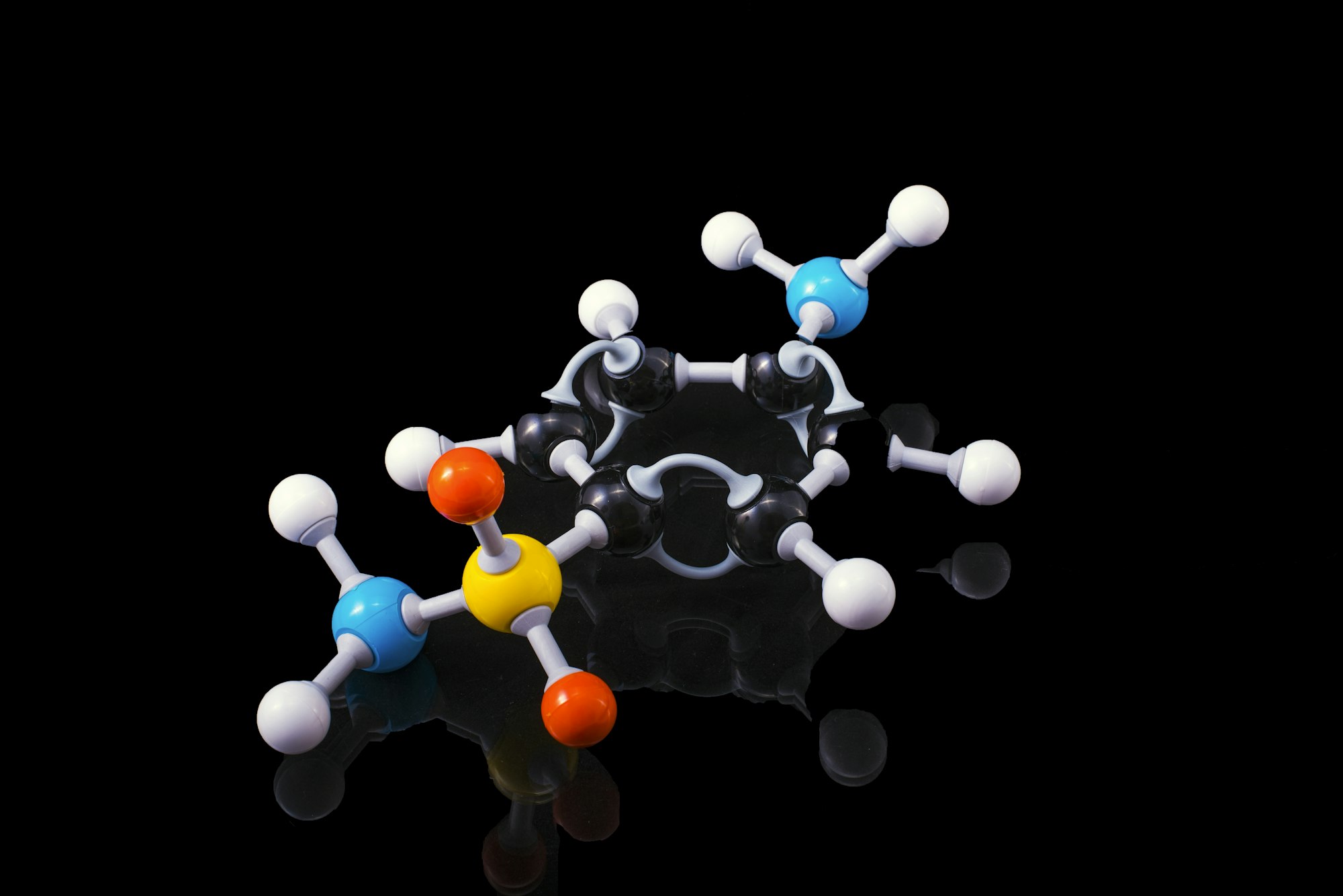
Start with amino acids. Your body uses twenty of them, and it strings them together like beads on a necklace. A short string is called a peptide. A long string, usually one that folds into a complicated three-dimensional shape, is called a protein.
Where exactly does a peptide stop and a protein begin? There's no official line. Most textbooks put the cutoff somewhere around 40 to 50 amino acids, and scientists argue about the borderline cases for fun. Insulin is a good example. It's 51 amino acids split across two linked chains, and depending on who you ask it's either a large peptide or a small protein. Nobody's wrong. The categories are a convenience, not a law of nature.
Here's a quick sense of scale using molecules you may actually encounter in our clinic:
- Oxytocin is just 9 amino acids long. Tiny.
- Bremelanotide (PT-141) is a small, ring-shaped peptide of 7 amino acids.
- Your own GLP-1, the gut hormone released after a meal, is about 30 amino acids. Tirzepatide is a modified chain of 39.
- Teriparatide is the first 34 amino acids of parathyroid hormone, which in its full natural form runs 84.
- Albumin, the most abundant protein in your blood, has roughly 585. That's firmly protein territory.
Why does size matter? Bigger, folded proteins can do mechanical and structural jobs that short peptides can't. Collagen gives your tendons tensile strength. Hemoglobin grabs oxygen. Enzymes speed up chemical reactions. Peptides, being small, tend to work as signals. They fit into a receptor like a key, flip a switch, and get cleared out.
And there's a practical consequence that matters a great deal to patients. Both peptides and proteins are made of amino acids, which means your digestive tract treats them as food. Swallow one, and stomach acid and digestive enzymes start chopping it into pieces, exactly the way they handle a steak or a protein shake. That's the main reason most peptide medications come as injections. It isn't a marketing choice. It's chemistry. (There is one oral semaglutide tablet, Rybelsus, and it gets around this problem with a special absorption enhancer and very specific instructions about taking it on an empty stomach.)
That same fact should make you skeptical of any capsule or powder promising that a swallowed "peptide" will travel intact to your joints or your skin. Your gut didn't get the memo that it's supposed to treat that one differently.
Hormones: A Job Description, Not a Material
Now for the word that causes most of the confusion. "Hormone" doesn't describe what a molecule is made of at all. It describes what the molecule does.
A hormone is a chemical messenger. One tissue makes it, releases it into the bloodstream, and it travels somewhere else to deliver instructions. Your pancreas releases insulin, and your liver and muscles respond. Your ovaries or testes release sex hormones, and tissues from bone to brain respond. Think of it like a coach on the sideline signaling a play. The coach doesn't run the ball. The signal does its work at a distance.
Because "hormone" is a job title, molecules from very different chemical families can hold it. Endocrinologists usually sort them into three groups:
Peptide and protein hormones
These are built from amino acids. Insulin, glucagon, GLP-1, oxytocin, and parathyroid hormone all belong here. They're water-soluble, so they travel freely in blood, but they can't easily slip through the fatty membrane that surrounds each cell. Instead they dock on receptors sitting on the cell surface, which then relay the message inside. Their effects often kick in quickly, and many of them are cleared within minutes.
Steroid hormones
These aren't made of amino acids at all. They're built from cholesterol. Testosterone, estradiol, progesterone, cortisol, and vitamin D's active form all live in this family. Steroids are fat-soluble, so they pass right through cell membranes and act on receptors inside the cell, often by changing which genes get switched on. That's slower to start, but the effects can be broad and long-lasting.
This is why testosterone and estradiol can be delivered through the skin as a gel, cream, or patch. A fat-soluble molecule can cross the skin barrier. A peptide mostly can't. It's also why steroid hormones need a ride through the blood. Proteins like sex hormone-binding globulin (SHBG) and albumin carry them around, which is exactly why I care about free testosterone and not just total testosterone when I read a man's labs. A protein is literally holding onto a portion of his hormone.
Amine hormones
The third group is derived from single amino acids, mostly tyrosine. Thyroid hormone (T4 and T3) and adrenaline belong here. They're a bit of a hybrid. Thyroid hormone, for instance, behaves more like a steroid in that it acts inside the cell, even though it's not built from cholesterol.
So when someone asks, "Is my medication a hormone or a peptide?" the answer can be both. Semaglutide is a peptide that mimics a hormone. Testosterone is a hormone that isn't a peptide. Albumin is a protein that isn't a hormone. Once you separate "what it's made of" from "what it does," the overlap stops being confusing.
Why the Medications You've Heard of Look the Way They Do
Peptide medicine isn't new or exotic. Insulin was first given to a patient in the early 1920s, and it's been a cornerstone of diabetes care ever since. A 2018 review in Bioorganic & Medicinal Chemistry by Lau and Dunn, tracing the history of therapeutic peptides, counted more than 60 peptide drugs approved in the United States and other major markets, with well over a hundred more in clinical development. A 2021 perspective in Nature Reviews Drug Discovery by Muttenthaler and colleagues, reviewing trends in peptide drug discovery, put the number that have reached the market at more than 80, across diabetes, cancer, osteoporosis, HIV, and chronic pain.
Both reviews make a point that I find useful with patients. Many of the earliest peptide drugs were copies of human hormones. The problem was that natural peptide hormones are built to be short-lived. Your own GLP-1 is broken down within a couple of minutes of release, because your body only wants that signal for a short time after a meal. That's great physiology and terrible pharmacology. Nobody wants to inject themselves every few minutes.
So chemists got clever. They swapped individual amino acids to resist the enzymes that chew the peptide up. They attached fatty side chains that let the molecule hitch a ride on albumin in the blood, which slows clearance dramatically. That's how a hormone signal lasting minutes became a medication dosed once a week. That's the story behind semaglutide and tirzepatide. Each one is, at its core, an engineered version of a hormone your gut already makes.
This history also explains why I'm picky about what we use at Magnolia. "Peptide" has become a marketing word. You'll see it on skin creams, protein powders, and a whole online market of vials labeled "not for human use." The category itself tells you nothing about safety or effectiveness. Insulin is a peptide. So is a toxin in snake venom. What matters is the specific molecule, the quality of the human trials behind it, and whether it has a lawful regulatory pathway. That's the standard I hold to, and it's why our peptide therapy program is built around a short list of established medications rather than whatever's trending online.
What This Means for Your Labs, Your Treatment, and Your Questions
Understanding these three words isn't just trivia. It changes how you read your own care.
It explains your delivery method. Steroid hormones like testosterone and estradiol can come as gels, creams, patches, pellets, or injections because they're fat-soluble. Peptide medications are mostly injected because digestion would destroy them. If you've ever wondered why your treatment comes in the form it does, the answer usually traces back to the chemistry.
It explains your lab work. When we check testosterone, we also look at SHBG and albumin, the carrier proteins, because they decide how much hormone is actually available to your tissues. A man can have a "normal" total testosterone and still feel lousy if too much of it is bound up. On the other side, when someone's on a GLP-1 medication, I'm watching things like kidney function, lipase, A1c, and body composition, because peptide hormones act on receptors spread across multiple organs. If you're curious about how we approach the steroid side of this, our testosterone replacement therapy page walks through it.
It explains timing. Peptide hormones tend to act fast and clear fast, so engineered versions are designed to stretch that out. Steroid hormones take longer to show their full effect because they're changing gene expression. That's part of why I tell patients starting testosterone or estrogen to give it several weeks before judging how they feel, while appetite changes on a GLP-1 medication often show up within days.
It explains the dietary confusion. "Eat more protein" and "take a protein hormone" are completely different instructions. Dietary protein gets digested into amino acids, which your body then uses to build its own proteins, including muscle. It doesn't act as a hormone on its way down. That's also why adequate protein intake matters so much when someone is losing weight on a GLP-1 medication. We want those amino acids available to protect muscle.
It gives you better questions to ask. When someone offers you a "peptide," ask what the specific molecule is, what hormone or receptor it targets, how it's delivered, what human trials exist, and whether it's an approved medication. Those five questions will screen out most of the nonsense in about thirty seconds. Any clinician worth seeing should be glad you asked.
The Short Version
A peptide is a short chain of amino acids. A protein is a longer one, usually folded into a working shape. A hormone is any molecule, peptide, steroid, or amine, that carries a message through the blood from one tissue to another. Some molecules wear two of those labels at once, and that's fine.
I'll admit I find this stuff fascinating, and I think patients do better when they understand what's going on inside their own bodies. You don't need a biochemistry degree to make good decisions about hormone therapy or peptide medications, but knowing the vocabulary helps you spot when someone's using it to sell you something. If you're weighing a treatment and want a physician to walk through what it actually is, how it works, and whether the evidence supports it for you, that's exactly the kind of conversation we have every day at Magnolia Functional Wellness here in Southlake.
Your Questions Answered
Led by trained medical professionals delivering safe, effective, and scientifically backed aesthetic and wellness treatments.
What's the difference between a peptide and a protein?
<p>Mostly size. Both are chains of amino acids, but peptides are short, usually under about 50, while proteins are longer and fold into complex working shapes. Insulin sits right on the border at 51. At Magnolia Functional Wellness in Southlake, I've found that once patients know this, a lot of confusing supplement marketing stops making sense.</p>
Is testosterone a peptide?
<p>No. Testosterone is a steroid hormone built from cholesterol, not from amino acids. That's why it can be absorbed through the skin as a gel or cream, while most peptide medications need to be injected. We'll walk through the delivery options that fit your labs and lifestyle at Magnolia Functional Wellness in Southlake.</p>
Is my GLP-1 medication actually a peptide?
Yes, it is. Semaglutide and tirzepatide are both built from the peptide hormone your own gut releases when food arrives, modified so the signal lasts about a week instead of a couple of minutes. Patients are often surprised by this, because they've filed peptides away as something separate from what they're taking. At Magnolia Functional Wellness in Southlake, we spend a fair amount of time clearing that up.
Why do peptide medications have to be injected instead of taken as a pill?
Because your digestive tract is built to dismantle exactly what a peptide is made of. Peptides are chains of amino acids, so your stomach treats a swallowed one like food and breaks it apart before it can reach a receptor. Injecting under the skin skips that problem entirely, which is why nearly every peptide medication we prescribe here in Southlake comes as a weekly injection.
Need More Information?
Our team is ready to answer your specific questions and concerns.