Heel Spurs and SoftWave: A Non-Surgical Approach That Works
That stabbing pain on your first steps out of bed usually isn't coming from the spur on your X-ray. Dr. Farhan Abdullah explains why the plantar fascia attachment is the real problem, what SoftWave shockwave therapy actually does to that tissue, and what the randomized trials show over the short and long term. A candid look at heel pain treatment from Magnolia Functional Wellness in Southlake, TX.
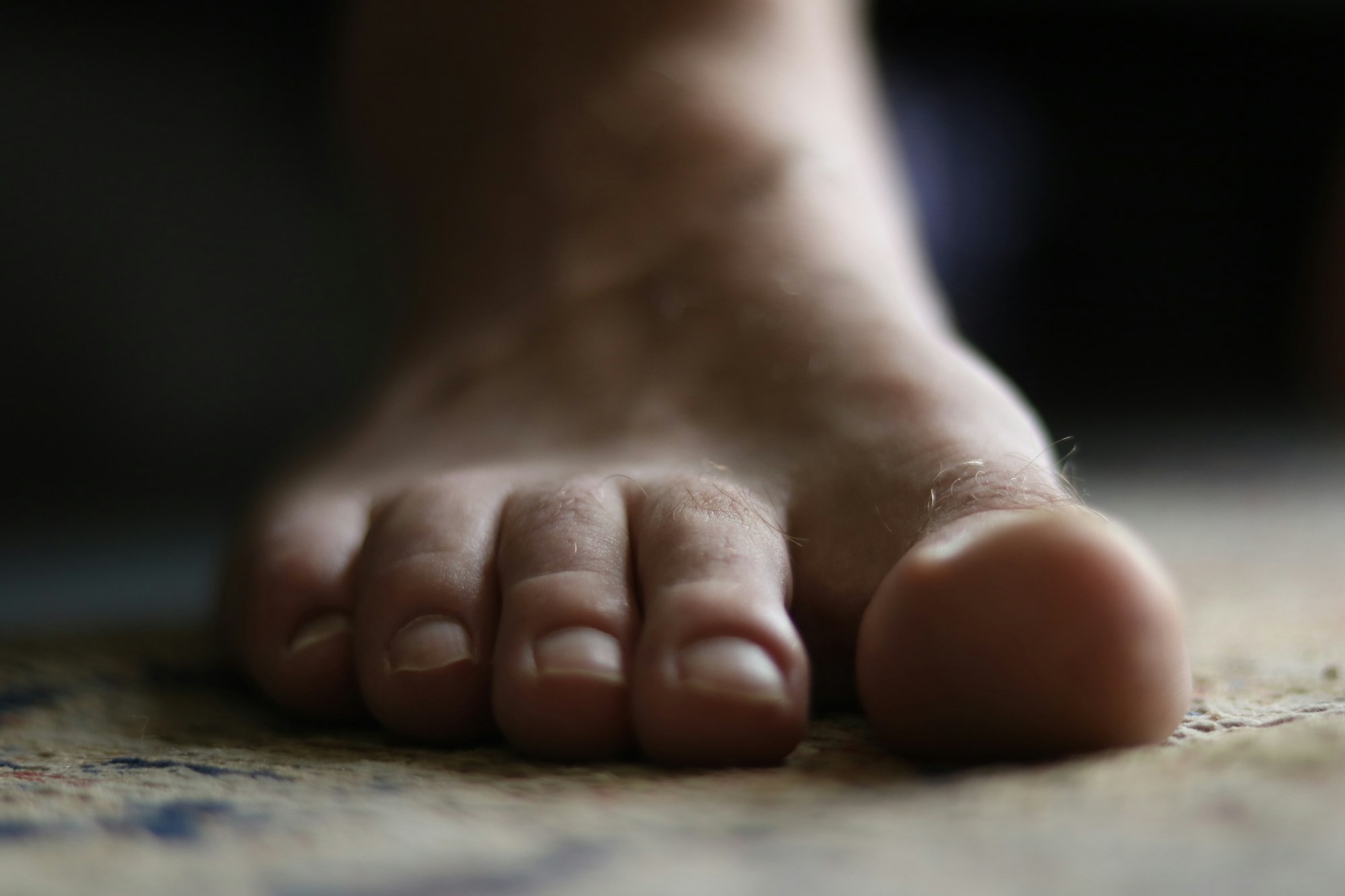


If the worst pain of your entire day happens before you've had your first cup of coffee, you probably don't need me to explain heel spurs to you. You already know the pattern. You swing your legs out of bed, put weight on that foot, and it feels like stepping on a tack. Twenty or thirty steps later it loosens up. Then you sit through a meeting, stand back up, and there it is again, sharp as ever.
I'm Dr. Farhan Abdullah. I'm a board-certified internal medicine physician, I still round on patients at a Dallas hospital, and I'm the medical director at Magnolia Functional Wellness here in Southlake. Heel pain is one of the most common complaints that walks through our door, and it's also one of the most frustrating, because by the time people get to me they've usually already tried the obvious things. Better shoes. Night splints. A cortisone injection that worked beautifully for six weeks and then quit. Stretching they did religiously for a while and then quietly abandoned, because life got busy.
So let's talk about what a heel spur actually is, why the story most people have been told about it is mostly wrong, and where SoftWave shockwave therapy fits in. I'm also going to tell you what the research doesn't support, because that matters just as much as what it does.
The Spur Is Rarely the Villain
Here's the part that surprises almost everyone. That bony hook you saw on your X-ray, the one your last provider pointed at with a pen, is usually not what's hurting you.
Heel spurs are calcium deposits that form on the underside of the calcaneus, your heel bone, right where the plantar fascia anchors in. They develop slowly, over years, in response to repeated traction on that attachment point. And here's the kicker: plenty of people have them and feel absolutely nothing. Imaging studies have repeatedly found spurs in feet that have never hurt a day in their lives. The spur is a footprint of stress, not the source of it.
What actually hurts is the tissue. The plantar fascia is a thick, fibrous band running from your heel to the ball of your foot, and it takes an enormous amount of load every single day. When it gets overloaded, the enthesis (the point where soft tissue meets bone) starts to break down. For a long time we called this plantar fasciitis and assumed it was inflammation. The tissue we've actually examined tells a different story. It looks degenerative more than inflammatory: disorganized collagen, poor blood supply, a healing response that stalled out and never finished the job.
That distinction isn't academic. It changes what treatment makes sense. If the problem were raw inflammation, anti-inflammatories and steroid injections would fix it permanently, and they don't. They mute the pain signal for a while. The underlying tissue stays exactly as unhealthy as it was. What I tell my patients is that we're not trying to calm something down. We're trying to wake something up.
That reframe is the whole reason shockwave therapy is on my radar at all.
What SoftWave Actually Does Down There
Shockwave therapy has a terrible name. Nobody hears the word "shock" and thinks pleasant thoughts. There's no electricity involved. What we're delivering are acoustic pressure waves, mechanical energy that travels through skin and fat and lands in the tissue underneath.
The SoftWave device we use generates unfocused, low-intensity waves that spread across a treatment zone rather than concentrating into a single narrow point. Practically speaking, that means we cover the whole painful region of the heel and the fascial attachment instead of trying to hit a bullseye.
When those waves reach struggling tissue, a few things happen. The mechanical stress triggers what researchers call mechanotransduction, where cells convert physical force into biochemical signaling. Growth factors get released. Small new blood vessels start forming, which matters enormously in a structure like the plantar fascia that has notoriously poor circulation to begin with. Resident stem cells in the area get recruited toward the site. And the local nerve endings that have been firing pain signals for months get disrupted, which is why some patients feel noticeably better within days even though the tissue repair takes considerably longer.
Notice what's missing from that list. We are not cutting anything, dissolving anything, or grinding the spur away. The spur usually stays right where it is. We are giving the tissue around it a reason to finish a repair job it gave up on a long time ago. Patients who want a deeper look at the technology can read through our SoftWave shockwave therapy page, which walks through the mechanism in more detail.
What does it feel like? Honestly, it's tolerable. Most people describe a firm tapping sensation with some tenderness when we hit the sorest spot. No numbing, no needles, no downtime. You walk out and drive yourself home.
What the Research Actually Shows
This is where I want to be careful, because heel pain attracts a lot of overclaiming and I'd rather you trust me later than be impressed now.
The strongest support comes from pooled data. A 2022 systematic review and meta-analysis in the Journal of the American Podiatric Medical Association by Tengku Yusof, Seow, and Vig gathered 24 clinical studies, including a dozen randomized controlled trials, on shockwave therapy for foot and ankle disorders. Their meta-analysis of pain scores for plantar fasciitis significantly favored shockwave over placebo and conservative care, with a mean difference of 3.10 points on the visual analog scale. They also specifically noted benefit for calcaneal spur, and they described side effects as minimal and unremarkable. You can read the full review on PubMed.
Then there's a 2023 randomized sham-controlled trial in The Physician and Sportsmedicine by Şah and colleagues that looked specifically at plantar calcaneal spur, which is exactly the population we're talking about. Ninety-nine patients were randomized into focused shockwave, radial shockwave, or sham. Both active groups improved significantly on the Foot Function Index compared to baseline and were significantly better than sham at five and thirteen weeks. Interestingly, the radial group outperformed the focused group on the durability of the improvement. That trial is available here.
A 2024 study in Medicina by Szajkowski, Pasek, and Cieślar added a wrinkle I found useful clinically. They treated runners with plantar fasciitis and escalated the shockwave intensity every two sessions in the experimental group while holding it constant in the control group. The escalating group showed measurable changes in the mechanical tension of the fascia that the fixed-dose group didn't. It's a small study, but it reinforces something I already believed: dosing and progression matter, and a rigid one-size protocol leaves results on the table.
Now the honest counterweight. A 2018 randomized controlled trial in the Journal of Foot and Ankle Surgery by Uğurlar and colleagues followed 158 patients with chronic plantar fasciitis and a symptomatic heel spur for a full 36 months, comparing shockwave, platelet-rich plasma, corticosteroid injection, and prolotherapy. Their finding was sobering. By the end of that long follow-up, average pain scores across all four groups had drifted back toward where they started. Corticosteroid worked best in the first three months, and shockwave was an effective option, but nothing held cleanly for three years. You can read it on PubMed.
I bring that study up with patients on purpose. It tells you something important: no single procedure permanently immunizes you against heel pain if the loads and mechanics that caused it in the first place stay unchanged. That's not an argument against SoftWave. It's an argument against treating SoftWave as a standalone miracle instead of one strong piece of a plan.
How We Actually Run It at Magnolia
A typical course is somewhere between four and six sessions, spaced about a week apart, with each visit running roughly fifteen minutes of actual treatment time. We map the tender points first, because heel pain is less uniform than people assume. Some of it sits right at the medial calcaneal tubercle. Some of it tracks forward into the arch. Some patients have a genuinely tight Achilles and gastrocnemius driving the whole thing from above, and treating only the heel in that case is treating the symptom.
Timeline expectations matter. A handful of patients feel meaningfully better after the first session, which is mostly the nerve-signaling effect rather than tissue repair. The more typical pattern is a gradual downward drift in pain over four to eight weeks, with the biggest gains often landing after the treatment course has finished. That surprises people. Biological remodeling runs on its own schedule and doesn't stop when your appointments do.
I also insist on the boring parts. Calf and fascia loading, done consistently. In that systematic review of systematic reviews on tendinopathy published in the Scandinavian Journal of Medicine and Science in Sports by Irby and colleagues, which you can find here, eccentric exercise came out as the most consistently effective intervention across the whole literature. Shockwave gives the tissue a biological head start. Loading is what teaches it to tolerate your life again. Skip the loading and you're rebuilding a bridge nobody drives across.
Footwear and terrain get a look too. This is North Texas, and a lot of my patients spend their weekends on unforgiving surfaces, whether that's walking the concrete at Southlake Town Square or standing on the sidelines at Bob Jones Park for a kid's soccer game in August heat. Those are exactly the exposures that keep an irritated fascia irritated. Small adjustments there compound.
For patients whose imaging or exam suggests more advanced degeneration at the attachment, we sometimes discuss layering in an orthobiologic like platelet-rich plasma alongside the shockwave course. That's an individualized conversation, not a default.
Who Does Well, and Who Doesn't
The patients who tend to do best have had symptoms for more than three months but less than a couple of years, have a clear mechanical story behind the onset, still have reasonable ankle dorsiflexion, and are willing to do their loading work. That combination is close to a green light in my experience.
The ones who struggle usually fall into a few buckets. People whose heel pain turns out to be a nerve problem rather than a fascial one, most often entrapment of the first branch of the lateral plantar nerve, won't respond the way you'd hope, which is why the exam matters more than the X-ray. People with an undiagnosed calcaneal stress fracture need imaging and rest, not acoustic energy. Patients with poorly controlled diabetes and significant neuropathy need a broader workup first. And anyone expecting to skip the rehab entirely is going to be disappointed no matter how good the technology is.
There are a few outright contraindications as well, including pregnancy, active infection over the treatment area, malignancy in the field, and certain bleeding disorders or anticoagulation situations. We screen for all of that before anyone gets on the table.
Here's what I keep coming back to. Heel spur pain has a reputation for being permanent, and I understand why, because so many people cycle through cortisone and inserts and eventually just decide this is their life now. It usually isn't. The tissue at the bottom of your foot is capable of healing. It stopped trying, and the job is to get it started again and then give it a reason to stay strong. Between shockwave, targeted loading, and some unglamorous attention to how you spend your hours on your feet, most people I see get a meaningful amount of their mornings back. If your first steps out of bed have been the worst part of your day for longer than you'd like to admit, that's a conversation worth having with us at Magnolia Functional Wellness in Southlake.
By Dr. Farhan Abdullah, DO | Medical Director, Magnolia Functional Wellness | Southlake, TX
Your Questions Answered
Led by trained medical professionals delivering safe, effective, and scientifically backed aesthetic and wellness treatments.
Will SoftWave get rid of my heel spur?
Almost certainly not, and that's usually fine. The spur itself is a calcium deposit that formed over years, and it's rarely what's actually causing your pain. The real culprit is the degenerated tissue where your plantar fascia attaches to the bone, and that's exactly what SoftWave targets by restarting blood flow and repair signaling. At Magnolia Functional Wellness in Southlake, I tell patients to judge success by how their first steps in the morning feel, not by what a follow-up X-ray shows.
Will SoftWave help my chronic plantar fasciitis if I'm a runner?
It's one of the better-supported uses of SoftWave. Multiple level I trials, summarized in a 2024 Br J Sports Med systematic review on athletes, found that ESWT can be effective alone for plantar fasciitis, and a 2024 Arch Orthop Trauma Surg meta-analysis showed measurable reductions in plantar fascia thickness on imaging. In my Southlake clinic, runners who've already tried stretching, orthotics, and a cortisone shot or two tend to be some of the strongest responders to a SoftWave course, especially when we also clean up their footwear, mileage progression, and calf strength at the same time.
Is SoftWave a better option than cortisone for tendon injuries?
For chronic tendon issues, I usually prefer SoftWave over repeat cortisone, and not because cortisone is useless. Cortisone reliably calms pain in the short term. The problem is that repeated steroid injections into a tendon can weaken the tissue over time, which is the opposite of what we want for someone planning to stay active for another 30 years. SoftWave works in the other direction. It encourages the body to remodel and rebuild the tissue instead of muting the pain signal. That said, cortisone still has a role for specific situations and short-term relief, and at Magnolia Functional Wellness we choose based on the patient and the injury, not on dogma.
Can I keep training while I'm doing a SoftWave course?
In most cases, yes. One of the practical advantages of SoftWave is that it doesn't require downtime. The vast majority of my patients at Magnolia Functional Wellness in Southlake keep up their regular workouts, runs, and league play through the course. The main exception is when we're working on something acutely irritated, where I'll usually pull back the volume for a week or two while we get the inflammation under control. The other big rule: skip NSAIDs like ibuprofen and Aleve for a few days before and a week or two after each session, since they blunt the healing response we're trying to use.
Can SoftWave therapy help heal a stress fracture?
SoftWave shockwave therapy has a long track record of stimulating bone healing, and we use it to support recovery in low-risk stress reactions and early stress fractures by boosting blood flow and activating your body's own repair cells. It isn't the right call for every fracture, though, since certain high-risk locations in the tibia and foot need protected weight bearing first. That's why I evaluate each runner individually at Magnolia Functional Wellness in Southlake before recommending it.
Need More Information?
Our team is ready to answer your specific questions and concerns.