
How to Order at Restaurants on GLP-1 Medications
Dining out on a GLP-1 isn't just about eating less. Slower gastric emptying, earlier fullness, and shifting food preferences change the mechanics of a restaurant meal. Dr. Farhan Abdullah walks through what to order, what tends to backfire, and how to protect your protein intake without making dinner out feel like a chore. Practical strategy from Magnolia Functional Wellness in Southlake, TX.
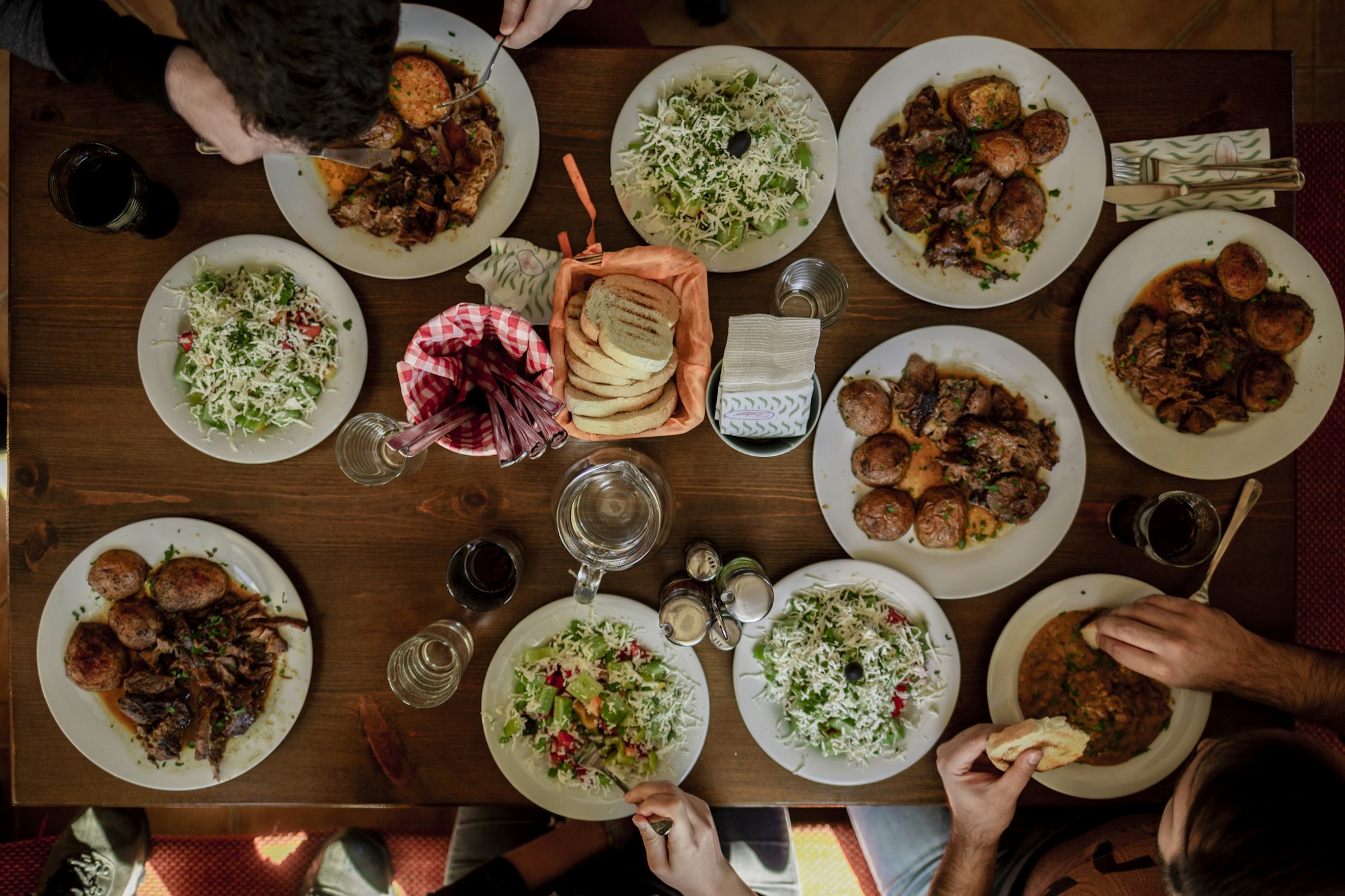


You're at a table in Southlake Town Square, the bread basket just landed, and everyone else is already three bites into an appetizer you didn't order. The menu in your hands runs eleven pages. A year ago you'd have known exactly what to get without reading a word of it. Now you're quietly doing math about how much of anything you'll actually be able to finish before your stomach taps out.
I'm Dr. Farhan Abdullah, and at Magnolia Functional Wellness here in Southlake, this comes up constantly with patients on GLP-1 medications. Not "is this working," because by month three most people already know the answer. The question is subtler and honestly more important: how do I eat at a restaurant like a normal human being without feeling sick afterward, or feeling like the odd one out at the table?
That deserves a better answer than "just eat less." Because these medications don't simply turn down your appetite. They change the physical mechanics of eating. Your stomach empties more slowly. Your preferences shift, sometimes without you noticing. Fullness arrives earlier and lands harder than it used to. Order the way you always did and you'll have a rough evening. Order with a little strategy and dinner out goes back to being what it should be, which is dinner.
What Actually Changes When You Eat on a GLP-1
Let's start with the biology, because the tactics only make sense once you know what your body is doing differently.
GLP-1 receptor agonists, the class that includes semaglutide (the drug substance in Ozempic and Wegovy) and tirzepatide (in Mounjaro and Zepbound), work on several fronts at once. They act on appetite centers in the brain. They influence how your body handles glucose after a meal. And critically for anyone sitting down at a restaurant, they slow the rate at which food leaves your stomach.
That last piece isn't theoretical. A 2021 trial published in Diabetes, Obesity and Metabolism by Friedrichsen and colleagues randomized 72 adults with obesity to semaglutide or placebo for 20 weeks and directly measured gastric emptying after a standardized breakfast. They found that emptying slowed in the early window after eating, and that participants ate meaningfully less when given free access to lunch. Slower emptying is a big part of why a portion that used to feel reasonable now feels like a brick sitting behind your sternum.
The appetite effect is just as striking. In a crossover trial published in the same journal in 2017, Blundell and colleagues studied 30 adults with obesity on semaglutide and found a 24 percent reduction in total energy intake across all meals in a day compared with placebo. That study also documented something I bring up with almost every patient: a measurable shift in food preference away from high-fat, energy-dense foods. People didn't just eat less. They wanted different things.
And more recent work fills in the psychological layer. A 2025 randomized phase 1 trial published in Nature Medicine by Martin and colleagues studied 114 adults on tirzepatide, liraglutide, or placebo. Beyond a substantial drop in energy intake at an ad libitum lunch, the tirzepatide group reported less overall appetite, fewer food cravings, a reduced tendency to overeat, and (my favorite finding for restaurant purposes) lower reactivity to food in the environment. The dessert tray rolling past your table simply carries less weight than it used to.
So that's your starting point. Smaller functional capacity, earlier fullness, altered preferences, and less pull from the food around you. Now let's talk about what to do with that.
The Decisions You Make Before You Sit Down
Most restaurant mistakes on a GLP-1 happen before anyone takes your order.
Look at the menu online before you leave the house. I know this sounds fussy, but it takes ninety seconds and it removes the single biggest failure mode, which is deciding what you want while you're hungry, socially distracted, and staring at photographs of fried appetizers. Pick your order at home. Then when you get there, you're not negotiating with yourself.
Skip the pre-game starvation strategy. Some patients tell me they eat nothing all day because they're going out for a big dinner. On a GLP-1 that backfires. You arrive with low blood sugar and poor judgment, you eat too fast, and your slowed stomach punishes you for it an hour later. Have a normal breakfast and a light protein-forward lunch. Show up moderately hungry, not desperate.
Think about timing relative to your injection. Plenty of people find that the day after their shot is their least comfortable eating day, with the most appetite suppression and the most nausea if they push it. If you have a choice about which night to book the reservation, don't schedule the anniversary dinner for the evening after injection day. Some of my patients deliberately shift their injection to a weekday so that weekend meals land in the smoother part of the cycle. That's a conversation worth having at your next visit rather than experimenting on your own, since timing interacts with dose and titration.
Finally, eat before drinking anything with bubbles or alcohol. Carbonation takes up real estate in a stomach that's already emptying slowly, and alcohol on an unusually empty stomach hits differently once your gastric transit has changed. I've had more than one patient in this area tell me two margaritas at their usual Tex-Mex place suddenly felt like four.
How to Actually Order
Here's the practical part. These are the strategies I give patients, and they work across almost every kind of restaurant in the Metroplex.
- Order protein first, and order it plainly. Grilled, roasted, broiled, or baked. Chicken, fish, shrimp, steak, eggs. Protein is the thing you most want to actually get down, and plain preparations are the easiest on a slow stomach.
- Treat appetizers as entrees. A shrimp cocktail and a side of grilled vegetables is a complete dinner now. This is probably the single most useful reframe I give people, and nobody at the table notices or cares.
- Ask for the to-go box when the food arrives, not after. Box half of it immediately. You cannot eat what isn't in front of you, and it kills the reflex to keep picking at a plate long after you're full.
- Split an entree. If you're with a spouse or a friend, one entree and one extra side often feeds two people comfortably when one of you is on a GLP-1.
- Get sauces and dressings on the side. This isn't diet-culture theater. Heavy cream and butter-based sauces are exactly the high-fat load that tends to trigger nausea and reflux, and you'll want control over how much you take on.
- Order water first and sip it, don't gulp it. Hydration matters, but chugging sixteen ounces right before food arrives fills the space you needed.
A note on the bread basket, since it always comes up. I'm not going to tell you bread is forbidden. But bread is uniquely good at occupying stomach volume you're going to want for protein, and if you're the person who eats three pieces because they're warm and they're there, ask the server to skip it. That's a completely normal request and no one will blink.
The Orders That Tend to Go Badly
Certain things reliably cause trouble, and it's worth knowing them so you can make an informed choice rather than getting ambushed.
Fried food is the most common culprit. Fat slows gastric emptying on its own, and you're stacking that on top of a medication that's already slowing it. A basket of fried calamari can sit in your stomach for hours. That heavy, queasy, "I need to lie down" feeling most patients describe at least once? It's usually fried food, and usually eaten faster than it should have been.
Cream-heavy pasta, queso-drenched dishes, and rich cheese plates land in the same category. Notice that this is precisely what the Blundell data predicted. People on semaglutide showed reduced preference for high-fat, energy-dense food, and your gut is voting the same way your brain is. When your body loses interest in the fettuccine alfredo, that's not willpower. That's pharmacology.
Very large volumes of anything cause problems, even healthy food. A giant salad with a mountain of greens is physically bulky, and bulk is the issue now, not just calories. Half a salad and a piece of grilled salmon will treat you better.
Alcohol deserves its own line. Beyond the empty-stomach issue, many patients on GLP-1 medications report that their desire for alcohol simply drops. If that's you, great, lean into it. If you do drink, one drink with food, slowly, is the version that tends to go fine. Anything past that and you're rolling dice with a stomach that no longer behaves the way it used to.
And then there's pace. This is the one I harp on. Eating fast was always a bad habit. On a GLP-1 it's a genuinely uncomfortable one, because the fullness signal now arrives sharply rather than gradually. Put the fork down between bites. Talk more. You'll finish with everyone else and feel considerably better doing it.
Protein, Muscle, and the Part Nobody Warns You About
Here's what worries me more than any single restaurant meal: chronic underconsumption of protein.
When appetite drops this much, total intake drops with it, and protein is usually the first casualty because it's the most work to chew and the most filling per bite. That matters because weight lost on these medications isn't purely fat. In a 2023 secondary analysis published in Diabetes Care, Heise and colleagues examined body composition, appetite, and energy intake in patients on tirzepatide, semaglutide, or placebo, and found meaningful changes in fat mass alongside overall weight reduction. Preserving lean mass while that happens takes deliberate effort, specifically adequate protein and resistance training. It doesn't happen by accident.
So when you're at a restaurant and you know you can only finish about a third of what's in front of you, make that third count. Eat the protein first, before the rice, before the bread, before the fries. If you're full after six ounces of grilled chicken and a few bites of vegetables, that's a far better outcome than being full after chips and queso.
This is also why I don't love the "I barely eat anything anymore" report from patients. It sounds like success. Nutritionally it often isn't. That's part of what we track at our clinic, and it's a core reason GLP-1 therapy belongs under real physician supervision rather than being handed to you with a shrug and a refill schedule.
Keeping the Social Part Intact
I want to close on something that isn't strictly clinical, because I think it's underrated.
A lot of patients quietly start declining invitations. Dinner feels complicated, they're worried about getting sick at the table, they don't want to explain why they're only eating half an appetizer. Over a few months they end up eating out less, seeing friends less, and treating food as a problem to be managed rather than something people do together.
Don't let that happen. You do not owe anyone an explanation for what you ordered. Nobody at a table in Grapevine or Colleyville is auditing your plate. Order what works for your body, box the rest, stay for the conversation, and let the evening be about the people. Some of my patients have told me that dining out actually got easier once the constant negotiation with food quieted down. The Nature Medicine data on reduced reactivity to environmental food cues lines up with exactly that experience.
The medication is a tool, not a personality. Whether you're on tirzepatide or semaglutide, the goal was never to make you afraid of restaurants. It was to take the volume down on a system that was working against you, so you could make reasonable decisions without fighting yourself over every menu.
If you're struggling with the practical side of this, the nausea, the protein, the timing, the social piece, bring it up. Those details are genuinely part of treatment, not trivia to figure out alone between appointments. At Magnolia Functional Wellness in Southlake, that conversation is a normal part of how we manage weight loss therapy, because a plan you can actually live with at a dinner table is the only kind worth having.
By Dr. Farhan Abdullah, DO | Medical Director, Magnolia Functional Wellness | Southlake, TX
Your Questions Answered
Led by trained medical professionals delivering safe, effective, and scientifically backed aesthetic and wellness treatments.
What's the best thing to order at a restaurant when I'm on a GLP-1?
<p>Start with protein, prepared simply. Grilled or roasted chicken, fish, shrimp, or steak sits far better than anything fried or drowned in cream sauce. A lot of my patients at Magnolia Functional Wellness in Southlake have good luck ordering an appetizer as their entree, and asking for a to-go box when the plate arrives rather than after. Eat the protein first, then the sides.</p>
Why do I feel sick after eating fried food on a GLP-1?
<p>Fat slows stomach emptying on its own, and your medication is already doing the same thing, so a heavy fried meal can sit there for hours. That's usually what's behind the queasy, weighted-down feeling people describe. It isn't a sign that something's wrong with you. If it keeps happening, bring it up and we'll look at your dose and timing at Magnolia Functional Wellness in Southlake.</p>
Can I drink alcohol at a wedding while on semaglutide?
Yes, but with caveats. Most of my patients at Magnolia Functional Wellness in Southlake find that alcohol hits harder on semaglutide or tirzepatide, because gastric emptying is slowed and tolerance drops with weight loss. I usually recommend sticking to one or two drinks, alternating each one with a full glass of water, and avoiding sugary cocktails. You'll feel dramatically better the next morning if you pace yourself.
How much protein should I eat on a GLP-1 if I'm barely hungry?
I usually aim for about 1.0 to 1.5 grams per kilogram of body weight, which lands around 80 to 120 grams a day for most patients. When your appetite's low, the trick is small protein-forward portions spread through the day rather than big meals. At Magnolia Functional Wellness in Southlake we'll set a target based on your labs and body composition.
Will the nausea go away if I stay on the same dose?
For most people, yes. Gastrointestinal side effects tend to be strongest in the first week or two after a dose change and then settle down as your body adapts. That's actually the whole reason we hold each dose for several weeks before moving up. If the nausea isn't improving after a few weeks, or it's keeping you from eating and drinking normally, tell us. Holding longer or stepping back down a level is a completely reasonable move, not a setback.
Need More Information?
Our team is ready to answer your specific questions and concerns.