
The Thanksgiving Plate on a GLP-1: A Realistic Plan
Holiday food lands differently on semaglutide or tirzepatide. Dr. Farhan Abdullah explains why the Thanksgiving plate felt the way it did, how to build one that works with your medication, what to do if you overdid it, and how to handle leftovers week and the big meals still ahead.


By Dr. Farhan Abdullah, DO | Medical Director, Magnolia Functional Wellness | Southlake, TX
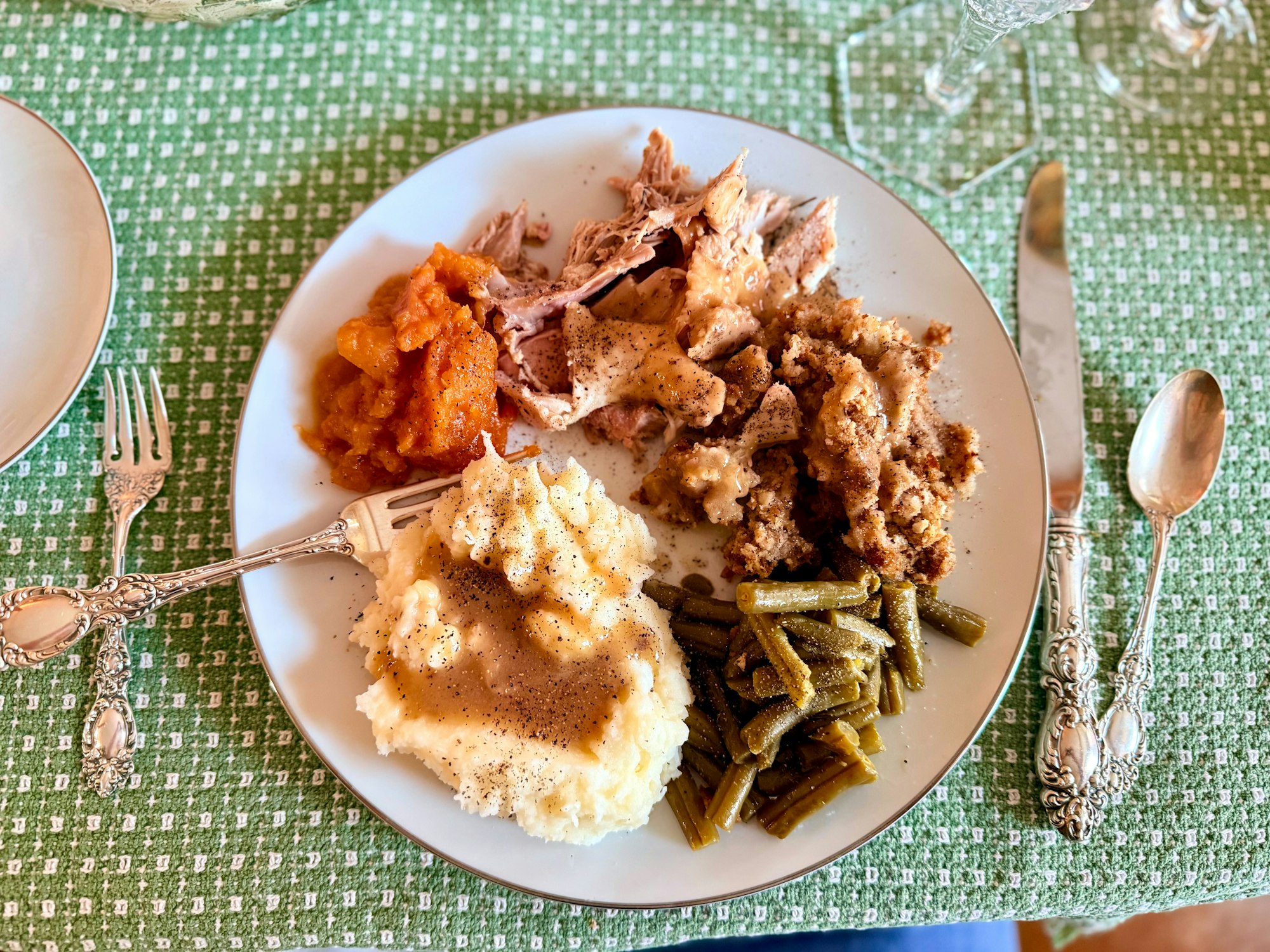
It's the Friday after Thanksgiving. The good china's back in the cabinet, there's a foil-covered half pan of cornbread dressing staring at you every time you open the fridge, and somebody in your house is already asking what's for lunch. If you're on a GLP-1 medication, there's a decent chance yesterday's dinner felt a little strange. Maybe you were full after six bites. Maybe you felt fine at the table and then miserable an hour later on the couch. Or maybe it went great, and you're wondering how to keep it that way through December.
I'm Dr. Farhan Abdullah, an internal medicine physician and the medical director at Magnolia Functional Wellness in Southlake. I still work hospital shifts, so I also see the rare holiday meal that ends in an emergency department. Most don't end that way, thankfully. But the plate in front of you on a GLP-1 medication really is a different plate than the one you ate from before, and it deserves its own plan.
So consider this a debrief and a game plan. We'll talk about why the meal felt the way it did, how to build a plate that works with the medication instead of against it, what to do when you overdo it, and how to handle the leftovers and the three or four big meals still waiting on the calendar.
Why Your Plate Feels Different Now
Semaglutide and tirzepatide work in a few places at once. They act on appetite centers in the brain, they change how satisfied you feel after eating, and early in treatment they slow the rate at which your stomach empties. That combination is why a meal that used to feel like a warm-up can now feel like plenty.
The numbers on this are striking. In a 20-week randomized trial of semaglutide 2.4 mg published in Diabetes, Obesity and Metabolism by Friedrichsen and colleagues, 72 adults with obesity were offered an all-you-care-to-eat lunch. People on semaglutide ate 35% less than those on placebo. They also reported less hunger, more fullness, and fewer and weaker food cravings. One detail in that study caught my attention, though. By week 20, the researchers didn't find clear evidence that gastric emptying was still meaningfully slowed. The appetite effect stuck around, while the stomach-slowing effect looked much smaller than people tend to assume.
Tirzepatide looks similar. A 6-week randomized trial in Nature Medicine by Martin and colleagues found that people on tirzepatide ate roughly 525 fewer calories at a buffet lunch than people on placebo by week three. They reported fewer cravings, less tendency to overeat, and less pull from food in their surroundings. What the drug didn't change was deliberate restraint, the conscious choice to hold back. That's a useful distinction. The medication turns the volume down on the urge. It doesn't make decisions for you.
Why does any of this matter for a holiday plate? Because Thanksgiving food is exactly the kind of food that exposes the gap between appetite and capacity. Rich gravy, buttery mashed potatoes, fried turkey if you're in a Texas household that does that sort of thing, pecan pie. Fat-heavy food sits longer and tends to cause more trouble when your gut is already running at a slower pace. You can feel like you've got room, keep going, and then pay for it later. It's a common pattern after big holiday meals, and it's mostly preventable.
Building the Plate: A Realistic Order of Operations
I'm not going to hand you a meal plan with a turkey-to-yam ratio. Nobody follows those, and Thanksgiving isn't the day for perfection. What tends to work better is a simple order of operations.
Start with a smaller plate. If your family uses the oversized dinner plates, grab a salad plate. You're not depriving yourself. You're matching the plate to the stomach you have now. Your eyes calibrate to how full a plate looks, and a big empty plate invites you to fill it.
Protein goes on first. A palm-sized portion of turkey, or ham, or brisket if that's your family's tradition. Protein matters more on these medications than most people realize, because when you're eating less overall, it's easy to fall short and lose muscle along with fat. Getting it in early means it's on board before fullness hits.
Vegetables next, the simpler the better. Green beans, roasted carrots, a salad. The green bean casserole with fried onions counts, but go easy on it, since it's carrying more fat than it lets on.
Then pick your favorites, not everything. This is the step people skip. Look at the whole spread before you serve yourself and decide which two or three sides you'd be sad to miss. Grandma's dressing? Take some. The store-bought rolls you don't even like? Leave them. A spoonful of each of nine sides adds up to a full plate fast, and on a GLP-1, that's often where the trouble starts.
Dessert waits. Pie on top of a full stomach is a common setup for the overstuffed, nauseated hour that follows. Give it an hour or two. If you still want a slice, have a small one, and you'll probably enjoy it more because you're not eating it on autopilot.
One more thing about drinks. Alcohol can hit harder than you expect on these medications, partly because you're eating less and partly because many people simply weigh less than they used to. Sugary cocktails and heavy eggnog add a lot of calories on top of a big meal too. If you're drinking, keep it to a drink or two and alternate with water.
Slow Down, Because Fullness Runs Late
If there's one habit I'd pick above all the others for holiday meals on a GLP-1, it's pace. Your stomach and brain need time to talk to each other, and on these medications that conversation can feel like it runs on a delay.
The research on eating speed is more solid than you'd think. A systematic review and meta-analysis in the American Journal of Clinical Nutrition by Robinson and colleagues pooled 22 studies that deliberately sped up or slowed down how fast people ate. Slower eating was linked to lower food intake. Interestingly, people weren't hungrier afterward, either at the end of the meal or in the hours that followed. Eating slowly didn't leave them feeling shortchanged. They just ate less. There was a lot of variation between studies, so it's not a magic trick, but it's about as low-risk an intervention as medicine has.
A few ways to actually do this at a crowded holiday table:
- Put your fork down between bites. It sounds silly. It works.
- Talk more. Ask your aunt about her trip, ask the kids about their season at Bob Jones Park. Conversation is a natural brake.
- Take a real pause before seconds. Give it 15 to 20 minutes. If you're in a house where the Cowboys game is on, halftime makes a pretty good timer.
- Sip water between bites rather than gulping a big glass with the meal, which can add to that stuffed feeling.
What I tell patients is that the GLP-1 already did a lot of the work by quieting the hunger. Your job is to give it enough time to show you how much you actually need.
When You Overdid It Anyway
Let's be real. Some of you are reading this because yesterday didn't go to plan. You felt fine, kept going, and an hour later you were dealing with that heavy, stretched feeling, reflux, nausea, or burps that tasted like something went wrong. It happens, and it's not a moral failing. It's physiology.
If you're in that spot, a few things usually help. Stop eating, even if the dessert tray is making another lap. Sip water or an electrolyte drink slowly rather than chugging it. A gentle walk often settles things better than lying flat on the couch, and if you do lie down, propping yourself up helps with reflux. The next day, go light: broth-based soup, eggs, yogurt, crackers, plain turkey. Bland, smaller portions, more often.
Now the part I want you to take seriously, because I see the hospital side of this. Get medical care promptly if you have severe abdominal pain that doesn't let up, especially pain that bores through to your back, repeated vomiting, an inability to keep fluids down, signs of dehydration like dizziness or very little urine, or pain in the upper right side of your belly with fever. Those aren't the usual too-much-pie symptoms, and they need to be checked. Pancreatitis and gallbladder problems are uncommon on these medications, but they're real, and a holiday weekend is no reason to wait it out at home.
One more thing: please don't change your dose on your own because of one rough meal. Skipping a dose and then restarting can bring back side effects you'd already gotten past, and doubling up later is never the answer. If yesterday left you feeling like your current dose and your holiday calendar don't mix, call us. That's exactly the kind of adjustment we'd rather make together.
Leftovers Week and the Big Meals Still Ahead
This is where the real damage tends to happen, and it's not the main event. It's the grazing. A forkful of dressing standing at the open fridge, a slice of pie at 10 p.m., turkey sandwiches with three kinds of leftovers piled on. None of it feels like a meal, so none of it registers as one.
A couple of simple moves make leftovers week a lot easier:
- Portion the leftovers into single servings today. Small containers, one portion each. When the dressing lives in a big pan, it gets eaten by the spoonful. When it lives in a half-cup container, it's a side dish.
- Treat the turkey as your protein bank. Turkey and vegetable soup, turkey over a big salad, turkey in a lettuce wrap. It's the most useful thing in your fridge this week.
- Freeze the extra pie. Sliced, wrapped, in the freezer. You can still have it. You just have to decide to.
- Get back to your normal meals by Saturday. Not a cleanse, not a fast, not a punishment. Just your usual breakfast, your usual protein, your usual walk.
Then look ahead. Between now and New Year's, a lot of us have three or four more big meals or parties on the calendar. Use what you learned yesterday. If you know the plate felt too full, start smaller next time. If the pie two hours later was fine, that's your new rule. If alcohol made everything worse, plan around it before the office party.
And keep an eye on the trend, not the day. A scale reading the morning after Thanksgiving is mostly salt and water and food that hasn't finished its trip. Weighing in over the next week or two tells you far more than today's number. If you're working with us on a physician-supervised GLP-1 weight loss plan, that trend is what we'll look at together, along with your energy, your side effects, and whether your dose still fits your life.
If you're on tirzepatide or semaglutide, the medication is doing a lot of the heavy lifting on appetite. The plate is still yours to build. Smaller plate, protein first, favorites only, slow down, and give dessert some room. That's it. At Magnolia Functional Wellness in Southlake, my goal isn't to talk anyone out of enjoying the holidays. It's to make sure you can enjoy them and still feel like yourself in January.
Your Questions Answered
Led by trained medical professionals delivering safe, effective, and scientifically backed aesthetic and wellness treatments.
How much should I put on my plate at a holiday dinner on a GLP-1?
Less than you think, and in a smarter order. I suggest a salad-sized plate with a palm-sized portion of protein first, then vegetables, then two or three favorite sides. Eat slowly and give it 15 to 20 minutes before deciding on seconds. At Magnolia Functional Wellness in Southlake, we'd rather you enjoy a smaller plate than feel sick from a big one.
What should I do if I overate on my GLP-1 and feel sick?
Stop eating, sip fluids slowly, and take a gentle walk instead of lying flat. Keep the next day's meals small and bland. If you have severe belly pain that won't let up, pain that goes through to your back, repeated vomiting, or you can't keep fluids down, get medical care right away. Please don't skip or double a dose on your own; call your prescriber first.
How do I handle holiday leftovers on a GLP-1 medication?
Portion them into single-serving containers the day after the meal so you're not grazing from the big pan. Use the turkey as your go-to protein for soups, salads and wraps, and freeze extra pie by the slice. Then get back to your usual meals and routine as soon as you can.
Why do I feel nauseated after eating sweets on a GLP-1 medication?
<p>These medications slow how fast your stomach empties, so a rich, sugary snack sits there longer than it used to. That's often when the bloating, reflux, and queasiness show up. Smaller portions, eating after a protein-rich meal, and skipping sweets on an empty stomach usually help. If the nausea is severe or you're vomiting repeatedly, call your clinician.</p>
What can I eat when food makes me nauseous on my weight loss medication?
Cold or room-temperature foods with mild smells tend to go down easier than hot, aromatic ones. Think Greek yogurt, cottage cheese, hard-boiled eggs, or a protein shake. Keep flavors simple and sip fluids between meals instead of with them. If nausea is severe or lasting, let us know so we can adjust your dose.
Need More Information?
Our team is ready to answer your specific questions and concerns.