
Eating Big and Training Hard: Getting Through the Holidays on TRT
One big Thanksgiving meal won't undo a year of progress on testosterone therapy, but five weeks of short sleep, heavy drinking, and skipped workouts can. Dr. Abdullah explains what actually matters for men on TRT over the holidays and how little training it takes to hold your ground.


By Dr. Farhan Abdullah, DO | Medical Director, Magnolia Functional Wellness | Southlake, TX
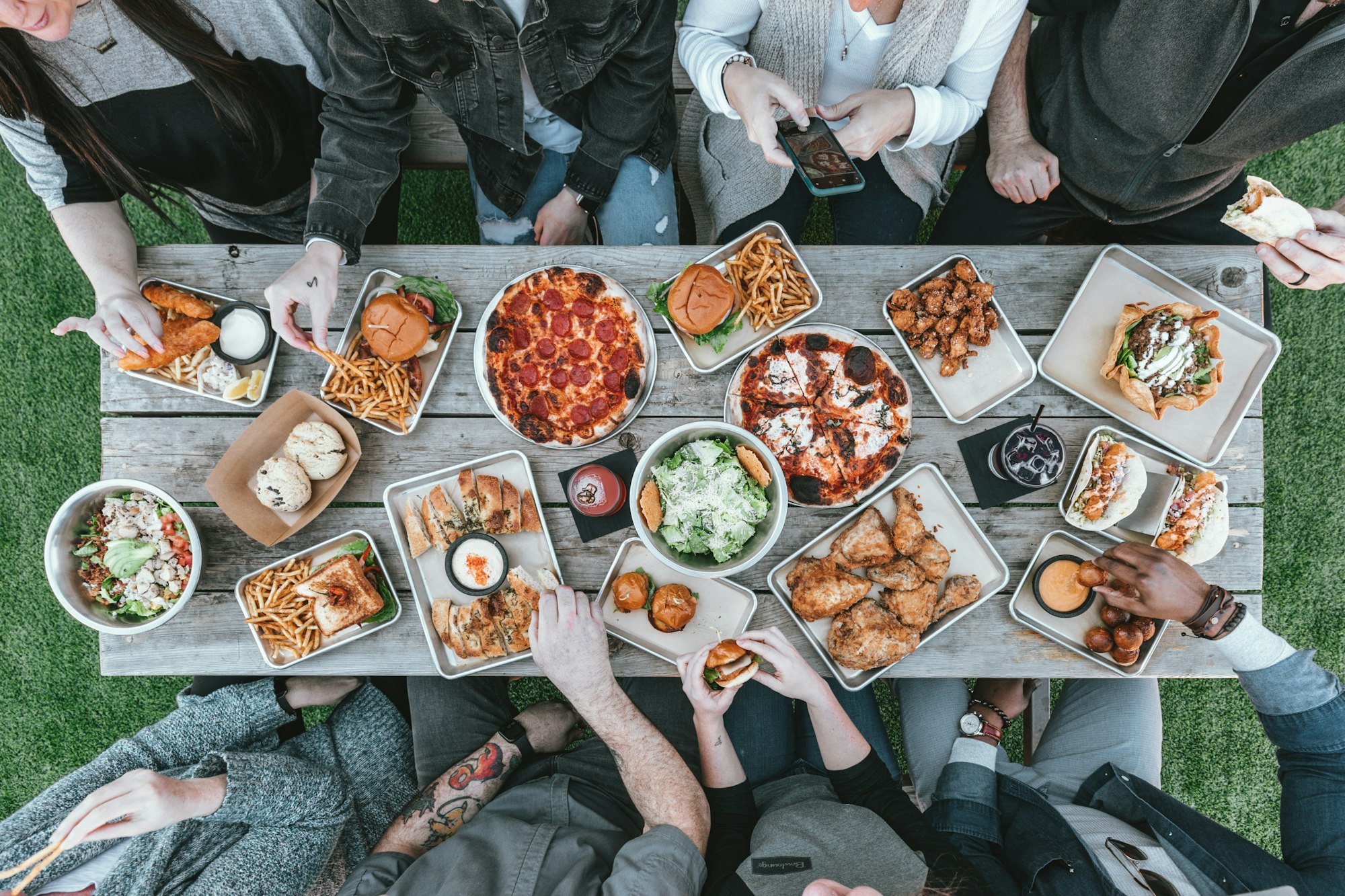
Every year around this time, I get some version of the same message from men on testosterone therapy. It usually arrives the Monday before Thanksgiving and goes something like this: "Doc, I've worked hard all year. I'm about to eat my body weight in brisket and pie, I'll probably miss a week at the gym, and my in-laws are staying through Sunday. Am I about to throw it all away?"
Short answer? No. Longer answer? It depends on a few things that have very little to do with the pie.
I'm Dr. Farhan Abdullah, an internal medicine physician and the medical director of Magnolia Functional Wellness in Southlake. I still work hospital shifts in Dallas, which means I've watched plenty of holiday weeks play out from both sides, the clinic and the ER. The men who come out of December in good shape aren't the ones who white-knuckle every meal. They're the ones who protect a handful of things that actually matter (sleep, a minimum amount of training, a sane relationship with alcohol, and their injection schedule) and let the rest go. That's what this article is about.
The Holiday Math Is Smaller Than You Think
Let's start with the fear, because it's usually inflated. You've probably heard that the average American gains five pounds or more between Thanksgiving and New Year's. It gets repeated every November like it's settled science.
It isn't. When researchers at the National Institutes of Health actually weighed people, the number was much smaller. In a prospective study of holiday weight gain published in the New England Journal of Medicine by Yanovski and colleagues, 195 adults were weighed before, during, and after the holiday season. The average gain over the holidays was about 0.37 kilograms, a little under a pound.
So why do I still care? Because of the second half of that study. The weight people gained over the holidays didn't come back off in the spring or summer. When the researchers followed up the next fall, it was still there. A pound a year doesn't sound like much until you're 52 and wondering where the last 20 came from.
That's the frame I want you to hold. Thanksgiving dinner isn't the problem. One big meal, even a ridiculous one, is a blip your body handles fine. The problem is when one big meal turns into five weeks of skipped workouts, short nights, a drink every evening, and "I'll restart in January." That's where men on TRT actually lose ground.
And here's the nuance specific to my TRT patients. Testosterone therapy works best as part of a system. It helps you build and keep muscle, but it does that in response to training, protein, and recovery. Take away the inputs for six weeks and the hormone doesn't have much to work with. The good news is that the inputs you need to keep are fewer than you'd expect.
What a Big Holiday Meal Actually Does on TRT
Let me walk through what I'm watching for clinically, because a few of these are specific to men on testosterone and rarely get mentioned.
Blood pressure and the salt load
Holiday food is salty. Ham, gravy, stuffing, casseroles, smoked meats, that tray of chips and queso parked in front of the Cowboys game. A big sodium load pulls water into your bloodstream, and in salt-sensitive men that shows up as a higher blood pressure reading for a day or two. If you already run borderline, or if your hematocrit is on the higher end, you may notice it more. I've had patients send me a home cuff reading the Friday after Thanksgiving in a mild panic. Usually it settles by Monday once the leftovers are gone. If it doesn't, that's worth a call.
Hematocrit and dehydration
This one surprises people. Testosterone stimulates red blood cell production, which is why we track hematocrit on every TRT patient. Hematocrit is a concentration, though. If you're dehydrated, from alcohol, travel, a long day of cooking, or just forgetting to drink water while you watch football, the same number of red cells sits in less plasma and the reading climbs. I've seen men get flagged for a "high" hematocrit that was really a hangover with a lab slip attached. That's one reason I don't love drawing TRT labs the Monday after a holiday weekend. More on timing below.
Body fat and estrogen, over weeks, not days
A single feast won't change your estradiol. But testosterone converts to estradiol largely in fat tissue, so a sustained gain in body fat over a long holiday stretch can nudge that conversion up. Men who already run high estradiol sometimes notice it first as water retention, puffiness, or a dip in libido by mid-January. Again, this is a five-week story, not a Thursday story.
Blood sugar
A plate of rolls, sweet potato casserole, and pecan pie will spike anyone's glucose. Men with low testosterone often carry some degree of insulin resistance, and TRT tends to help with that over time, but it doesn't make you immune to a 3,000-calorie afternoon. The simplest fix is old-fashioned: eat your protein and vegetables first, take a 15-minute walk after the meal, and the curve flattens noticeably.
Training Through the Holidays: The Minimum That Keeps Your Gains
Here's the question I get most: "If I can't train like I normally do, how much do I actually need to keep from going backwards?"
We have reasonably good data on this. In a study on exercise dosing to retain resistance training adaptations, published in Medicine and Science in Sports and Exercise by Bickel, Cross, and Bamman, 70 adults lifted three days a week for 16 weeks, then were randomized to stop entirely or to drop their training to one-third or one-ninth of the original dose for the next 32 weeks.
The younger group, ages 20 to 35, held onto their muscle size on both reduced doses. Some of them even kept growing on the one-third dose. The older group, ages 60 to 75, didn't hold their muscle fiber size as well on either reduced dose, which tells us that older muscle needs a stronger maintenance signal. One encouraging finding across both groups: strength was largely retained, even in the people who stopped lifting completely, with only a slight dip by the end.
What do I take from that for my patients, most of whom are in their 40s, 50s, and 60s?
- You don't need your full program to hold your ground for a few weeks. But the older you are, the less you should cut.
- Keep the heavy compound lifts and drop the accessories. A squat or leg press, a push, a pull, and a hinge. That's a complete session in 35 minutes.
- Two sessions a week through the holidays is a realistic floor for most men over 45. One is better than none.
- Keep the intensity, trim the volume. Fewer sets, still challenging weights.
And if you're traveling to a relative's house with no gym? A set of bands, push-ups, split squats, and a backpack loaded with books will get you through a long weekend. I'm not asking for a personal record. I'm asking you to send your muscles a reminder that you still need them.
One more thing. If you get an extra morning off, the folks running a Thanksgiving morning 5K have the right idea. Move in the morning, eat in the afternoon. Your glucose response, your mood, and your sleep that night all tend to be better for it.
The Two Things That Quietly Undo Your Progress: Alcohol and Sleep
If I could get men on TRT to focus on only two things between now and New Year's, it would be these. Not the pie. These.
Alcohol
Holiday drinking is cultural, social, and in a lot of families, kind of expected. I'm not going to tell you not to have a drink with your brother-in-law. But you should know what heavy drinking does to the work you've put in.
In a randomized crossover trial published in PLoS One by Parr and colleagues, physically active men did a hard training session and then drank a large amount of alcohol, roughly 12 standard drinks over the recovery period. Compared with protein alone, muscle protein synthesis dropped by about 24 percent even when the alcohol was paired with protein, and by about 37 percent when it was paired with carbohydrate instead.
That was a lot of alcohol, and it was a small study of eight men. I wouldn't extrapolate it to a single glass of wine with dinner. But the direction is clear, and it matches what I see in clinic: the men whose progress stalls over the holidays are rarely the ones who ate too much stuffing. They're the ones who turned every evening from Thanksgiving to New Year's into a three-drink night.
Alcohol also dehydrates you (hello again, hematocrit), raises blood pressure in a lot of men, and fragments sleep in the second half of the night. Which brings us to the bigger one.
Sleep
Holiday sleep is a mess. Late nights, early flights, a toddler in the guest room, an air mattress that deflates by 3 a.m. It feels harmless because it's temporary.
But look at what even one week does. In a study published in JAMA by Leproult and Van Cauter, ten healthy young men limited to five hours of sleep per night for one week saw their daytime testosterone levels fall by 10 to 15 percent. Those were men making their own testosterone, not men on TRT, so the mechanism isn't the same for my patients. Still, sleep loss affects far more than one hormone. It drives up appetite, worsens glucose control, blunts recovery from training, and makes you more likely to reach for a second drink and a third slice.
For men on TRT, poor sleep often shows up as "my testosterone isn't working anymore." The energy dips, the mood flattens, the gym feels harder. More often than not, the dose is fine and the sleep isn't. If you protect one thing this season, protect seven hours.
A Practical Holiday Game Plan on TRT
Here's the plan I actually give patients at Magnolia. None of it is complicated.
Keep your injection schedule. Put your dose days in your phone calendar before you leave town. If you're traveling, keep your medication in its pharmacy-labeled packaging in your carry-on with your supplies, not in checked luggage. If your schedule shifts by a day, that's usually not a big deal for most protocols, but don't skip a week and then double up to "catch up." Call us instead and we'll tell you what makes sense for your specific regimen.
Eat the meal. Then go for a walk. Protein and vegetables first, then whatever you actually want. A 15-minute walk after the big meal does more for your blood sugar than skipping dessert.
Hydrate like it's July in Texas. Water between drinks, water during the game, water before bed. Your hematocrit, your blood pressure, and your head the next morning will thank you.
Set a drink ceiling before you walk in. Decide your number ahead of time. Two is reasonable for most men. Deciding at 9 p.m. never works.
Lift twice a week, minimum. Short sessions, heavy compound lifts, done before the family wakes up if that's what it takes.
Don't schedule TRT labs right after a holiday weekend. If your follow-up bloodwork falls in late November or early January, give yourself several normal days of hydration and sleep first. A dehydrated, sleep-deprived Monday morning is a terrible baseline, and it can send us chasing numbers that aren't real.
Check your blood pressure at home. If you own a cuff, take a couple of readings the week after Thanksgiving. If it's running higher than your usual and isn't settling down, let us know.
That's it. No guilt, no punishment workouts on Black Friday, no juice cleanse.
The holidays are supposed to be enjoyed, and testosterone therapy is meant to give you more energy for the things that matter, including the people sitting around your table. If you're a man in the Southlake or greater DFW area wondering whether your levels or your current plan still fit your life, our team at Magnolia Functional Wellness can review your labs, your symptoms, and your goals with you. You can read more about how we approach testosterone replacement therapy in Southlake, or start with our guide on what men over 30 should know before starting TRT. In the meantime, enjoy the turkey. Then go for a walk.
Your Questions Answered
Led by trained medical professionals delivering safe, effective, and scientifically backed aesthetic and wellness treatments.
Should I move my testosterone injection if I'm traveling for the holidays?
Plan around it rather than skipping it. Put your dose days in your phone before you leave, and keep your medication in its pharmacy-labeled packaging in your carry-on. Shifting a dose by a day is usually fine for most protocols, but don't skip a week and double up later. If your travel dates make the schedule awkward, call us at Magnolia Functional Wellness in Southlake and we'll work out what fits your regimen.
Does drinking alcohol cancel out the benefits of TRT?
A drink or two won't undo your therapy, but regular heavy drinking works against it. Large amounts of alcohol blunt muscle repair after training, raise blood pressure in a lot of men, dehydrate you, and wreck the second half of your sleep. My advice is to pick your limit before the party starts and alternate every drink with water.
How much do I need to work out over the holidays to keep my muscle on TRT?
Less than you'd think, but probably more than nothing. Research on maintenance training shows a reduced dose can hold muscle for months in younger adults, while older adults need a bit more to keep the same size. For most of my patients over 45, two short sessions a week built around heavy compound lifts is a realistic floor until January.
Does testosterone therapy raise your blood pressure?
On average the effect is small, usually a couple of millimeters of mercury on 24-hour monitoring, and the TRAVERSE trial found no increase in major cardiac events. But averages hide people. Men who already have hypertension or diabetes tend to see larger increases, and a rising hematocrit is often the real driver. That's why we check blood pressure and hematocrit at every follow-up at Magnolia Functional Wellness in Southlake rather than just tracking your testosterone number.
Is walking enough to protect my muscle, or do I need to lift weights?
Walking is great for your heart, but it does very little to preserve muscle. You need actual resistance work, whether that's weights, bands, or your own body weight, a few times a week. We help patients start at whatever level fits them.
Need More Information?
Our team is ready to answer your specific questions and concerns.