
HRT and Marriage: Navigating Intimacy Through Menopause
Menopause doesn't happen to one person, it happens to a marriage. Dr. Farhan Abdullah explains how declining estrogen and testosterone quietly erode intimacy, what the evidence says about testosterone for desire and vaginal estrogen for painful sex, and where hormone therapy genuinely helps a relationship, and where it honestly can't.
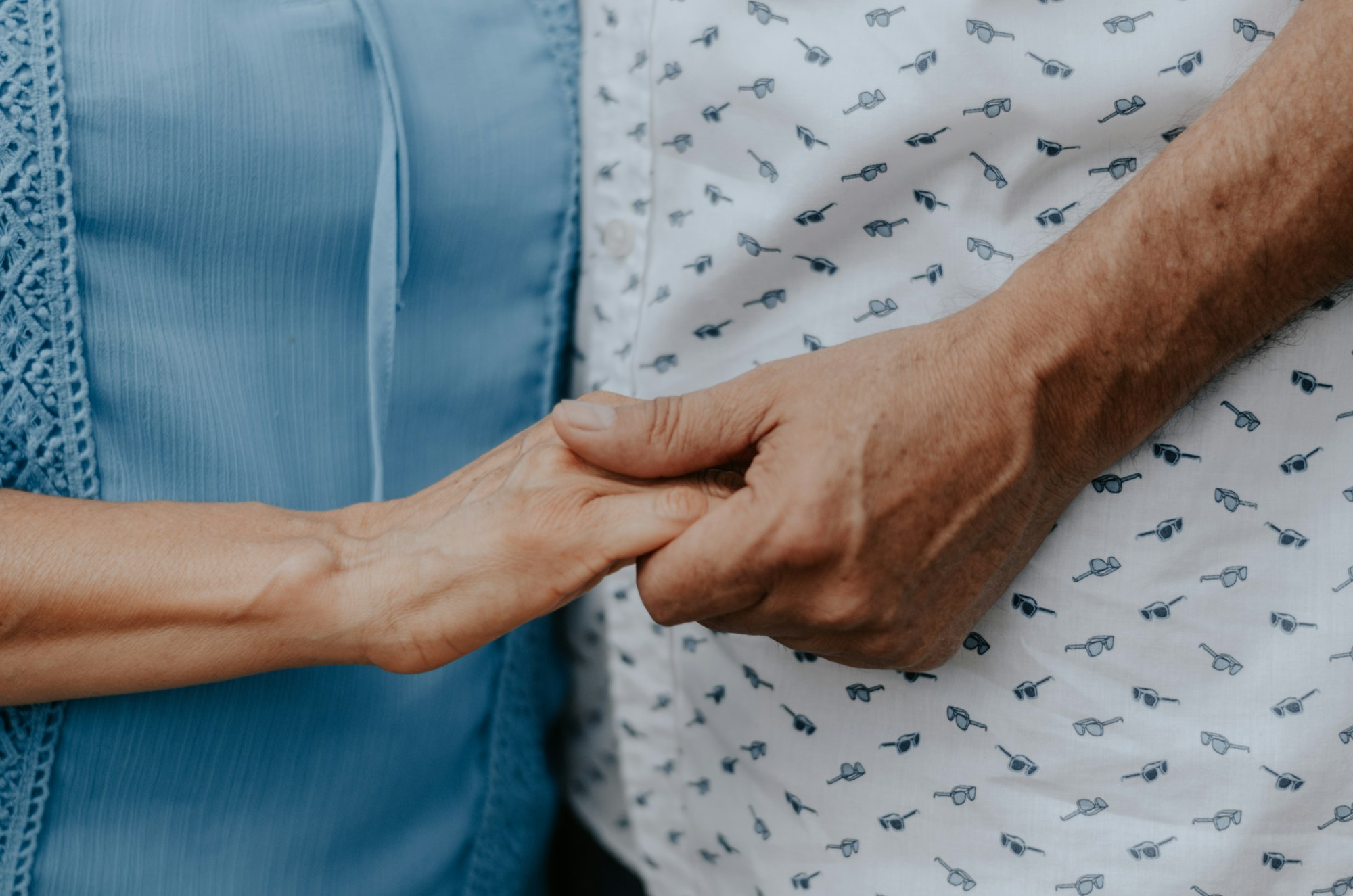


A husband called our front desk last spring, and it wasn't to book his own appointment. He wanted to know if we could help his wife. He didn't quite have the words for it. He said she felt like a stranger in her own body, that something warm had gone out of their marriage, and he genuinely couldn't tell whether the problem was him or something medical. I hear some version of that phone call more often than you'd guess. At Magnolia Functional Wellness in Southlake, a good number of my hormone consultations actually begin with a relationship, not a lab value.
Here's what I've learned in practice: menopause doesn't happen to one person. It happens to a household. We spend a lot of airtime on hot flashes and wrecked sleep, and those matter, but the quieter casualty is usually intimacy. Not just sex, though that too. The whole current of closeness that keeps two people feeling like a team. I'm Dr. Farhan Abdullah, and I want to talk plainly about what hormone therapy can do for a marriage in this stretch of life, and just as importantly, what it can't.
By Dr. Farhan Abdullah, DO | Medical Director, Magnolia Functional Wellness | Southlake, TX
What Actually Changes, and Why It Blindsides Couples
Estrogen and progesterone don't just regulate a menstrual cycle. They shape mood, sleep, body temperature, skin, and the tissue of the vagina and vulva itself. When they decline through perimenopause and into menopause, the effects land in a dozen places at once. A woman who used to fall asleep in ten minutes is now staring at the ceiling at 3am, drenched. She's irritable by Thursday because she hasn't slept well since Sunday. Sex feels like the last thing on the list, and when it does happen, it might hurt.
Now picture her partner, who often has no idea any of this is hormonal. He notices she pulls away. He notices she snaps. He may quietly conclude she's lost interest in him, and he starts pulling back too, out of self-protection. Two people who love each other end up in parallel loneliness, both convinced the other one changed first. I've sat across from couples who were three conversations away from separating, and the actual root cause was a hormone panel nobody had ordered.
What I tell my patients, and their partners when they come along, is that naming the mechanism takes the blame out of the room. This isn't a referendum on the marriage. It's endocrinology. That reframe alone changes how people talk to each other, and it happens before we've prescribed a single thing.
The Timing Is Cruel, and It Matters
Here's a piece couples rarely account for. Perimenopause, the years of hormonal turbulence leading up to the final period, usually arrives somewhere in the mid-forties. That's often the single most demanding season of a marriage. Careers are peaking. Kids are teenagers, or heading off to college, or both at different ages. Aging parents are starting to need help. Around Southlake I see it constantly, the couple running in opposite directions between work, a kid's select soccer schedule at Bob Jones Park, and a parent's cardiology appointment two towns over.
So the hormonal shift doesn't land on a rested, connected couple with time on their hands. It lands on two people already stretched thin, and it removes exactly the reserves they'd need to weather it. The sleep goes first, and sleep debt makes everything harder to regulate, patience, mood, desire, all of it. Then the physical symptoms stack on top. It's not that these couples are weak. It's that the timing is genuinely brutal, and almost nobody warned them it was coming.
I bring this up because context changes how people treat each other. When a husband understands that his wife isn't choosing to be distant, that her body is running an involuntary program at the worst possible moment, he stops taking it personally. And when a woman understands that what she's feeling is expected and treatable, she stops blaming herself for failing at something. Neither of those shifts requires a prescription. They just require someone to explain what's actually happening, which is a lot of what I do in that first visit.
The Desire Question, and Where Testosterone Fits
Low desire is the symptom women are most reluctant to bring up, and the one that quietly does the most damage. Estrogen replacement helps a lot of the surrounding problems, sleep, mood, vaginal comfort, and desire often improves just from feeling human again. But for some women, desire itself stays flat even after everything else is dialed in. That's where testosterone enters the conversation, and yes, women make and need testosterone too.
The evidence here is better than most people realize. A 2019 systematic review and meta-analysis published in The Lancet Diabetes and Endocrinology by Islam and colleagues, pooling randomized controlled trial data, found that testosterone therapy significantly improved sexual desire, arousal, orgasm, and satisfaction in postmenopausal women, along with a reduction in the distress that low desire causes. An earlier meta-analysis by Achilli and colleagues in Fertility and Sterility in 2017 looked specifically at transdermal testosterone in postmenopausal women with hypoactive sexual desire disorder and reached the same conclusion: more satisfying sexual episodes, more desire, and no signal for serious harm over the study periods. You can read the Islam meta-analysis here and the Achilli review here.
I want to be careful, because this is exactly where wellness marketing tends to overpromise. Testosterone for women is prescribed off-label, dosed low, and monitored. The side effects that show up in the data are androgenic ones, acne and some extra hair growth, not the dramatic stuff people fear. It isn't a libido switch you flip. It's one tool, used selectively, in women whose distress and labs both point the same direction. In my practice I don't reach for it first, and I don't reach for it for everyone.
Painful Sex Is a Medical Problem, Not a Character Flaw
If desire is the symptom women won't mention, pain is the one they'll endure in silence for years. Genitourinary syndrome of menopause is the clinical name for what happens when estrogen leaves vaginal and vulvar tissue: dryness, thinning, burning, and dyspareunia, which is the medical word for sex that hurts. Unlike hot flashes, this one doesn't fade with time. Left alone, it usually gets worse. And it quietly teaches a couple to stop trying, because who keeps volunteering for something that hurts?
The good news is that this is one of the most treatable problems in all of menopause medicine. A 2024 systematic review in the Annals of Internal Medicine by Danan and colleagues evaluated 46 randomized controlled trials and concluded that vaginal estrogen improves dryness, painful sex, and overall treatment satisfaction, with vaginal DHEA showing benefit as well. You can find that review here. Low-dose vaginal estrogen delivers the hormone right where it's needed, with minimal absorption into the rest of the body, which is why it's often appropriate even for women who can't or don't want to take systemic hormones.
I mention this to nearly every menopausal patient, whether or not they raise it, because so many assume painful sex is just the new normal and something they have to accept. It isn't. When we fix the physical pain, the emotional guarding that built up around it starts to relax too, and that's often where couples feel the biggest shift.
Hormones Help. They Are Not a Marriage Counselor.
Now the honest part. I've seen hormone therapy give a woman her sleep, her energy, her comfort, and her desire back, and I've watched marriages come back to life alongside it. I've also seen couples where the hormones worked beautifully and the relationship still needed real work that no prescription touches. Resentment that built up over years doesn't dissolve because estrogen is back in range. If the closeness left the marriage long before menopause did, hormones will not manufacture it.
What hormone therapy does is clear the physiological static so the actual relationship becomes visible again. Sometimes what's underneath is a strong marriage that just got buried under symptoms, and treatment is enough. Sometimes what's underneath needs a good couples therapist, and I'll say so directly. Connection is built through attention, touch, and time, and there's decent physiology behind that too. Oxytocin, the bonding hormone released through affectionate touch and closeness, is real, and we sometimes discuss its clinical uses in our practice, but no molecule substitutes for two people choosing to turn toward each other. If you want to understand the oxytocin piece, we cover it on our oxytocin service page.
The couples who do best are the ones who treat this as a shared project. She gets evaluated and treated. He learns what's actually happening in her body so he stops reading it as rejection. They talk about it out loud, which most couples have never once done. That combination, good medicine plus honest conversation, is where I see marriages genuinely turn around.
Where to Start if This Sounds Familiar
If you recognized your own marriage somewhere in this, the first step isn't dramatic. It's a proper evaluation: a real history, a symptom review, and a hormone panel that looks at estrogen, progesterone, and testosterone rather than a single number. From there we build a plan that fits the woman in front of me, not a template. That might be systemic hormone therapy, local vaginal treatment, carefully considered testosterone, or some combination, always with monitoring and always with a frank conversation about expectations. If you want the fuller picture of how we approach this, our women's hormone replacement therapy page lays it out.
Menopause is going to reshape a marriage one way or another. The question is whether it does that with a couple flying blind, or with two people who understand what's happening and have real tools to work with. At Magnolia Functional Wellness here in Southlake, I'd rather it be the second kind. The warmth that husband was describing on the phone last spring, the thing he thought was gone for good? His wife started treatment. A few months later he called back, and this time it was to say thank you.
Your Questions Answered
Led by trained medical professionals delivering safe, effective, and scientifically backed aesthetic and wellness treatments.
Will HRT bring my wife's sex drive back?
Often yes, but the protocol matters. Estrogen alone can help with lubrication and pain, which makes sex more comfortable. For desire itself, testosterone is usually the bigger lever, and the strongest data supports transdermal testosterone in postmenopausal women. At Magnolia Functional Wellness in Southlake, we typically see libido improve in the three- to six-month range, not in the first few weeks. If we're three months in and nothing's shifted, that's a signal to adjust the protocol.
How soon after starting HRT will my partner feel like herself again?
There's a typical progression I walk couples through at Magnolia. Sleep usually improves in the first two to three weeks. Mood and emotional reactivity start to even out by month one or two. Energy, cognitive clarity, and joint comfort tend to settle around months two to three. Libido and body composition are usually the last to shift, often three to six months in. If she doesn't feel meaningfully better by six months, something in the protocol needs to change.
Do women really need testosterone, or is that just a men's hormone?
Women absolutely make and need testosterone. It's actually the most abundant active sex hormone in a woman's body for much of her life, and it influences libido, energy, mood, and muscle. Levels fade with age, and for some women restoring them makes a real difference. At Magnolia Functional Wellness in Southlake, we check it as part of a full hormone evaluation, not as an afterthought.
Can I do BHRT if I'm still having periods?
Yes. Perimenopause often begins years before cycles stop, with significant hormonal fluctuation and real symptoms. You don't have to be postmenopausal to benefit from evaluation and targeted support.
Need More Information?
Our team is ready to answer your specific questions and concerns.