
IM vs. SubQ Testosterone: Which Injection Method Actually Hurts Less?
For decades, testosterone injections meant a long needle and a bullseye on your glute. That's no longer the default. Dr. Farhan Abdullah breaks down what the research actually says about IM vs. subcutaneous TRT, which route hurts less, and why SubQ is now the go-to at Magnolia Functional Wellness in Southlake.


By Dr. Farhan Abdullah, DO | Medical Director, Magnolia Functional Wellness | Southlake, TX
Here's a scene I've watched play out hundreds of times. A new patient sits in my office, nervous, having just decided to start testosterone replacement therapy. Then comes the question that's been looping in his head the whole drive over: "How bad is the shot going to hurt?" For years, the answer involved a pretty intimidating needle and a bullseye drawn somewhere on the upper outer glute. That's how TRT was done. That's what he's picturing.
But the injection landscape has shifted, and it's shifted in a way that most guys never hear about unless they're already plugged into the TRT world. At Magnolia Functional Wellness in Southlake, the default injection method I use with most men isn't intramuscular anymore. It's subcutaneous. And if you've been avoiding TRT because you hate needles, this is the part of the conversation that tends to change minds.
Let's get into the actual data behind which route hurts less, works better, and fits a real life.
The Old Standard: Why IM Became the Default
Intramuscular injection, or IM, was the original path for testosterone cypionate and enanthate. The logic made sense at the time. You inject into a deep, highly vascular muscle, usually the glute, quad, or deltoid, and the oil-based testosterone slowly releases into circulation over several days. Clinicians were trained to think of muscle tissue as the reliable depot. That's the way it was done in the 1970s and 80s, and by the time most of today's prescribing guidelines were written, IM was simply "how you do it."
The problem? The needles are long. We're talking 1 to 1.5 inches, 22 to 23 gauge typically, with a draw-up needle that's even bigger. You're pushing through skin, fat, and fascia to hit muscle belly. If you're lean, that's not terrible. If you've got some fat over the injection site, that needle still has to go all the way through. In my practice, I've had 6'2", 230-pound guys confess they'd skipped a week of injections because they "just couldn't face the needle." That's not a dose problem. That's a delivery problem.
IM also came with something called the "roller coaster." Weekly injections produced a predictable surge, then a slow drop, then another surge. Patients reported feeling dialed in a few days after the shot and then flat by day six or seven. Splitting the dose helped, but you were still going in with a hefty needle twice a week.
Enter Subcutaneous: What Actually Changed
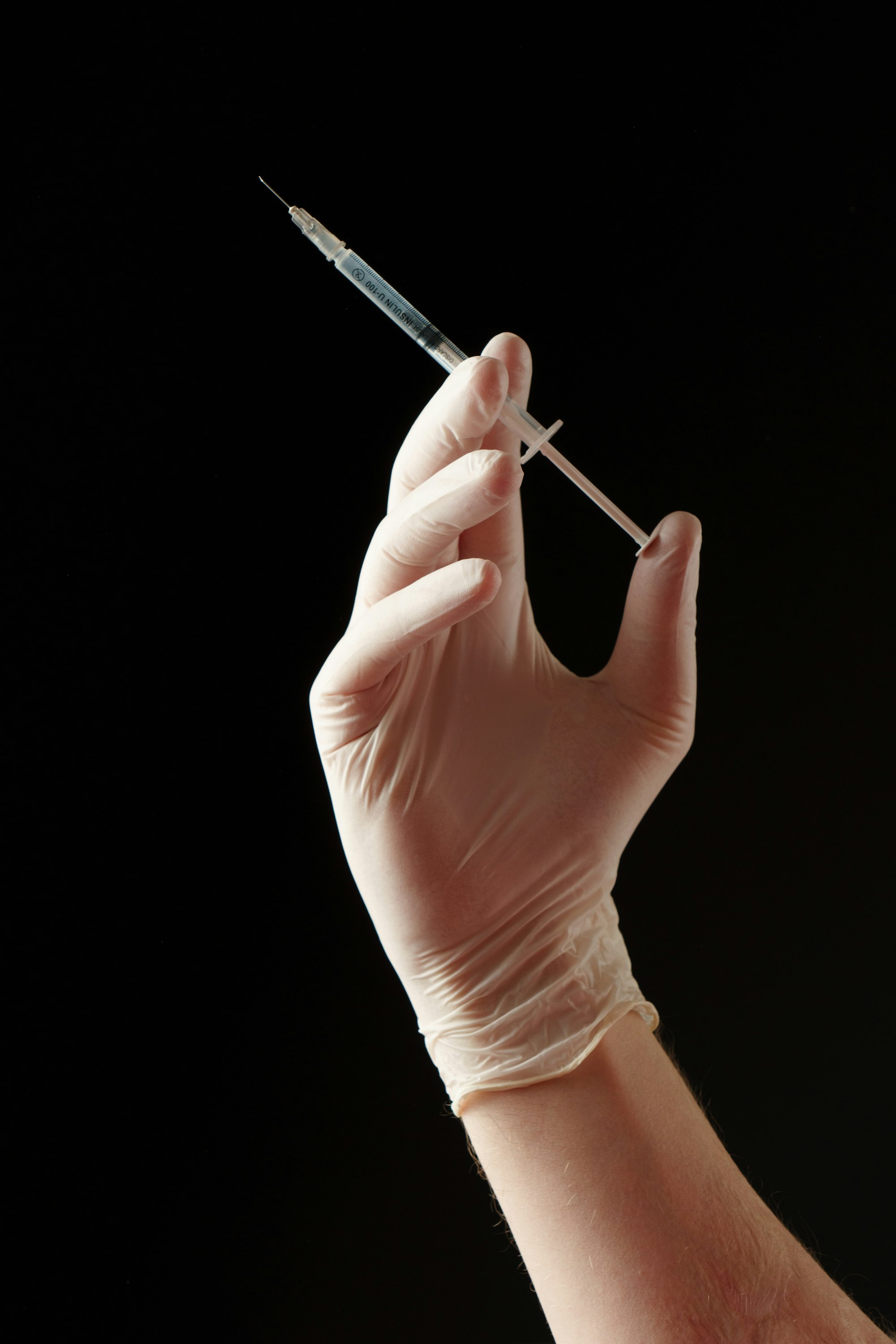
Subcutaneous injection, or SubQ, means delivering the testosterone into the fat layer just under the skin rather than into muscle. The needle is short: typically 5/8 inch, 25 to 27 gauge. It's the same kind of needle diabetics use for insulin. Almost everyone who injects SubQ for the first time says something like, "Wait. That's it?"
For a long time, we assumed IM was pharmacologically superior. Muscle is vascular, fat is relatively avascular, so surely the muscle would deliver the hormone more reliably. Turns out that assumption was wrong. Oil-based testosterone forms a depot in subcutaneous tissue just fine. The fat pad slowly releases the hormone into circulation the same way muscle does, just with a gentler pharmacokinetic profile.
A 2022 systematic review by Figueiredo and colleagues in the Journal of Clinical Endocrinology and Metabolism (PMID 34698352) looked at the body of evidence on SubQ testosterone and concluded that subcutaneous administration produces comparable pharmacokinetics and comparable mean serum testosterone levels to the IM route, while being easier to self-administer. That's a big statement from a major endocrinology journal. It essentially says the old dogma was wrong.
When the data shifts, practice should shift. And it has.
Head to Head on Pain: What the Studies Show
Now to the question you actually came here for. Which one hurts less?
The most direct answer comes from a pilot study by Wilson, Kiang, and Ensom published in the American Journal of Health-System Pharmacists in 2018 (PMID 29367424). Participants received both IM and SubQ testosterone in a crossover design and rated pre-injection anxiety, pain during the injection, and post-injection pain on standardized scales. SubQ won on every single measure. Lower anxiety going in, less pain during the shot, less soreness afterward. Total testosterone exposure was equivalent between the two routes.
Spratt and colleagues ran a similar study published in the Journal of Clinical Endocrinology and Metabolism in 2017 (PMID 28379417). Twenty-two patients who had been on IM testosterone were switched to SubQ. At the end of the study, every single one of them preferred SubQ. Not most of them. All of them. Two had a mild preference, twenty had a marked preference. None wanted to go back to IM.
Why the consistent pain difference? A few reasons. Shorter needle, so less tissue trauma. Smaller gauge, so a narrower puncture channel. The injection goes into fat, which has fewer pain fibers per square centimeter than muscle does. And the volume is typically smaller because SubQ lends itself to more frequent, lower-dose injections. A 0.2 mL shot into fat just feels different than a 0.5 or 1 mL shot into glute muscle.
One of my patients, a former Marine who had been self-injecting IM for four years, switched to SubQ last fall. He texted me that first week: "Doc, I can't believe I was doing it the other way. This is nothing." That reaction is typical, not exceptional.
Beyond Pain: The Metabolic Advantages of SubQ
Pain is what gets people in the door, but there's more to the story. The delivery route actually affects downstream hormone behavior in ways that matter.
Choi and colleagues published a comparison in the Journal of Urology in 2022 (PMID 34694927) that looked at hypogonadal men on IM testosterone cypionate versus SubQ testosterone enanthate via autoinjector. Both groups achieved therapeutic testosterone levels. But the SubQ group had lower post-therapy estradiol (E2) and lower hematocrit at equivalent testosterone levels. Translation: fewer estrogen-related side effects like bloating, moodiness, and nipple sensitivity, and less blood thickening.
The hematocrit point is big. Elevated hematocrit, meaning the percentage of your blood that's red blood cells, is one of the most common reasons a patient gets pulled off TRT. Too high, and you're at risk for clots, strokes, and heart events. Lots of guys on IM end up donating blood every few months just to keep their numbers in range. SubQ seems to blunt that rise because the hormone enters circulation more steadily. You get less peak-and-trough behavior, which means less of the hematocrit spike that drives polycythemia.
Less estrogen spike means many of my patients need lower doses, or sometimes no dose, of anastrozole. I'm a big believer in not using medication you don't need. Every prescription carries a cost, both literal and physiological, and if changing a delivery route lets you drop a medication, that's a win.
The Lifestyle Math: Why SubQ Fits Real Life
Then there's the practical piece. Weekly IM injections are a production. You need a 3 mL syringe, a draw-up needle, an injection needle, a cleanup process, and a quiet room where you can get your pants down and inject into your glute without your kid walking in. I've had patients in DFW tell me they scheduled their shot for Sunday afternoons during the Cowboys game because that's the only time the house was calm enough to deal with it.
SubQ protocols at Magnolia are typically two to three small injections per week, sometimes daily for guys who really want smooth levels. The injection itself takes maybe 30 seconds. You can do it into the belly fat or thigh fat. It fits into the morning routine the same way brushing your teeth does. No pants coming off, no bullseye, no post-shot limp.
For busy dads, hospitalists like me who work long shifts, or guys juggling a career and three kids at Carroll ISD soccer games, that simplicity is the difference between staying on protocol and drifting off of it. And TRT only works if you actually do it consistently.
When IM Still Makes Sense
I want to be fair here. IM isn't the wrong answer for everyone. Some patients respond better to the peak-and-trough pattern of weekly IM dosing. A minority prefer the feeling of a big testosterone pulse a few days after injection. Some guys have body-fat distribution that makes SubQ tricky, although this is rare.
Patients who have been on IM for years and are feeling great don't need to switch. The old adage applies: if it isn't broken, don't fix it. I see this mostly in men who started TRT in their 30s or early 40s, tolerate weekly IM well, have stable labs, and have built a routine around it. If that's you, carry on.
My default recommendation for new patients, though, is SubQ. Lower barrier to entry, better tolerability, smoother hormone profile, and fewer downstream side effects. It's the cleaner protocol.
What This Looks Like in My Practice
At Magnolia Functional Wellness, when a patient starts TRT, we go through injection technique together. I want you to watch me draw it up. I want you to do the first shot with me standing right there. We practice the pinch, the angle, the plunger speed. It's not complicated. It's just new, and new things feel harder than they are.
After a month, almost nobody is anxious about injections anymore. They've integrated it. They're focused on what they came for in the first place, which is getting their energy, their drive, their focus, and their sense of themselves back. The delivery method is just plumbing. The outcome is the actual goal.
If you're in the Dallas-Fort Worth area and you've been putting off TRT because you've heard horror stories about the shots, that's an outdated reason. The evidence is clear: subcutaneous testosterone is comparable in efficacy, superior in tolerability, and gentler on your physiology than the intramuscular injections your dad's doctor might have done. We've updated the protocol. The research caught up. Your experience should catch up too.
Your injection routine shouldn't be the thing standing between you and optimized hormones. It really shouldn't. And if it has been, it's worth a conversation.
Your Questions Answered
Led by trained medical professionals delivering safe, effective, and scientifically backed aesthetic and wellness treatments.
Do Hormone Injections Hurt?
Not usually. We use very fine gauge needles (similar to insulin needles) that go into the fatty tissue or muscle. Most patients report feeling nothing more than a tiny pinch.
Which is better: testosterone injections or creams?
It depends on your lifestyle and physiology. Injections are often preferred for ensuring 100% absorption and consistent blood levels. Creams are painless and easy to apply but require daily discipline and care to avoid transferring to others. At Magnolia, we strongly recommend injections for best results but we will help you choose the method that fits your life best.
What should I expect during Hormone Replacement Injections treatment?
During your hormone replacement injections consultation and treatment at Magnolia Functional Wellness, you can expect a thorough assessment, personalized treatment plan, and physician-supervised care in a calm, clinical environment. Our team will guide you through each step and ensure you're comfortable throughout the process. Treatment duration and frequency will be discussed during your initial consultation based on your specific needs and goals.
What is Hormone Replacement Injections and how does it work?
Hormone Replacement Injections at Magnolia Functional Wellness is precision-dosed injectable hrt tailored to your physiology.. This treatment works by [specific mechanism based on service type]. Our physician-supervised protocols ensure safe, effective delivery of this hormone optimization treatment, tailored to your unique needs and goals. During your consultation, our medical team will explain the specific mechanisms and expected outcomes for your personalized treatment plan.
Is subcutaneous testosterone really as effective as intramuscular?
Yes. The published data consistently shows that SubQ testosterone produces comparable serum testosterone levels and pharmacokinetics to IM injections. In my practice at Magnolia Functional Wellness in Southlake, most new TRT patients start on SubQ because it's just as effective, hurts less, and tends to produce less estrogen and hematocrit spike. It's the cleaner protocol for most guys.
Need More Information?
Our team is ready to answer your specific questions and concerns.