
Is BMI a Scam? Better Ways to Measure Health
BMI was built to study populations, not to judge one person in an exam room. Dr. Abdullah explains where it misleads, what the 2025 clinical obesity commission changed, and which simple measurements tell you more, starting with a tape measure.


By Dr. Farhan Abdullah, DO | Medical Director, Magnolia Functional Wellness | Southlake, TX
Picture a former college linebacker who still lifts four days a week. He's 6'1", about 235 pounds, with a waist under 34 inches and a resting heart rate in the low 50s. His insurance wellness portal flags him as "obese" and nudges him toward a weight management class. He'd laugh, and so would I. But the same number that mislabels him routinely under-flags other people I see in my Southlake clinic, and those are the patients who worry me.
So, is BMI a scam? The short answer is no. It's a screening tool that got promoted to a verdict, and the gap between those two jobs matters more than most people realize.
Where the number came from
Body mass index is just your weight divided by your height squared. That's the whole formula. It traces back to a Belgian mathematician, Adolphe Quetelet, who in the 1800s was studying the statistical "average man," not diagnosing disease in individual patients. A physiologist named Ancel Keys gave it the name we use today in the 1970s, after noticing it tracked reasonably well with body fatness across big populations.
Notice the phrase "across big populations." That's where BMI shines. If you want to compare the health of two cities, or follow a country's weight trends over thirty years, a cheap number you can calculate from a clipboard is wonderful. It's fast, free, and consistent.
The trouble starts when we take a tool built for crowds and point it at one person sitting in an exam room. BMI can't see where your weight lives. It can't tell muscle from fat, or the fat under your skin from the fat packed around your liver and intestines. And that last distinction, as it turns out, is the one that predicts a lot of the trouble.
What the research says about its accuracy
One of the more cited analyses on this question came from a Mayo Clinic group. In a study of more than 13,000 adults from the national NHANES survey, Romero-Corral and colleagues, publishing in the International Journal of Obesity in 2008, compared BMI against body fat percentage. A BMI of 30 or higher was very specific. If you crossed that line, you almost certainly did carry excess body fat. But the sensitivity was poor: only about 36 percent of men and 49 percent of women who had excess body fat by percentage criteria were picked up by a BMI of 30 or more. In plain English, BMI missed a lot of people who had too much fat.
The same paper found the accuracy got worse with age. That fits what I see in clinic. A 62-year-old woman can hold a "normal" BMI of 24 while having lost muscle and gained fat in the middle, and her number never budges. We sometimes call that normal-weight obesity, or the "skinny fat" pattern, and a scale or a BMI chart is the worst possible way to catch it.
So BMI fails in both directions. It scolds the linebacker, whose weight is mostly lean tissue, and it reassures the person whose weight is mostly the wrong kind of fat. Neither error helps anybody make a good decision.
The 2025 shift in how experts define obesity
Plenty of experts have said the same thing, and it's gone well past grumbling from a Dallas-Fort Worth exam room. In 2025 a Lancet Diabetes and Endocrinology Commission led by Francesco Rubino and a panel of 58 experts published a consensus on the definition and diagnostic criteria of clinical obesity. The commission's starting point was blunt: BMI-based measures can both underestimate and overestimate body fat, and they tell you little about an individual's health.
Their answer was to separate two ideas that we've blurred together for decades. Having excess body fat is one thing. Having that excess fat actually impair how your organs and tissues work is another. The commission proposed treating the second situation as a disease in its own right, "clinical obesity," and described confirming excess fat with direct measurement or with body-shape measures such as waist circumference, rather than leaning on BMI by itself.
I like this framing because it matches how I was trained to think about every other chronic condition. We don't diagnose hypertension by guessing from someone's build. We measure the blood pressure, and then we ask what it's doing to the heart and kidneys. Obesity deserves the same discipline: measure the thing, then ask about the function.
The cheap upgrade: grab a tape measure
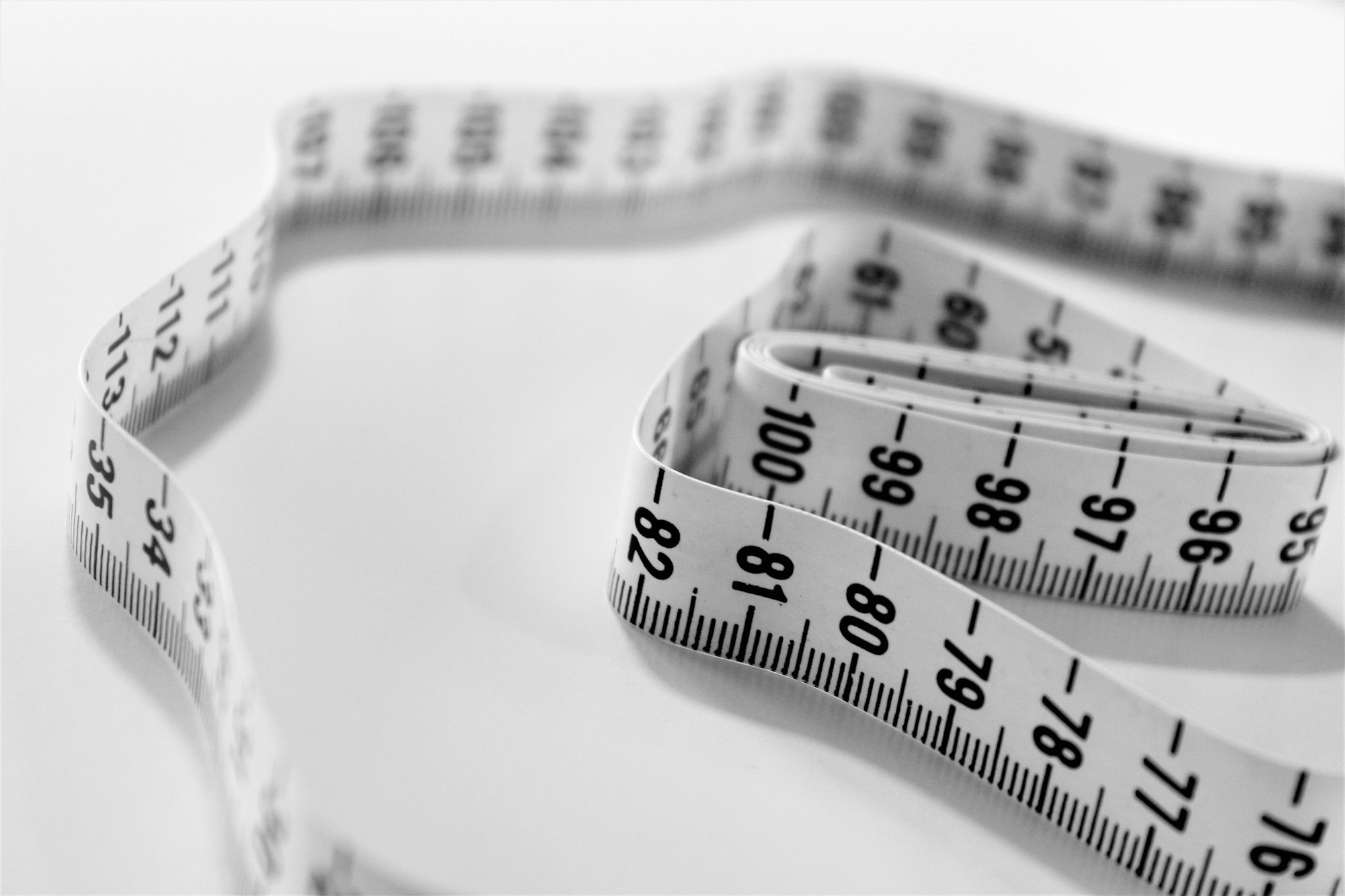
If I could change one habit in primary care, it would be getting a tape measure into every exam room next to the blood pressure cuff. A 2020 consensus statement from the International Atherosclerosis Society and the International Chair on Cardiometabolic Risk, led by Robert Ross, argued exactly that. The authors noted that decades of evidence show waist circumference gives independent and additive information beyond BMI for predicting illness and death, and yet most clinics still don't measure it. They made the case for treating it as a vital sign.
Why does the waist matter so much? Fat stored deep in the abdomen, around the organs, behaves differently than fat on the hips or thighs. It's more metabolically active and more closely tied to insulin resistance, fatty liver, and cardiovascular risk. Your waist is a rough proxy for that hidden fat, and you can check it at home in thirty seconds.
A simple version: measure around your midsection at the level of your belly button, relaxed, after a normal exhale. Then divide that number by your height, in the same units. Many clinicians use a ratio under about 0.5 as a reasonable rule of thumb, meaning your waist is less than half your height. It's not a diagnosis, and it works less well for some body types, but it's a far better conversation starter than BMI alone. Our hypothetical linebacker would land well under 0.5.
Who gets misled the most
Some groups get shortchanged by BMI more than others. Muscular athletes and people who strength train seriously get overcalled, because dense lean tissue weighs a lot. Older adults get undercalled, because muscle thins out with age (clinicians call that sarcopenia) while fat quietly takes its place. Women moving through menopause often live in that second group. Their weight may barely change across a decade while their body shape and insulin sensitivity change a great deal.
Think about the Texas heat for a second. A lot of my patients here keep their activity up through the summer by walking early or hitting the gym at dawn, then back off in the fall without noticing. Their BMI stays within a point or two all year. Their waist, their grip strength, and their fasting glucose tell the actual story of whether they're gaining ground or losing it.
What we actually look at in my practice
At Magnolia Functional Wellness, nobody gets sorted by BMI and sent on their way. Weight and BMI still go in the chart, because they're quick and they give us a baseline to compare against later. But they're the opening bid, not the final answer. Here's what else we pull in:
- Waist circumference and waist-to-height ratio, measured the same way each visit
- Body composition, so we can see fat mass and lean mass separately
- Blood pressure and resting heart rate
- Labs: fasting glucose and insulin, A1c, a lipid panel, liver enzymes, and thyroid markers when they're relevant
- How you feel and function: energy, sleep, strength, how your knees handle the stairs
That last item gets overlooked. Someone can have a "good" BMI and labs sliding toward prediabetes, or a "bad" BMI with spotless metabolic health. Neither is destiny, but both are information that a single number would've hidden.
This matters for people considering medical weight loss, too. If you're working with a physician on a plan, whether it's nutrition, strength training, or a prescription option, you want progress measured by things that reflect real health. A scale that drops five pounds because you lost muscle is a loss. Our guide to physician-supervised GLP-1 weight loss in DFW walks through how we monitor patients beyond the scale, and you can browse the rest of our weight loss services if you want the bigger picture.
A quick plan you can use this week
You don't need a lab or an appointment to start. Write down your height and weight, then measure your waist at the belly button first thing in the morning and divide by your height. Do it once a month, same time, same spot on the body, same tape. Add a basic strength check, like how many chair stands you can do in thirty seconds or how long you can hold a plank, and keep your last set of blood work handy, especially fasting glucose, A1c, and triglycerides.
Trends matter more than any single reading. A waist that's shrinking while your weight holds steady usually means you're swapping fat for muscle, which is the direction you want. A waist that's creeping up while the scale sits still deserves a conversation with your physician sooner rather than later.
So should you ignore BMI?
Throwing it out entirely would be a mistake. A very high BMI, say 35 or above, nearly always signals real excess fat, and it's worth taking seriously. A very low BMI deserves attention too. At the extremes, BMI is useful.
It's the broad middle where it misleads, and that's where most of us live. If your BMI says "overweight" but you lift, walk, sleep well, and carry your weight in your hips and legs, a number on a chart shouldn't make you panic. If your BMI says "normal" but your waist keeps growing, your strength is fading, and your fasting glucose has crept up two years in a row, please don't let that number talk you out of a closer look.
What I tell my patients is this: use BMI as the smoke detector, not the fire investigation. When it goes off, you check the room. When it stays quiet, you still look around if something smells odd.
If you've been boxed in by a number that never quite described you, bring it to someone who'll measure the rest of the picture. Here in Southlake, that's the conversation we have every day at Magnolia Functional Wellness, and it usually starts with a tape measure and a few good questions.
Your Questions Answered
Led by trained medical professionals delivering safe, effective, and scientifically backed aesthetic and wellness treatments.
Is BMI a reliable way to know if I'm at a healthy weight?
It's a useful screening number, but it can't tell muscle from fat or show where your fat is stored. In a large national sample, a BMI of 30 or higher missed more than half of the people who actually carried excess body fat. At Magnolia Functional Wellness in Southlake, I pair BMI with waist measurements, body composition, and labs.
What's a better measurement than BMI for belly fat?
Start with your waist circumference, and divide it by your height. Many clinicians use a ratio under about 0.5 as a rule of thumb, though it's a screen and not a diagnosis. We measure it at every visit at Magnolia in Southlake, because it tracks metabolic risk in ways the scale can't.
Why is the scale barely moving but my clothes don't fit anymore?
Because the scale can't tell you what you're made of. During the menopause transition, fat gain roughly doubles while lean muscle mass declines, and those two changes partly cancel each other out on the scale. Your body shape, metabolic rate, and insulin sensitivity all shift even when the number stays similar. At Magnolia Functional Wellness in Southlake, we measure body composition instead of relying on weight alone.
Who is most at risk of losing too much muscle during weight loss?
Older adults, women after menopause, and anyone whose weight drops very fast are the groups I watch most closely. For them, resistance training and protein move from optional to essential, and we build that in from day one at our Southlake clinic.
Need More Information?
Our team is ready to answer your specific questions and concerns.