
IT Band Syndrome: SoftWave for the Runner's Nemesis
Lateral knee pain that shows up at mile two and vanishes the moment you stop is one of running's most predictable injuries, and one of the most badly explained. Dr. Farhan Abdullah walks through why IT band syndrome is a compression problem rather than a friction one, why foam rolling underperforms, what the evidence actually supports, and where SoftWave shockwave therapy fits into a real plan. Honest musculoskeletal medicine from Magnolia Functional Wellness in Southlake, TX.
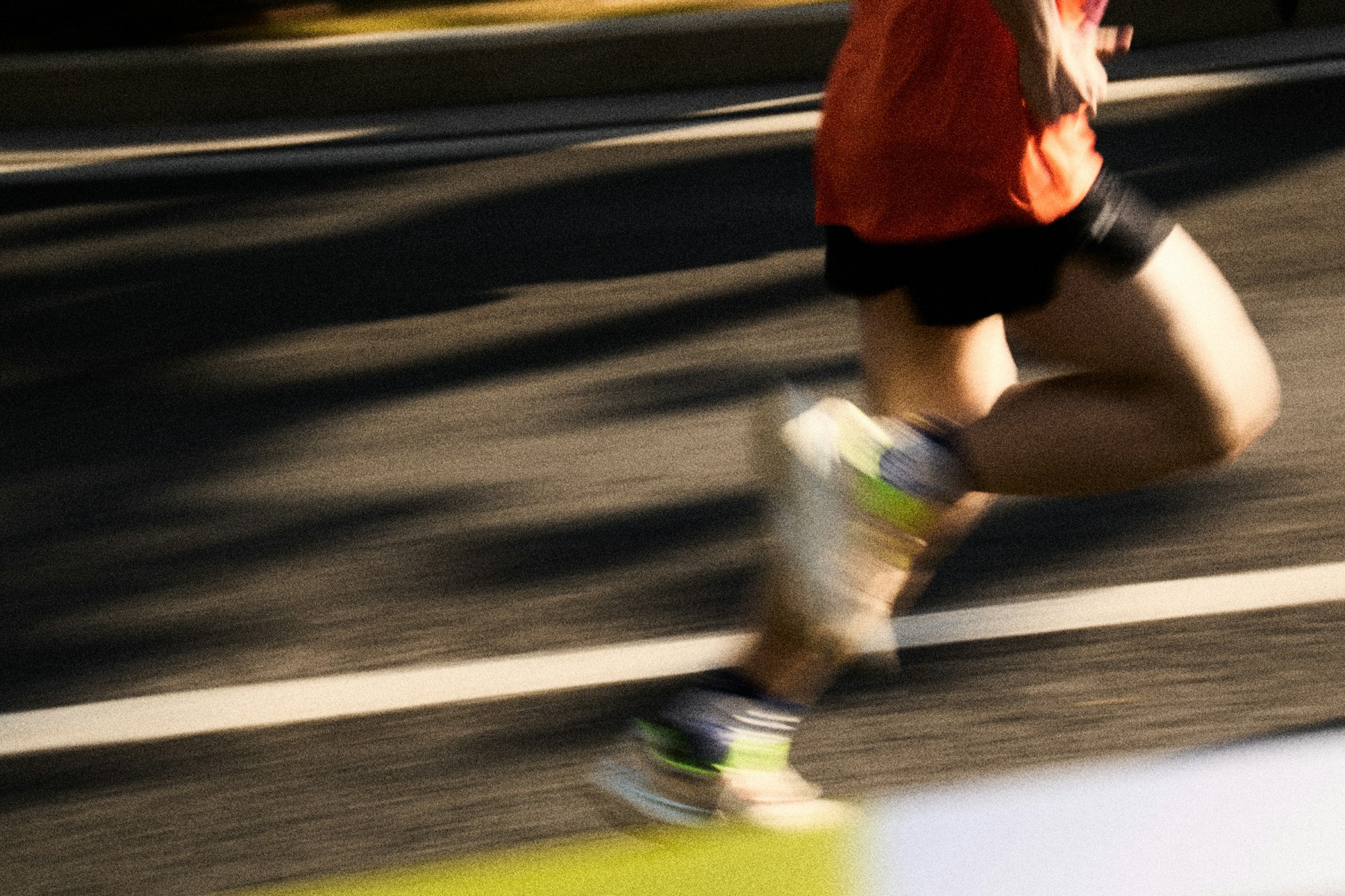


You get about two miles in and everything feels fine. Then something on the outside of your knee starts to talk. Not sharp yet, just a warmth, a tightness, a suggestion that you should probably pay attention. By mile three it's a hot blade on the lateral side of the joint and you're walking. Five minutes later the pain is gone completely, and you feel a little foolish for stopping. Sound familiar?
That's iliotibial band syndrome, and it's one of the most predictable injuries in distance running and one of the most badly explained. I'm Dr. Farhan Abdullah, an internal medicine physician and the medical director at Magnolia Functional Wellness in Southlake. Most of the runners who land in my office with lateral knee pain have already been told the same three things: foam roll harder, stretch it out, take time off. They did all three. They're still sitting in front of me.
So let's talk about what's actually happening in that knee, why the standard advice underperforms, and where a tool like SoftWave shockwave therapy fits into a plan that has a real chance of working.
By Dr. Farhan Abdullah, DO | Medical Director, Magnolia Functional Wellness | Southlake, TX
It's Not a Friction Syndrome, and That Changes Everything
For decades the teaching was simple and wrong. The story went like this: the IT band is a tough strip of fascia running from the hip down the outside of the thigh, and as the knee bends and straightens, the band slides forward and backward over a bony bump on the femur called the lateral epicondyle. Rub it enough times and you get friction, inflammation, pain. Hence the old name, iliotibial band friction syndrome.
Then a group of anatomists actually looked. In a 2006 paper in the Journal of Anatomy, Fairclough and colleagues dissected cadaveric knees and imaged the region with MRI, and found that the IT band is anchored to the femur by fibrous strands along its length. It can't slide forward and back over the epicondyle, because it isn't free to slide. What looks like movement on imaging is the band tensing anteriorly and posteriorly in sequence, creating an optical illusion of translation.
What's actually getting irritated is a richly innervated, fat-filled layer of tissue underneath the band that gets compressed against the femur when the knee is somewhere around 20 to 30 degrees of flexion. That's a compression problem, not a rubbing problem. And 20 to 30 degrees of flexion is, almost exactly, the position your knee is in at foot strike when you run.
Why does this matter clinically? Because compression and friction call for different fixes. If the problem were friction, you'd want to loosen the band so it glides more freely. If the problem is compression, loosening a structure that's already under tension does very little, and the real question becomes why the knee is loading into that compressive position over and over. That's a hip and a gait question, not a thigh question.
Why Foam Rolling Your IT Band Is Mostly Theater
I'm not going to tell you foam rolling is useless. Patients tell me it feels good, and that counts for something. But the mechanical claim behind it does not hold up. The IT band is dense fascia with a tensile strength in the neighborhood of a light-duty tendon. You are not lengthening it with a piece of foam and your body weight. Whatever relief you get is almost certainly neurologic, a temporary change in how sensitive the tissue is, not structural.
What tends to matter more is what's happening upstream at the hip. The classic study here is Fredericson and colleagues in Clinical Journal of Sport Medicine, published in 2000 out of the Stanford Sports Medicine clinics. They measured hip abductor torque in 24 distance runners with ITBS and compared it against the runners' own uninjured legs and against 30 healthy control runners. The injured limbs were significantly weaker in both men and women. The runners then went through a six-week program built around strengthening the gluteus medius, abductor strength climbed by roughly 35% in the women and 51% in the men, and most returned to running.
That study gets quoted a lot, sometimes more confidently than it deserves. It's a case series, not a randomized trial, and there's no control arm that rested without strengthening. So I'd also point you to a more skeptical modern look: a 2023 systematic review and meta-analysis in Gait and Posture by Foch, Brindle and Pohl, which pooled data across 17 studies. They found that female runners with current ITBS showed lower isometric hip abductor strength and smaller peak hip internal rotation angles than controls, but the picture differed between male and female runners and between people who had the injury now versus people who'd had it in the past. In other words, hip weakness looks like a real contributor for some runners and not a universal law for all of them.
What I take from both papers is this: check the hip, because it's often part of the story, but don't assume every case is a glute medius case. In my practice I'd rather test than guess.
Where SoftWave Actually Fits
Shockwave therapy delivers acoustic pressure waves into tissue. The unfocused, low-intensity version that SoftWave uses spreads energy over a broader treatment zone rather than concentrating it at a single depth. The proposed mechanism is mechanotransduction, meaning the mechanical energy triggers a biological response in the cells it passes through: local increases in blood flow, upregulation of growth factors, recruitment of resident repair cells, and changes in how pain-transmitting nerve endings behave in the treated area.
Now the honest part. There is no large randomized trial of shockwave therapy specifically for iliotibial band syndrome. I want to be plain about that, because you deserve to know where the evidence is solid and where we're reasoning by analogy.
What we do have is decent evidence in closely related lateral hip and lower limb conditions. A 2018 systematic review in the British Journal of Sports Medicine by Korakakis and colleagues evaluated shockwave across Achilles tendinopathy, greater trochanteric pain syndrome, medial tibial stress syndrome, patellar tendinopathy and proximal hamstring tendinopathy. The findings are genuinely mixed by condition and by time point, which is what a careful review looks like. Moderate-level evidence showed no advantage over placebo in patellar tendinopathy, while radial shockwave beat conservative care at short, mid and long term in proximal hamstring tendinopathy. Real medicine is rarely uniform.
The result I find most interesting for lateral hip and thigh pain comes from a randomized controlled trial published in Hip International in 2023 by Heaver and colleagues. They randomized 104 patients with greater trochanteric pain syndrome to either focused shockwave therapy or an ultrasound-guided corticosteroid injection. At three months the two groups looked similar on pain and function. At twelve months the shockwave group had significantly better pain scores, better Harris Hip Scores and better quality of life scores than the injection group, and the functional gains held while the injection group had drifted back toward where they started.
That pattern is one I see constantly in clinic, and it's worth internalizing. A steroid injection often wins the first three months. Regenerative and mechanotransductive approaches tend to win the year. If you're a runner planning to still be running at 60, which race are you trying to win?
And specific to ITBS, a 2024 systematic review in Frontiers in Sports and Active Living by Sanchez-Alvarado and colleagues reviewed 13 studies covering 201 runners. Their conclusion was that a conservative approach built on hip abductor strengthening, possibly augmented by shockwave or manual therapy, reduced pain and improved function. Note the sequencing in that sentence. Strengthening is the foundation. Shockwave is the augmentation. I use it the same way, and I'd be suspicious of any clinic that sells you the reverse.
One more piece of plain talk on regulatory status: shockwave devices carry FDA clearance for specific indications, and iliotibial band syndrome is not among them. Using shockwave for ITBS is off-label use of a cleared device, which is legal and common in musculoskeletal medicine, but you should hear it stated rather than have it glossed over.
What a Course Looks Like at Magnolia
We start with an exam, not a machine. I want to know where exactly the pain lives, whether it's reproducible at that 20 to 30 degree flexion angle, what your hip abduction strength looks like side to side, how your single-leg squat holds up, and what changed in your training before the pain started. That last one is often the whole answer. New shoes, a jump in mileage, a switch to hill repeats, more downhill running, or a track where you always run the same direction.
If it's a straightforward ITBS presentation, a typical plan looks something like this:
- A treatment series of SoftWave shockwave therapy, usually weekly, targeting the lateral knee and often the lateral hip and gluteal attachments as well. Sessions run short. Most people describe it as a firm, rapid tapping that can be tender over the sore spot.
- A progressive hip and lateral chain strengthening program that you actually do, not one you screenshot and forget.
- Training modifications with a defined end date, because the goal is to get you back on the road, not to keep you off it indefinitely.
- A reassessment at four to six weeks, with honest criteria for whether it's working.
Some patients need more. If imaging or exam suggests a significant tendinous component at the hip, or if there's concurrent lateral compartment joint irritation, we'll discuss whether platelet-rich plasma injections belong in the plan. Combining approaches isn't always right, but sometimes it's the difference between partial and complete.
When Lateral Knee Pain Isn't the IT Band
Not every ache on the outside of the knee is ITBS, and treating the wrong thing is a good way to waste a season. A lateral meniscus tear can present with lateral joint line pain, usually with a mechanical feel, catching, locking or a sense that the knee isn't trustworthy. Biceps femoris tendinopathy sits a bit more posteriorly. Proximal tibiofibular joint irritation is uncommon but real. In older runners, early lateral compartment osteoarthritis can mimic the whole picture, and the treatment plan looks quite different.
Stress fracture deserves its own sentence. Pain that shows up earlier in each successive run, hurts at night, or persists at rest is a reason to stop running and get imaging, not a reason to book a shockwave series.
I'd also say this plainly: if you've had six weeks of well-executed rehab and you're no better, you need a new diagnosis or a new plan, not more of the same at higher intensity.
The Southlake Part of This
A lot of the lateral knee pain I see around here is seasonal and it's environmental. September in North Texas is when people finally start running outside again after a summer of treadmills and 5 a.m. compromises, and the mileage jump from "whatever I could tolerate in August heat" to "it's finally 78 degrees, let's do ten" is exactly the kind of spike that lights up an IT band. The trails around Bob Jones Park and the loops people run out of Town Square are mostly cambered or gently rolling, and cambered surfaces load one hip differently than the other for the entire run. If you always run the same direction on the same loop, try flipping it.
Small change, occasionally a big return.
The Practical Takeaway
Iliotibial band syndrome is a compression problem driven by how your hip and knee are loading, not a tight strap that needs to be beaten into submission. The evidence supports building your plan on hip strengthening and load management. Shockwave therapy is a reasonable adjunct with good supporting data in adjacent lateral hip conditions, including one randomized trial where it outperformed a steroid injection at twelve months, and a direct ITBS review that lists it as a sensible augmentation.
What I'd want you to walk away with is that this is a fixable problem for most runners, and that the fix is usually boring and specific rather than dramatic. If you're in Southlake or anywhere in the DFW area and you've been stuck in the two-miles-then-walk cycle for longer than you'd like to admit, it's worth having someone actually examine the hip instead of handing you another foam roller. That's the kind of workup we do at Magnolia Functional Wellness, and most of the time, the answer is more straightforward than people expect.
Your Questions Answered
Led by trained medical professionals delivering safe, effective, and scientifically backed aesthetic and wellness treatments.
Why didn't foam rolling my IT band fix my knee pain?
Because the IT band isn't tight in the way most people assume, and you can't lengthen dense fascia with a foam roller anyway. The irritation comes from tissue getting compressed underneath the band near the knee, and that compression is usually driven by how your hip is loading during your stride. Foam rolling can feel good and quiet things down briefly, but at Magnolia Functional Wellness in Southlake I'd rather test your hip abductor strength and look at what changed in your training, because that's where the actual fix tends to live.
How do I know if my lateral knee pain is IT band syndrome or something else?
Classic IT band syndrome follows a telling pattern. It shows up at a fairly predictable point in your run, sits right on the outside of the knee, and settles down within minutes of stopping. Pain that catches or locks the joint, hurts at night, or arrives earlier on each successive run points somewhere else, like a meniscus injury or a stress fracture, and those need a different workup entirely. That's why we examine both the knee and the hip before recommending any treatment at Magnolia Functional Wellness in Southlake.
Can I keep training while I'm doing a SoftWave course?
In most cases, yes. One of the practical advantages of SoftWave is that it doesn't require downtime. The vast majority of my patients at Magnolia Functional Wellness in Southlake keep up their regular workouts, runs, and league play through the course. The main exception is when we're working on something acutely irritated, where I'll usually pull back the volume for a week or two while we get the inflammation under control. The other big rule: skip NSAIDs like ibuprofen and Aleve for a few days before and a week or two after each session, since they blunt the healing response we're trying to use.
Is SoftWave a better option than cortisone for tendon injuries?
For chronic tendon issues, I usually prefer SoftWave over repeat cortisone, and not because cortisone is useless. Cortisone reliably calms pain in the short term. The problem is that repeated steroid injections into a tendon can weaken the tissue over time, which is the opposite of what we want for someone planning to stay active for another 30 years. SoftWave works in the other direction. It encourages the body to remodel and rebuild the tissue instead of muting the pain signal. That said, cortisone still has a role for specific situations and short-term relief, and at Magnolia Functional Wellness we choose based on the patient and the injury, not on dogma.
Can SoftWave therapy help heal a stress fracture?
SoftWave shockwave therapy has a long track record of stimulating bone healing, and we use it to support recovery in low-risk stress reactions and early stress fractures by boosting blood flow and activating your body's own repair cells. It isn't the right call for every fracture, though, since certain high-risk locations in the tibia and foot need protected weight bearing first. That's why I evaluate each runner individually at Magnolia Functional Wellness in Southlake before recommending it.
Need More Information?
Our team is ready to answer your specific questions and concerns.