
P-Shot and Size: What Studies Actually Show About Length and Girth Improvement
The question most men are actually asking about the P-Shot is whether it can increase size -- and the answer, based on published clinical data, is that modest gains in length and girth appear possible with multi-session protocols, particularly when combined with adjunct therapies like vacuum erection devices and penile traction. Dr. Farhan Abdullah reviews the P-Long Protocol's IRB-approved pilot data, explains the biological mechanism behind tissue growth from PRP, addresses where the mainstream medical skepticism is valid, and gives a frank summary of what realistic expectations look like. If you've been searching for an honest physician's take on P-Shot size results, this is it.


Let's just address the question directly, because it's what a lot of men are actually wondering when they research the P-Shot -- even if it's not the first thing they say in a consultation. Can platelet-rich plasma injections increase penile length and girth? And if so, how much, and how reliable are those results?
The honest, medically responsible answer is: there's emerging clinical evidence that modest gains are possible, particularly with multi-session protocols combined with adjunct therapies, but the research is still early-stage and the gains reported in the best-designed studies are meaningful rather than dramatic. Anyone promising you dramatic size transformation from a single P-Shot is overstating the evidence. But the data isn't nothing, either -- and I want to walk you through what's actually been published so you can make an informed decision.
Why Size Enhancement Is Biologically Plausible
The biology makes sense when you understand what PRP does at the tissue level. The growth factors in platelet-rich plasma -- particularly VEGF (vascular endothelial growth factor), PDGF, and IGF-1 -- stimulate angiogenesis, meaning they trigger the formation of new blood vessels in the injected tissue. They also promote the proliferation of fibroblasts and smooth muscle cells in the corpus cavernosum, the erectile chambers that fill with blood during an erection.
More and healthier blood vessels means the erectile tissue can engorge more fully. More robust smooth muscle and connective tissue means greater structural capacity. The theoretical result is fuller, more complete erections -- and over time, with repeated stimulation of tissue growth, potentially modest increases in the dimensions of the erect penis. It's not magic. It's the same mechanism by which PRP promotes tissue regeneration elsewhere in the body, applied to a highly vascular specialized tissue.
What the P-Long Protocol Studies Show
The most rigorous published work on PRP specifically for size enhancement comes from the P-Long Protocol, developed by board-certified urologist Dr. Judson Brandeis. The P-Long Protocol is notable because it's the first male enhancement protocol to be registered on ClinicalTrials.gov and studied under an institutional review board -- meaning it went through formal ethical review and oversight, which most anecdotal size claims never do.
The protocol isn't PRP alone. It combines PRP injections with three adjunct components: nitric oxide boosters to support vascular function, the RestoreX penile traction device, and a vacuum erection device. Published pilot study results presented at the Journal of Sexual Medicine showed that all participants in the study experienced measurable increases in both erect length and girth after six months. The protocol's multi-modal approach is important -- the PRP creates the biological environment for tissue growth, while the traction and vacuum devices apply the mechanical stimulus that directs that growth.
This mirrors what we know about traction therapy alone: RestoreX has independent Level 1 evidence for lengthening in Peyronie's disease patients. Combining it with PRP's growth factor stimulation is a logical enhancement of that established mechanism.
What Other Clinical Reports Show
Beyond the P-Long data, several clinical reports and smaller studies have documented size outcomes as a secondary finding in P-Shot research. Patient-reported outcomes in these studies suggest average gains in the range of roughly half an inch to just under an inch in erect length and somewhat less in girth circumference, primarily with multi-session protocols of three to six injections over several months rather than a single treatment.
A 2024 review in a sexual medicine journal acknowledged that while cosmetic size gains from PRP are modest and variable, the mechanism -- tissue growth and vascularization -- is biologically sound and the safety profile is favorable. The review called for larger, randomized controlled trials with standardized PRP preparation protocols to establish more definitive outcomes data.
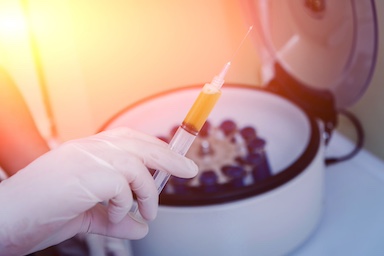
That last point matters: PRP preparation varies significantly between providers. The platelet concentration, activation method, and injection technique all affect what growth factors are actually being delivered and how. A poorly prepared PRP product from an underpowered centrifuge and a well-prepared, properly concentrated product are not the same intervention, even if they're both called a P-Shot.
Where the Mainstream Medicine Critique Is Valid
I want to be fair to the skeptics here because their concerns are legitimate. The Cleveland Clinic and similar institutions note that size claims for the P-Shot specifically lack large randomized controlled trial support. That's true. The published studies are mostly pilot data -- small sample sizes, short follow-up, often without blinded control groups. This makes it genuinely difficult to separate the PRP effect from placebo, the vacuum device effect, the traction device effect, and measurement variability.
Men are notoriously inconsistent at measuring themselves under standardized conditions, which introduces noise into outcome data. A study that shows an average 0.8-inch gain across participants needs to account for whether measurement methodology was rigorous -- and in some of the lower-quality reports, it wasn't.
This doesn't mean the treatment doesn't work. It means the evidence hasn't yet reached the bar we'd want before making strong clinical claims. The honest position is: promising preliminary data, biologically plausible mechanism, acceptable safety profile, and a genuine need for larger well-controlled trials.
What This Means for You Practically
If size enhancement is part of what's motivating your interest in the P-Shot at Magnolia Functional Wellness, I'll have a direct conversation with you about realistic expectations. Based on the available evidence, here's what I can say honestly:
- A single P-Shot is unlikely to produce significant size changes. Multi-session protocols over three to six months give the biology time to work.
- Combining PRP with a vacuum erection device post-procedure consistently produces better outcomes than PRP alone -- the mechanical stimulus matters.
- Improvements in erectile quality -- fuller, firmer erections -- are more reliably documented than absolute size gains and may account for some of the perceived size improvement patients report.
- Individual response varies considerably based on age, vascular health, tissue integrity, and how well the PRP is prepared and administered.
- The safety profile is excellent -- using your own blood means no foreign material, no rejection risk, and minimal side effect profile.
The P-Shot for size isn't a replacement for a frank conversation about what you're hoping to achieve and whether this is the right tool for that goal. But for men who are good candidates, the combination of functional improvement and the possibility of modest size enhancement makes it a reasonable consideration -- and a far safer one than surgical alternatives.
Your Questions Answered
Led by trained medical professionals delivering safe, effective, and scientifically backed aesthetic and wellness treatments.
Is the P-Shot painful?
Significantly less than most men expect. A topical numbing cream is applied to the treatment area 20–30 minutes before the procedure and allowed to take full effect before any injection occurs. By the time Dr. Abdullah administers the PRP, the area is thoroughly anesthetized. During the injection itself, most men report feeling pressure rather than pain. Some describe a mild stinging sensation that lasts only seconds. The procedure takes just a few minutes once the anesthetic has worked. After the procedure, mild swelling or sensitivity at the injection site is normal and typically resolves within 24–48 hours. Most men find the experience far less uncomfortable than they anticipated — the anxiety beforehand is usually worse than the procedure itself.
How long before I see results from the P-Shot?
The regenerative process takes time. Most men begin noticing changes — improved sensitivity, firmer erections, better response to stimulation — within 2–6 weeks as new vascular tissue and nerve repair begins. The most significant improvements typically develop over 2–3 months as the tissue remodeling process matures. It's worth being honest about the timeline: the P-Shot is not an overnight fix. It's a regenerative treatment that promotes biological change, and biological change takes weeks to months to fully manifest. Men who see the strongest results are usually those who also address contributing factors — testosterone optimization if levels are suboptimal, cardiovascular health, and metabolic status — alongside the procedure.
Can SoftWave be combined with PRP or the P-Shot?
Yes — and this combination is clinically rational. SoftWave stimulates angiogenesis and recruits stem cells to the treatment area; PRP delivers concentrated growth factors that amplify the repair response those recruited cells can mount. For musculoskeletal applications, SoftWave followed by PRP injection addresses tissue healing through complementary mechanisms. For ED treatment, SoftWave combined with the P-Shot provides both vascular regeneration (SoftWave) and growth factor-driven tissue repair (PRP) — a combination that clinical experience suggests outperforms either modality alone.
Need More Information?
Our team is ready to answer your specific questions and concerns.