
Prediabetes and GLP-1 Medications: Catching It Before It Turns
Prediabetes isn't a waiting room. Dr. Abdullah walks through what the Diabetes Prevention Program and the big semaglutide, tirzepatide and liraglutide trials show for people with prediabetes, who might actually benefit from a GLP-1, and why lifestyle still comes first.


By Dr. Farhan Abdullah, DO | Medical Director, Magnolia Functional Wellness | Southlake, TX
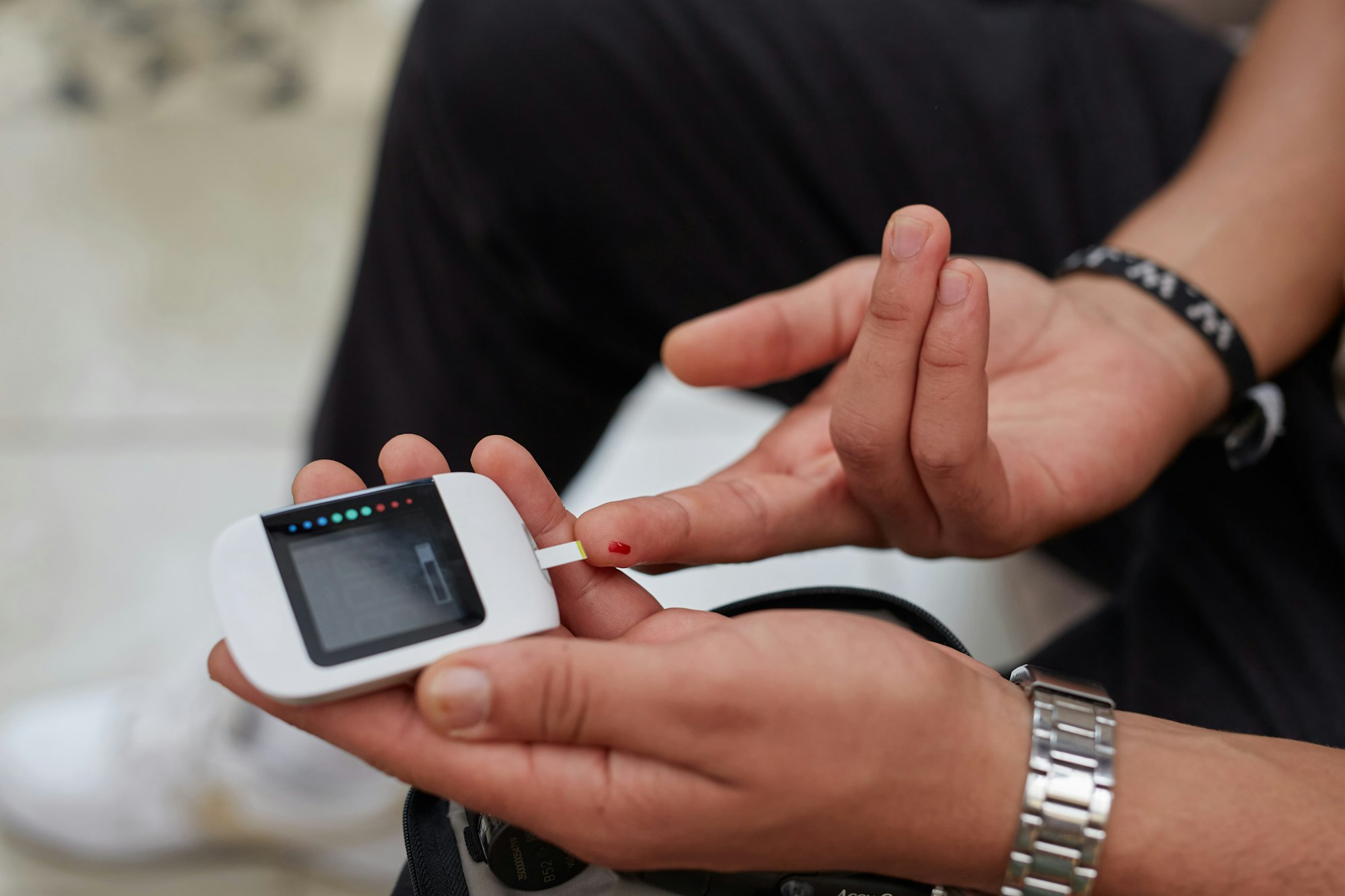
Most people find out they have prediabetes by accident. A routine physical, a life insurance exam, a pre-op lab panel before a knee scope. The A1c comes back at 6.1, someone circles it in the portal, and the advice amounts to "watch your carbs and we'll recheck next year." Then a year goes by. Then two. I see this pattern constantly, both in the hospital where I still work as an internist and in our clinic at Magnolia Functional Wellness here in Southlake.
November is American Diabetes Month, so it feels like the right time to talk about the stage that gets the least attention and gives you the most say over what happens next. Prediabetes isn't a diagnosis to shrug at. It also isn't a life sentence. It's a window, and windows close.
I'm Dr. Farhan Abdullah, and in this post I want to walk through what prediabetes actually is, what the best prevention trials have shown, where GLP-1 medications like semaglutide and tirzepatide fit, and where they don't. Spoiler: the answer isn't "everyone with an A1c of 5.8 needs an injection." But it isn't "just eat less" either.
What Prediabetes Really Means (and Why the Label Undersells It)
By the standard definitions, prediabetes is an A1c between 5.7 and 6.4 percent, a fasting glucose between 100 and 125 mg/dL, or a two-hour glucose between 140 and 199 mg/dL on an oral glucose tolerance test. The CDC estimates that more than one in three American adults falls into this range, and the large majority of them have no idea.
The name is part of the problem. "Pre" sounds like a waiting room. Nothing's happening yet, right? Not quite. By the time fasting glucose starts drifting upward, the underlying insulin resistance has usually been building for years. The pancreas has been compensating by pumping out more and more insulin to keep glucose looking normal. When glucose finally creeps up, that's often a sign the compensation is starting to slip.
And the damage doesn't politely wait for an official diabetes diagnosis. Insulin resistance travels with higher triglycerides, lower HDL, fatty liver, elevated blood pressure and a greater burden of cardiovascular risk. In my practice, I've had patients with "only" prediabetes who already had early changes in the liver on ultrasound or protein in their urine. That's why I'd rather talk about metabolic health as a spectrum than a switch that flips at 6.5.
Here's what I tell patients sitting across from me: the number on your lab sheet is a snapshot of a trend. The question isn't where you are. It's which direction you're heading and how fast.
The labs I actually want to see
An A1c by itself is a blunt tool. It can read falsely low or high with anemia, recent blood loss or certain hemoglobin variants. When someone comes to Magnolia worried about blood sugar, we usually look at A1c alongside fasting glucose, fasting insulin, a lipid panel, liver enzymes, kidney function and waist circumference. Fasting insulin in particular can flag insulin resistance years before glucose budges. It isn't perfect, but it's a useful early warning light.
What the Diabetes Prevention Program Taught Us
Any honest conversation about preventing type 2 diabetes has to start with the Diabetes Prevention Program, published by Knowler and colleagues in the New England Journal of Medicine in 2002. It's more than two decades old and it still shapes how I practice.
The trial randomized 3,234 adults with elevated fasting and post-meal glucose to placebo, metformin, or an intensive lifestyle program aimed at losing at least 7 percent of body weight and getting 150 minutes of activity per week. Over an average of 2.8 years, diabetes developed at a rate of 11.0 cases per 100 person-years on placebo, 7.8 on metformin and 4.8 with the lifestyle program. That's a 58 percent reduction with lifestyle and 31 percent with metformin.
Two things jump out at me every time I reread that paper.
First, a modest amount of weight loss did a huge amount of work. Seven percent. For a 220-pound man, that's about 15 pounds. Not a total body transformation. Just enough to take pressure off the liver and muscle so insulin can do its job again.
Second, lifestyle beat the drug. People love to skip past that part. The structured program, with real coaching and accountability, outperformed metformin. That should humble anyone (including me) who's tempted to treat prediabetes purely as a prescription problem.
So why aren't we all just doing the DPP? Because real life isn't a funded trial with dedicated coaches. A lot of my patients have already tried. They've cut sugar, they've joined the gym in January, they've lost the same 12 pounds three separate times. For some of them, the barrier isn't knowledge or willpower. It's biology: relentless hunger, constant food noise and a body that defends its set point aggressively. That's where the newer medications enter the conversation.
What GLP-1 Trials Show in People With Prediabetes
GLP-1 medications weren't designed as prediabetes drugs. Semaglutide, tirzepatide and liraglutide were studied primarily for weight management and type 2 diabetes. But several of the big obesity trials enrolled large numbers of people with prediabetes, and the results in that subgroup are hard to ignore.
Liraglutide: the three-year look
The earliest long-term data came from the SCALE Obesity and Prediabetes trial, reported by le Roux and colleagues in The Lancet in 2017. Adults with prediabetes and obesity (or overweight with a related condition) were randomized to daily liraglutide 3.0 mg or placebo, both alongside diet and activity counseling. By week 160, 2 percent of the liraglutide group had been diagnosed with diabetes while on treatment, compared with 6 percent on placebo. Time to diabetes onset was 2.7 times longer with liraglutide.
There's a real limitation worth knowing about, though. About half of participants didn't finish the three years, and people who withdrew weren't followed afterward. So the true effect could be bigger or smaller than it looks.
Semaglutide: getting back to normal glucose
A pooled analysis of the STEP 1, 3 and 4 trials, published by Perreault and colleagues in Diabetes Care in 2022, asked a slightly different question: of the people who started with prediabetes, how many had normal glucose after 68 weeks? In STEP 1, it was 84.1 percent on semaglutide 2.4 mg versus 47.8 percent on placebo. STEP 3 and STEP 4 also favored semaglutide, though the gap was smaller in STEP 4, where everyone had a 20-week run-in on the drug first. Fasting glucose, A1c and insulin resistance all improved more on the medication.
That's a meaningful finding. It's not just "slower progression." It's a large share of people moving back across the line into the normal range while on treatment.
Tirzepatide: the strongest prevention signal so far
The most striking data came from the three-year extension of SURMOUNT-1, published by Jastreboff and colleagues in the New England Journal of Medicine in 2025. It followed 1,032 adults with obesity and prediabetes for 176 weeks. Average weight loss was 12.3 percent on the 5 mg dose, 18.7 percent on 10 mg and 19.7 percent on 15 mg, compared with 1.3 percent on placebo. Only 1.3 percent of the tirzepatide groups developed type 2 diabetes versus 13.3 percent on placebo.
Now the part that matters for anyone thinking long term. After 17 weeks off the drug, the diabetes rate in the former tirzepatide groups rose to 2.4 percent, while placebo sat at 13.7 percent. Still a big difference, but the direction tells you something: the benefit is tied to staying on treatment and keeping the weight off. All three of these GLP-1 programs were sponsored by the companies that make the drugs, which is typical for drug trials this size and another reason I read them carefully rather than as marketing.
So Who Should Actually Consider a GLP-1 for Prediabetes?
This is where clinical judgment earns its keep. These trials studied people with prediabetes and obesity or overweight with a related health problem. They don't tell us much about a lean 35-year-old whose A1c is 5.8 because of a family history and a desk job. Prediabetes on its own isn't a labeled indication for these medications. When we consider one at Magnolia, it's because a patient meets weight-related criteria and the metabolic picture adds urgency.
In practice, I think about it in tiers.
- Lifestyle first, for nearly everyone. If your A1c is in the low prediabetes range, your weight is close to where it should be, and you haven't made a serious structured attempt at diet, strength training and sleep, that's where we start. The DPP data supports it, it costs little, and it improves things a pill or shot can't touch.
- Add medication when biology is winning. If you carry excess weight, your numbers keep climbing despite real effort, or you have other risk factors stacking up (fatty liver, high triglycerides, a parent who developed diabetes young), a GLP-1 can be a reasonable tool. Metformin is still on the table too, and for some patients it's the better first step.
- Not the right fit. A personal or family history of medullary thyroid cancer or MEN2, a history of pancreatitis, pregnancy or plans for pregnancy, and certain gallbladder or GI conditions all change the calculation. We screen for these before anyone starts.
If you're curious how we structure this kind of care, our guide to physician-supervised GLP-1 weight loss in DFW walks through the full process, from the first lab draw to dose adjustments.
Something I want to be clear about: a GLP-1 isn't a substitute for the habits in the DPP. It's what makes those habits possible for some people. When the constant background hunger quiets down, patients tell me they can finally follow the meal plan they've known about for years. That's the combination that seems to work best.
What We Do to Make the Benefit Last
The SURMOUNT-1 off-treatment data is a good reminder that what happens after the scale moves matters as much as the drop itself. So at Magnolia, the medication is one piece of a longer plan. Here's what that looks like.
We protect muscle. Skeletal muscle is the largest sink for glucose in the body. Lose a lot of it during rapid weight loss and you can undercut the very metabolic improvement you were chasing. That's why we push protein targets and resistance training from week one, not as an afterthought.
We titrate slowly. Nausea, constipation and fatigue are the main reasons people quit these medications. Going up in dose gradually (and sometimes staying at a lower dose longer than the schedule suggests) keeps more people on track. If you're weighing options, our page on tirzepatide at Magnolia covers what the dosing process looks like in more detail.
We recheck the right labs. Weight alone doesn't tell you whether insulin resistance is improving. We repeat A1c, fasting insulin and lipids at regular intervals so we can see whether the metabolic engine is actually healing.
We plan the long game. Some patients stay on a maintenance dose. Others taper down carefully once their habits and numbers are stable, and we watch closely for any drift back up. There's no single right answer, but there should always be a plan rather than an abrupt stop.
And yes, the timing of this post is deliberate. Thanksgiving is two weeks out, and between office parties, tamale season and the Cowboys' holiday games, December is a rough month for anyone's blood sugar. Starting the conversation now beats making a resolution in January.
The Bottom Line on Prediabetes and GLP-1 Medications
If you've been told you have prediabetes, I'd encourage you to treat it as an early warning, not a footnote. The best prevention data we have says modest weight loss and consistent activity can cut your risk of progressing by more than half. For people carrying extra weight who haven't been able to get there on their own, GLP-1 medications have shown in large trials that they can push many back into the normal range and sharply lower the odds of developing type 2 diabetes, as long as treatment continues.
What I'd avoid is waiting. Waiting is the default, and it's the option most likely to end in a diabetes diagnosis five years from now. At Magnolia Functional Wellness in Southlake, we start with a full metabolic workup, talk through where you really stand, and build a plan that fits your body and your life, with or without medication. Catching it before it turns is the whole point.
Your Questions Answered
Led by trained medical professionals delivering safe, effective, and scientifically backed aesthetic and wellness treatments.
Can a GLP-1 medication reverse prediabetes?
<p>In the large semaglutide trials, most people who started with prediabetes had normal glucose readings after about 68 weeks of treatment, compared with roughly half of those on placebo. That's encouraging, but it reflects being on the medication, and numbers can drift back if the weight returns after stopping. At Magnolia Functional Wellness in Southlake, we pair medication with strength training and nutrition so the improvement has a better chance of sticking.</p>
Do I need a GLP-1 if I have prediabetes?
<p>Not necessarily. The Diabetes Prevention Program found that losing about 7 percent of body weight and staying active cut the risk of developing diabetes by 58 percent. We usually consider a GLP-1 when someone also carries excess weight and their numbers keep climbing despite real effort, and we make that decision together at Magnolia Functional Wellness.</p>
What happens to my blood sugar if I stop tirzepatide?
<p>In the three-year SURMOUNT-1 study of people with prediabetes, diabetes rates in the tirzepatide groups rose from 1.3 percent to 2.4 percent after 17 weeks off the drug, while the placebo group sat near 13.7 percent. Some benefit carried over, but the trend moved the wrong way once treatment ended. That's why we build a maintenance plan and recheck labs before anyone comes off treatment at our Southlake clinic.</p>
Can changing my meal timing help my blood sugar?
Often, yes. Studies on time-restricted eating have shown improvements in HbA1c and fasting insulin, and the benefit tends to be strongest when the eating window sits earlier in the day. It isn't a replacement for medication if you need it, but for a lot of people it's a free, low-risk lever worth pulling. We're glad to look at your numbers at Magnolia Functional Wellness in Southlake.
Should I get my testosterone checked if I have prediabetes?
<p>If you're a man with prediabetes, it's a reasonable test to ask for, especially if you've also noticed low energy, a growing waistline or a drop in libido. Low testosterone and insulin resistance show up together often, and each one tends to make the other worse. I like to check a morning testosterone, SHBG, fasting insulin and A1c together so we can see the whole picture at once.</p>
Need More Information?
Our team is ready to answer your specific questions and concerns.