
PRP Before Surgery: Preparing Your Body for a Better Recovery
Getting surgery on the calendar doesn't mean your recovery is out of your hands. Dr. Farhan Abdullah explains how platelet-rich plasma (PRP) may help prime tissue before an operation, what the research actually shows, and who is a realistic candidate. It is not a substitute for surgery, but it may give your body a better starting point for healing.


By Dr. Farhan Abdullah, DO | Medical Director, Magnolia Functional Wellness | Southlake, TX
A patient of mine, a woman in her late fifties, came in about six weeks before a scheduled knee replacement. She wasn't there for the knee itself. She wanted to know if there was anything she could do beforehand to come out the other side stronger. "I don't want to spend three months just getting back to zero," she told me. That question, more than almost any other, is what got me interested in pre-surgical regenerative protocols in the first place. Surgery fixes a structural problem. It doesn't automatically fix the tissue quality, the inflammation, or the healing capacity of the body doing the repairing. That part is on you, and increasingly, it's something we can actually influence ahead of time.
At Magnolia Functional Wellness in Southlake, we've been building out a pre-surgical optimization track that leans heavily on platelet-rich plasma, or PRP. It's not a replacement for surgery, and I want to be upfront about that. It's a way to prime the tissue environment before a surgeon ever picks up an instrument, so that whatever healing needs to happen afterward has better raw materials to work with.
I come at this from a slightly unusual angle for someone offering it. My background is internal medicine, and I still round in the hospital, so I see the full arc of what happens after a major procedure, not just the elective outpatient version of recovery. Between that and additional training in functional medicine and stem cell therapy, I tend to think about surgery the way a hospitalist does: as a stress event the whole body has to absorb, not an isolated fix to one joint or one structure. That framing is what pulled me toward regenerative prep work in the first place.
What Actually Happens to Tissue Before and After Surgery
Most patients think of surgery as a single event. In reality, it's the middle of a longer biological story. Whatever inflammatory state your joint, tendon, or soft tissue is in going into the operating room tends to carry forward into the recovery period. A tendon that's chronically inflamed, poorly vascularized, or already struggling to repair itself doesn't suddenly become a great healing environment just because a surgeon repaired the structural defect.
This is part of why some patients bounce back from what looks like a routine procedure in half the expected time, while others with a nearly identical operation seem to stall for months. The surgical technique matters, of course. But so does the biology of the tissue being asked to heal. In my practice, I've seen patients who arrive for surgery with years of unaddressed low-grade inflammation in the surrounding tissue, and it shows in how slowly things progress afterward.
PRP is, at its core, a concentration of your own platelets and the growth factors they carry, drawn from a small blood sample and spun down in a centrifuge. Those growth factors, things like PDGF, TGF-beta, and VEGF, are signaling molecules that recruit repair cells, stimulate new blood vessel formation, and help organize collagen during healing. Giving the tissue a dose of those signals before the trauma of surgery even happens is the basic logic behind pre-surgical PRP. You're not treating the structural problem. You're trying to improve the terrain the repair process has to work with.
Think about what actually happens biologically the moment a surgeon makes an incision. The body responds with an acute inflammatory cascade, and that response is necessary up to a point. But if the local tissue was already running hot with chronic, low-grade inflammation beforehand, that acute surgical inflammation stacks on top of a system that's already struggling to regulate itself. Recovery ends up fighting on two fronts instead of one. Priming that tissue with concentrated growth factors ahead of time doesn't eliminate the surgical inflammatory response, and it shouldn't. What it can do is shift the starting point, so the tissue has better blood supply and a more organized repair scaffold already forming before the surgical trauma arrives.
Where the Evidence Actually Stands
I want to be careful here, because this is an area where enthusiasm tends to outrun the data, and I'd rather undersell it than oversell it. The strongest evidence for PRP around surgery comes from studies where it's applied at the time of the procedure rather than weeks ahead of it, and it's worth knowing what that evidence actually says before assuming pre-surgical application behaves the same way.
A randomized controlled trial by Jo and colleagues, published in the American Journal of Sports Medicine, looked at PRP augmentation during arthroscopic repair of medium to large rotator cuff tears. The PRP group didn't heal noticeably faster on the Constant score at three months, but their retear rate was 3.0 percent compared to 20.0 percent in the group that had conventional repair alone, and the cross-sectional area of the supraspinatus muscle held up better over the following year. That's a meaningful finding. It suggests PRP's real value in a surgical context might be less about speed and more about the durability and quality of what gets rebuilt.
A more recent randomized trial out of a minimal access surgery journal, by Kumar and colleagues, tested PRP infiltration at the port sites of elective laparoscopic cholecystectomy patients against plain saline. The PRP group had lower pain scores from day one through three months, better wound healing scores on a validated scale, and noticeably better scar quality by the three month mark, with early reductions in infection rates that softened somewhat over time. Again, not a miracle result. A real one, though, in the categories that matter most to a patient trying to get back to normal life.
A 2025 systematic review in Current Problems in Surgery by Ranjbar Moghaddam and colleagues pulled together outcomes across a range of surgical wound applications and found a generally favorable pattern for wound healing metrics, though the authors were careful to note that study quality and PRP preparation methods vary a lot from center to center. That variability is a real limitation of this field, and I tell patients that directly rather than glossing over it.
What none of this proves is that giving PRP injections a few weeks before surgery, rather than during it, produces identical benefits. That's an honest gap in the literature right now. What the data does support is the underlying biological premise: PRP measurably improves tissue quality and healing markers around a surgical event. Whether the timing is intraoperative or pre-operative, the mechanism doesn't change, even if the specific outcomes data for pre-surgical timing specifically is still catching up.
Who Tends to Benefit Most From This Approach
Not every surgery is a good candidate for this kind of preparation, and I'll say that plainly because I think it matters more than the sales pitch some clinics run. Where I've seen the most logical fit is with orthopedic and soft tissue procedures where the surrounding tissue quality genuinely affects the outcome, the kind of cases where our broader orthobiologic and regenerative options already come into play. Rotator cuff repairs, ACL reconstructions, tendon repairs, and joint replacements in patients with a lot of surrounding soft tissue degeneration all fall into that category.
Age matters too, and not in the direction some people expect. Older patients, whose baseline tissue vascularity and platelet function are already declining, sometimes have the most to gain from an intervention that concentrates their own growth factors before the additional stress of surgery. On the other hand, patients on blood thinners, those with active infections, and anyone with a platelet disorder or certain blood cancers aren't candidates. That screening happens at the consultation, not after the fact, and it's a nonnegotiable part of how we run this at Magnolia.
I'll also say, because patients ask this constantly: this isn't a way to avoid a surgery you actually need. If a joint is structurally torn or a tendon has ruptured, PRP isn't going to reattach it. What I tell my patients is that this is optimization, not replacement therapy. It sits alongside the surgical plan your orthopedic surgeon or specialist has already made. We coordinate with that surgeon, we don't work around them.
Diabetics and patients with poorly controlled blood sugar deserve a special mention here, because they're often the ones who need this kind of prep the most and get offered it the least. Elevated glucose impairs collagen cross-linking and slows the exact repair processes PRP is trying to support, so in my practice, a diabetic patient heading into surgery gets both the PRP conversation and a hard look at glycemic control in the weeks beforehand. One without the other is incomplete. The same goes for smokers. Nicotine constricts the small vessels that carry oxygen and nutrients to healing tissue, and no amount of platelet concentrate fully overcomes that. If someone can get even a few weeks of smoke-free time before surgery, it matters more than almost anything else on this list.
What the Process Looks Like in Practice
The logistics are less dramatic than people expect. We typically start the pre-surgical PRP protocol somewhere between two and six weeks before the scheduled procedure, depending on the tissue involved and how much lead time the surgery allows. A joint or tendon issue with more chronic inflammation usually benefits from starting closer to the six week mark, giving the tissue two or three sessions to respond before the operating room.
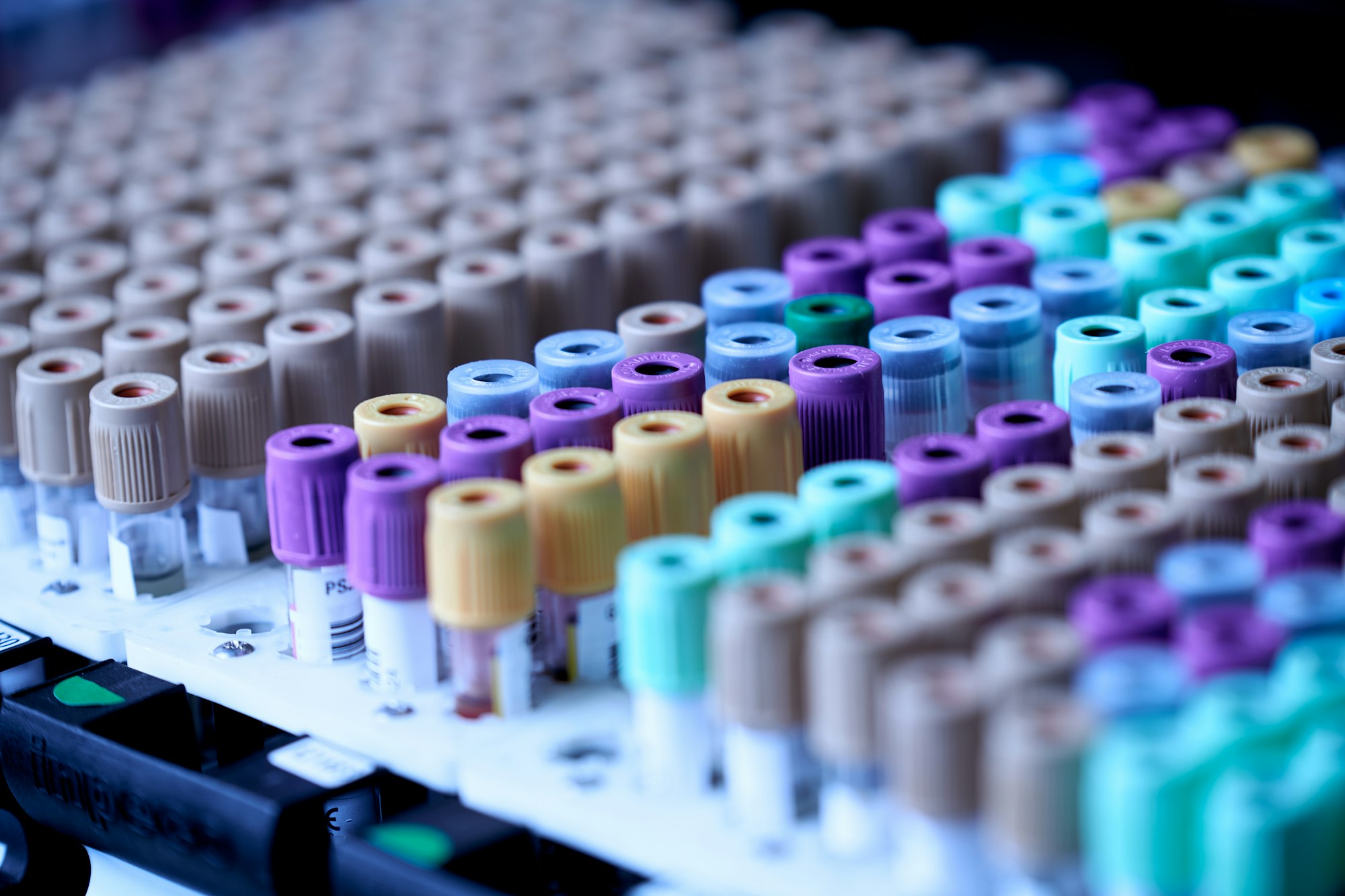
Each visit starts with a blood draw, similar to routine labs, followed by about fifteen minutes of processing in a centrifuge to separate and concentrate the platelet-rich fraction. We use ultrasound guidance for our PRP joint and tendon injections to make sure the concentrate actually lands where it needs to, rather than just somewhere in the general area. Most patients describe some soreness for a day or two afterward, comparable to a moderate workout, and then it settles.
We also use this window to address the other factors that affect surgical outcomes and tend to get ignored: vitamin D status, protein intake, blood sugar control, and smoking cessation where relevant. PRP isn't a substitute for those basics, and frankly none of this works particularly well if someone's vitamin D is at rock bottom or their nutrition going into a major operation is poor. It's one piece of a bigger picture, not a magic injection that overrides everything else.
Setting Realistic Expectations
If you're weighing whether pre-surgical PRP makes sense for your situation, the honest answer depends heavily on what surgery you're having and why. This isn't the right fit for every procedure, and I'd rather tell a patient that upfront than have them spend money on something unlikely to move the needle for their specific case. What I can say with confidence, based on both the published data and what I've watched happen in my own patients, is that the biological logic holds up: healthier, better-supported tissue going into surgery tends to behave better coming out of it.
If you've got a procedure on the calendar and you're wondering whether there's more you can be doing between now and the surgery date, that's a conversation worth having with your surgical team and with us. We'll look at your timeline, your tissue, and your overall health picture, and give you a straight answer about whether this makes sense, not a blanket yes because it's something we offer. At Magnolia Functional Wellness, that's the same approach we bring to every regenerative option on our menu, in Southlake and for the patients who drive in from across DFW to see us.
Your Questions Answered
Led by trained medical professionals delivering safe, effective, and scientifically backed aesthetic and wellness treatments.
Can I get PRP before surgery to help me heal better?
Sometimes, yes. If you have several weeks before a scheduled procedure, PRP can be used to improve tissue quality and calm inflammation so you go into surgery with a stronger baseline. The stronger evidence is actually for PRP delivered right at the time of surgery to support how the repair heals. At Magnolia Functional Wellness in Southlake, we coordinate with your surgeon rather than work around them, and we're honest that PRP is a supporting tool, not a replacement for the operation you need.
Does PRP mean I can avoid surgery altogether?
For some milder tendon, ligament, or joint injuries, PRP earlier in the process can help you heal enough to delay or reconsider surgery. But for a full-thickness tear or a joint that clearly needs repair, surgery is still the right call, and PRP is there to support your recovery. Dr. Abdullah won't promise you'll skip an operation you genuinely need. We'd rather give you an honest assessment of where PRP fits in your specific situation.
What's the difference between PRP, stem cells, and exosomes?
PRP delivers concentrated growth factors from your own blood to stimulate repair signaling at a treatment site. MSCs are living cells that can signal tissue repair, modulate immune responses, and differentiate into various tissue types. Exosomes are the nanoscale vesicles MSCs secrete — carrying the signaling molecules that drive much of their biological activity, in a cell-free format that offers different delivery characteristics. Each has distinct mechanisms, evidence bases, and appropriate applications. Dr. Abdullah helps you understand which is most relevant for your goals.
Need More Information?
Our team is ready to answer your specific questions and concerns.