
Weight Loss Isn't Linear: How to Read Your Own Trend Line
Your weight can swing several pounds overnight without any change in body fat. Dr. Farhan Abdullah of Magnolia Functional Wellness in Southlake explains why the scale zigzags, what the research shows about weekly and holiday weight rhythms, and a simple way to build your own trend line so one bad morning never derails your progress.


By Dr. Farhan Abdullah, DO | Medical Director, Magnolia Functional Wellness | Southlake, TX
Monday morning. You step on the scale after a pretty tame weekend: a birthday dinner, some chips during the game, maybe a second margarita. The number is up two and a half pounds from Friday. Your stomach drops. Five weeks of careful work, and it feels like the whole thing just slid backward.
Then Thursday rolls around and you're right back where you were. Or lower. So which number was the real one?
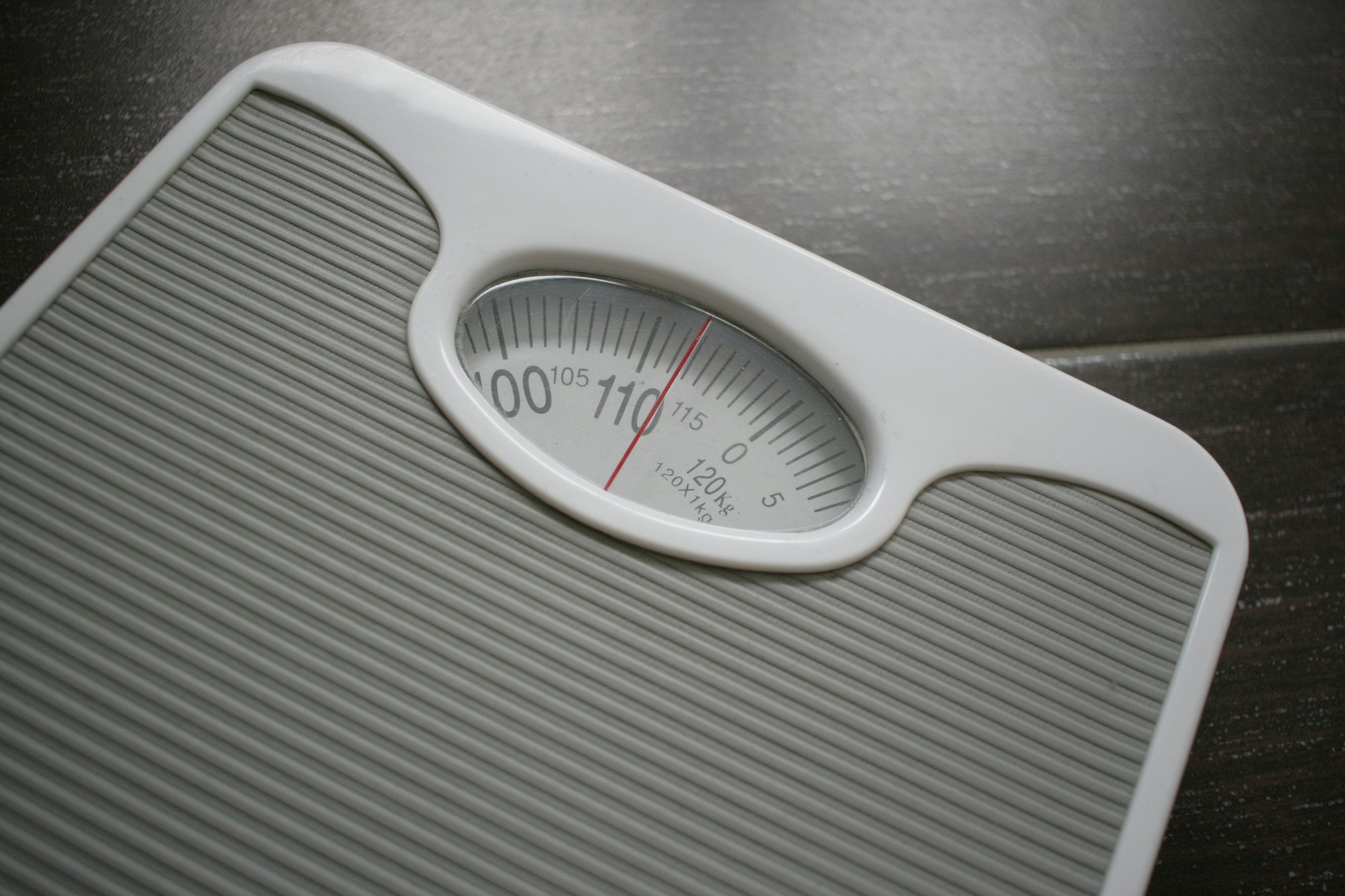
Neither of them, really. I'm Dr. Farhan Abdullah, and I'm the medical director at Magnolia Functional Wellness in Southlake. A big part of my weight loss work has nothing to do with prescriptions or meal plans. It's teaching people how to read their own data without letting a single morning hijack their week. Weight loss doesn't come down in a straight line. It comes down in a jagged, noisy, occasionally maddening zigzag that only looks like progress when you zoom out. Once you learn to read that zigzag, the scale stops being a daily verdict and starts being a useful tool.
Why the Scale Bounces Around So Much
Your body weight on any given morning is a sum of a lot of things that aren't fat. Water is the big one. Glycogen, the stored carbohydrate in your muscles and liver, gets packed away with roughly three grams of water for every gram of glycogen, so a carb-heavy dinner can show up as a couple of pounds by morning. Salt does something similar. So does a hard leg workout, because inflamed, repairing muscle holds onto fluid for a few days. Add in what's still sitting in your digestive tract, hormonal shifts across a menstrual cycle, poor sleep, and travel, and you've got a number that can swing two to four pounds in either direction with zero change in actual body fat.
None of that is fat. Fat changes slowly. It has to, because a pound of fat holds a lot of stored energy, and you simply can't eat enough at one Saturday barbecue to deposit two pounds of it overnight.
There's even a weekly rhythm to this. Researchers in Finland tracked daily weights in 80 adults across more than 4,600 measurements and found a consistent pattern: weight ran highest on Sunday and Monday, then drifted down through the week, with the climb starting again on Saturday. Their paper, published by Orsama and colleagues in Obesity Facts in 2014, made a point I find myself repeating to patients. The people who lost or kept off weight weren't the ones who never had a weekend bump. They were the ones whose weekdays reliably brought it back down. The authors concluded that weekend-to-weekday swings should be treated as normal, not as signs of weight gain.
A much larger European dataset backs that up. In the NoHoW trial, which followed smart-scale data from more than 1,400 people working on weight maintenance, Turicchi and colleagues reported in PLoS One in 2020 that weight cycled by about 0.35% within a typical week, again with weekend gains and weekday reductions. For a 220-pound person, that's close to a pound of built-in wobble before anything meaningful has happened at all.
So when your Monday number jumps, you're not looking at failure. You're looking at Monday.
The Shape of Real Progress
I often sketch this on the exam table paper. Draw a line sloping gently downward. Now scribble a messy, jumpy line on top of it that bounces above and below. The scribble is your daily weigh-in. The smooth slope underneath is what's actually happening to your body. Your job, and mine, is to pay attention to the slope.
That slope isn't straight, either. Kevin Hall and his team at the National Institutes of Health built one of the most respected mathematical models of human weight change, and their 2011 analysis in The Lancet showed that body weight responds slowly to a sustained change in how much you eat, with a half time of roughly a year. In plain English, the curve bends. Early weeks tend to move faster (some of that is water and glycogen leaving), and then the rate gradually tapers as your body gets smaller and needs less energy to run. The same model showed that people starting with more body fat should expect a bigger total loss from the same change in intake, and it takes them longer to settle at their new weight.
Why does that matter for you? Because people often judge month four by the pace of month one. If you lost eight pounds in your first month and three in your fourth, that can feel like things are breaking down. Usually they aren't. That's just what the curve looks like. A slowing rate is expected. A flat trend line over several weeks is a different conversation, and I'll get to that.
This pattern is common with GLP-1 medications like semaglutide or tirzepatide. The first couple of months can be dramatic, then the line naturally softens. If you're working with us on one of those medications, our guide to physician-supervised GLP-1 weight loss in DFW covers what a typical course looks like and how we monitor it. The trend-reading skills in this article apply whether you're on a medication or not.
How to Build Your Own Trend Line
You don't need fancy software. You need consistency and a little math. This is the approach I recommend.
Weigh under the same conditions
First thing in the morning, after the bathroom, before food or coffee, in the same minimal clothing, on the same scale on the same hard floor. Every one of those variables adds noise. Remove as much of it as you can, and the trend gets clearer, faster.
Weigh more often than you think
This surprises people. Many assume that weighing less often protects their mood. For some people it does, and I'll come back to that. But for most, more data points make the trend easier to see, because one weird morning gets diluted by six normal ones. There's also some evidence that frequent weighing goes hand in hand with better habits. In a 6-month trial analysis published by Steinberg and colleagues in the Journal of the Academy of Nutrition and Dietetics in 2015, participants who weighed every day lost about 6 kg more than those who weighed most but not all days, and they adopted more weight-control behaviors. It was a small group (47 people), and it compared people who chose different weighing patterns rather than randomly assigning them, so I don't oversell it. Still, it fits what I see in clinic. People who check in with the data daily tend to notice drift early, before it turns into a trend.
Use a weekly average, not a single reading
Add up your seven morning weights and divide by seven. Compare this week's average to last week's. That one change filters out most of the water and weekend noise. Many smart scales and tracking apps will calculate a rolling or "smoothed" average for you automatically, and I'd encourage using that view instead of the raw daily number if your app offers it.
Judge in blocks of three to four weeks
Even weekly averages wobble. A week with a period, a vacation, or a stomach bug can throw one average off. So I ask patients to look at the direction across three or four weekly averages before drawing any conclusion. Down, down, flat, down? That's progress. Flat, flat, flat, flat with an honest effort behind it? Now we have something worth investigating.
Add a second measurement
The scale only measures one thing. A tape measure at the navel once a week, how your jeans fit, progress photos in the same lighting, or a body composition scan at the clinic can all reveal fat loss the scale is hiding, especially if you've started lifting and are gaining some muscle. When the scale and the tape measure disagree, I usually trust the tape.
What a Real Stall Looks Like (and What It Doesn't)
So when should you actually worry? Let me separate the noise from the signal.
Probably noise: a jump after a salty restaurant meal, a higher number for a few days after a tough workout, a two-to-five-day bump around your period, a spike after a flight, a slow week following a fast one, or a rate that's gradually decreasing over months.
Worth a closer look: weekly averages that haven't budged for three to four weeks along with no change in your waist measurement, a steady upward drift across several weekly averages, or weight loss paired with new fatigue, weakness, or hair shedding (which can mean you're losing too much muscle or not eating enough protein).
If you're in that second group, don't panic and don't overcorrect. Crash-cutting calories or piling on two-a-day cardio sessions tends to backfire. We've written a full piece on what we check first during a true three-month plateau (you'll find it linked below), and the short version is that the answer is usually some combination of protein, strength training, sleep, dosing review if you're on medication, and a look at labs like thyroid function.
One more thing. If the daily number is affecting your mood in a way that's hurting you, or if weighing every day pulls you toward obsessive or restrictive habits, stop weighing daily. Seriously. Weekly weigh-ins plus a tape measure work fine. The data serves you, not the other way around. I'd much rather you have a calm, sustainable relationship with a slightly fuzzier trend line than a perfect spreadsheet and a miserable month.
The Holiday Stretch Is Coming
We're a week away from Thanksgiving, which means turkey, pie, the Cowboys game on in the background, and a long run of parties straight through New Year's. This is exactly when people abandon tracking, usually because they're afraid of what the scale will say.
I'd encourage the opposite, with realistic expectations. That same NoHoW analysis found weight rose about 1.35% on average over the Christmas period, and on average it wasn't fully reversed in the months that followed. That's the part that matters. It isn't the single holiday meal that does the damage. It's the slow, unnoticed creep that never gets corrected because nobody was looking.
So keep weighing, keep averaging, and expect a bump the morning after Thanksgiving dinner. All that salt and starch will show up on the scale the next day, and most of it will drain away within a few days if you get back to your normal routine. If your weekly average holds roughly steady from mid-November to early January, I'd call that a win worth celebrating, even if you didn't lose a pound.
When I talk with patients at Magnolia Functional Wellness about this, I keep coming back to one idea: you aren't trying to win every morning. You're trying to bend a line over months. Some days the scale will flatter you and some days it'll insult you, and neither one is the full story. If you'd like help setting up a tracking system that works for your life, or you're wondering whether your own line is truly stuck, our team here in Southlake is glad to look at your numbers with you and figure out what they're actually saying.
Your Questions Answered
Led by trained medical professionals delivering safe, effective, and scientifically backed aesthetic and wellness treatments.
How much can my weight change from one day to the next without it meaning anything?
<p>Two to four pounds in a day is common, and almost all of it is water, stored carbohydrate, and whatever's still in your digestive tract. A salty dinner, a hard workout, poor sleep, or your menstrual cycle can all push the number up overnight. That's why at Magnolia Functional Wellness in Southlake we look at weekly averages instead of any single morning.</p>
Should I weigh myself every day or once a week while losing weight?
<p>For most people, daily weigh-ins averaged over the week give the clearest picture, because one odd morning gets diluted by six normal ones. That said, if the daily number wrecks your mood or pulls you toward restrictive habits, weekly weigh-ins plus a tape measure work fine. I'd rather you have a calm, sustainable routine than a perfect spreadsheet.</p>
How long should I wait before calling a weight loss stall a true plateau?
I like to see three to four weeks of flat weekly averages, with no change in waist measurement or body composition either. Daily weights swing by several pounds from water alone, so a few stuck mornings don't tell us much. If you're past that window, we'd look at protein, strength training, sleep, and labs at Magnolia Functional Wellness here in Southlake.
Is it normal to hit a weight loss plateau a few months into semaglutide or tirzepatide?
Yes, and it's one of the most common things I reassure patients about. A flat stretch of two or three weeks in month four or five usually means your body is recalibrating, not that the medication quit working. It's also worth remembering you may still be climbing toward your full dose during those early months. If a true plateau holds after you've reached a full dose, that's when we look at dosing, consistency, sleep, and other drivers.
How can I avoid gaining weight over the holidays?
<p>Make your plan in early November, before the parties start. Pick two or three small habits you can keep in a busy week, like a protein-forward breakfast and a short walk after your biggest meal. At Magnolia Functional Wellness in Southlake, I tell patients that a simple plan they follow beats a perfect one they abandon by Thanksgiving.</p>
Need More Information?
Our team is ready to answer your specific questions and concerns.