
Why You're Gaining Weight in Menopause (And What Actually Helps)
The scale hides what's really happening during the menopause transition. SWAN body composition data shows fat gain roughly doubles while lean mass declines, which is why your clothes change before the number does. Dr. Farhan Abdullah explains why estrogen loss redirects fat to your midsection, gives an honest answer on whether hormone therapy helps with weight, and lays out the interventions that actually move the needle.


The scale says you've gained six pounds in three years. Your jeans say you've gained twenty. Which one is lying?
Neither, actually. And that gap between what the scale reports and what your body feels like is one of the most common frustrations I hear at Magnolia Functional Wellness. Women come into my office in Southlake having done everything they were told. They cut calories. They walk more. They gave up the evening glass of wine. And the weight still settles around the middle like it signed a lease.
I'm Dr. Farhan Abdullah, an internal medicine physician with functional medicine and hormone therapy training, and I want to be direct with you about something: menopausal weight gain is not a character flaw. It's also not entirely a hormone problem, which is where a lot of clinics get it wrong in the other direction. The real answer sits somewhere in between, and once you understand it, the plan gets a lot clearer.
The Scale Is Telling You the Wrong Story
The single best data we have on this comes from the Study of Women's Health Across the Nation, a long-running cohort that tracked thousands of women through the menopause transition with repeated DXA body composition scans. In a 2019 analysis published in JCI Insight, Greendale and colleagues found something that should be posted in every primary care waiting room.
Total body weight climbed steadily through the premenopausal years, and here's the surprise: it did not accelerate when the menopause transition began. The rate of weight gain stayed roughly the same. What changed was what that weight was made of. At the start of the transition, the rate of fat gain roughly doubled. At the same time, lean mass started falling. Those two trajectories continued until about two years after the final menstrual period, then flattened out.
Read that again. Fat gain doubled while muscle was being lost, and the number on the scale barely noticed because the two changes partially cancel each other out. Muscle is denser than fat. Swap four pounds of muscle for six pounds of fat and you've gained two pounds on the scale while changing your body shape, your metabolic rate, and your insulin sensitivity considerably.
This is why I stopped relying on weight alone years ago. When a patient tells me she's only up eight pounds since her early forties but nothing fits, I believe her completely, and I want a body composition measurement before I believe the scale. If you've been tracking a single number and concluding that you're failing, you may have been measuring the wrong thing this entire time.
Why Estrogen Loss Moves Fat to Your Middle
Estrogen does far more than regulate a menstrual cycle. It's a metabolic signal, and fat tissue is full of estrogen receptors. When estradiol falls, several things shift at once.
Fat storage relocates. Premenopausal women preferentially store fat in the hips, thighs, and buttocks, a pattern that is metabolically pretty benign. As estrogen declines, storage shifts toward the abdomen, and specifically toward visceral fat, the deep fat that wraps around the liver, pancreas, and intestines. Visceral fat isn't passive padding. It's hormonally active tissue that secretes inflammatory cytokines and drives insulin resistance. That's why a woman can gain relatively little weight during this window and still see her fasting glucose, triglycerides, and blood pressure creep up.
Insulin sensitivity drops. Estrogen supports glucose uptake in muscle. With less of it, the same bowl of pasta produces a bigger insulin response, and insulin is a storage hormone. Many of my patients notice they've become carbohydrate intolerant almost overnight, eating the way they always ate and getting a different result.
Then there's sleep, which almost nobody counts as a metabolic variable but should. Night sweats and 3am wakeups fragment sleep architecture, and fragmented sleep raises cortisol, blunts leptin, and increases ghrelin. You wake up tired, your appetite signaling is scrambled, and by 3pm you want something sweet. That isn't weakness. That's neuroendocrinology. If you want a deeper look at what's happening with your labs during this window, I wrote a full patient guide on what "normal" hormone labs actually mean for women in DFW.
The Part That Isn't Hormonal (And Why That Matters)
Now let me push back on my own field a little.
There are clinics that will tell you every pound is estrogen's fault and a prescription fixes it. That's not what the evidence shows, and overselling it does patients a disservice. A 2024 review in Current Obesity Reports by Hurtado, Kapoor, Shufelt, Faubion and colleagues at Mayo Clinic laid out the case carefully. Aging itself brings a decline in total energy expenditure and, for most people, a quiet decline in physical activity. Those forces are running in parallel with the hormonal shift, not instead of it. The hormonal changes strongly influence where fat goes and how much lean mass you keep. Aging and lifestyle influence how much total energy you're burning in the first place.
Both are real. Both need addressing. In my practice, the women who do best are the ones who stop arguing about which factor matters more and treat all of them.
The activity piece deserves an honest look, especially around here. It's late July in North Texas, which means it's been over a hundred degrees for weeks and nobody is walking at Bicentennial Park at 5pm. Summer in DFW quietly removes a lot of incidental movement from people's lives, and it doesn't come back automatically in October. If your step count dropped by three thousand a day and stayed there, that's worth knowing before you conclude your metabolism betrayed you.
Does Hormone Therapy Actually Help With Weight?
This is the question I get asked most, and I'm going to give you a more nuanced answer than you may want.
A 2026 clinical review in Obesity Pillars by Younglove summarized the evidence well. Randomized trials and meta-analyses suggest that menopausal hormone therapy can attenuate central fat accumulation and help preserve a more favorable body composition. That's a genuine benefit, and it lines up with the mechanism. If estrogen loss is what's redirecting fat to your abdomen and accelerating lean mass decline, restoring estrogen reasonably slows that redirection.
But the same review is clear on the other side: hormone therapy is not a weight loss drug and shouldn't be marketed as one. It's indicated for moderate to severe vasomotor symptoms, prevention of osteoporosis, treatment of hypoestrogenism, and genitourinary symptoms. If a clinic is selling you pellets primarily as a fat loss strategy, they're going beyond what the data supports.
What I tell my patients is this. Hormone therapy is often the thing that makes everything else possible. When you're sleeping through the night instead of waking up soaked at 3am, you have the energy to lift weights on Tuesday. When the joint aches and brain fog lift, you're not reaching for sugar at 4pm to stay upright. The direct effect on body composition is modest. The indirect effect, by removing the symptoms that were sabotaging your ability to do anything else, is often substantial. That's how I frame women's hormone replacement therapy at Magnolia: as a foundation, not a shortcut.
What Actually Helps
Here's where I'd put your effort, roughly in order of return on investment.
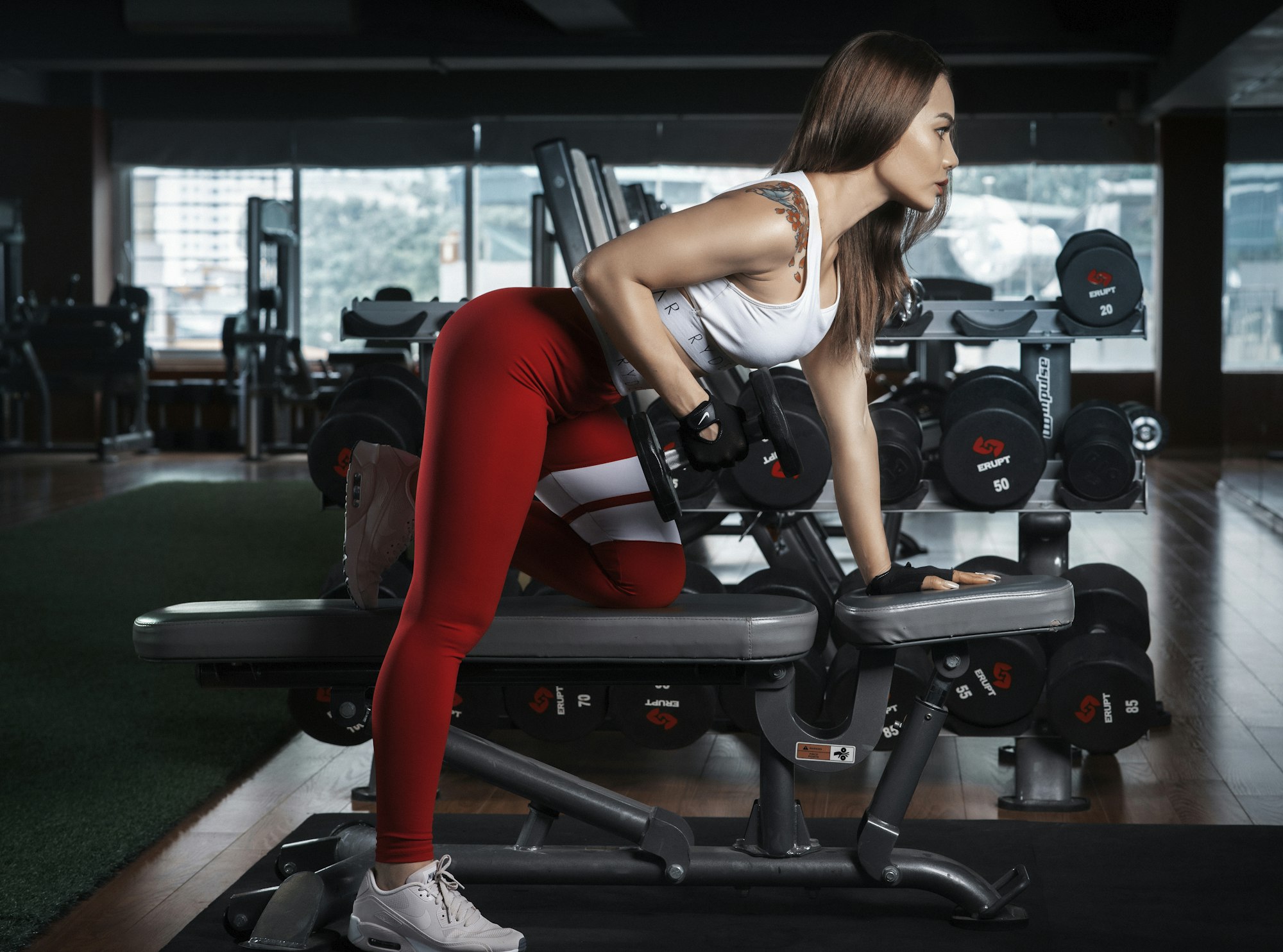
Lift heavy things, on purpose, several times a week. If the core problem is accelerated fat gain plus lean mass loss, resistance training addresses both sides of that equation directly. The ACTLIFE randomized controlled trial, published by Hettchen and colleagues in Clinical Interventions in Aging, randomized early postmenopausal women to either high-impact, high-intensity resistance training three times weekly or a low-intensity control program. After thirteen months, the training group gained lean mass while the control group lost it. Total body fat dropped by about 1.4 kg in the training group versus essentially no change in controls, and abdominal fat dropped by roughly 1.5 kg while controls slightly gained. Menopausal symptom scores improved too. Walking is wonderful for your heart and your head. It will not do this.
Eat enough protein to actually hold onto muscle. Most women I see in their late forties are eating half of what they need. I generally target somewhere around 1.2 to 1.6 grams per kilogram of body weight daily, spread across meals rather than crammed into dinner. Protein is also the most satiating macronutrient, which quietly solves part of the appetite problem without any willpower being involved.
Treat sleep as a medical issue, not a lifestyle preference. If night sweats are waking you up, that's a treatable symptom and it's downstream of everything else on this list. Fix that first.
Look honestly at alcohol. Nobody wants to hear it. Alcohol adds calories, disrupts deep sleep, raises cortisol, and, in perimenopause, frequently triggers hot flashes. Two glasses of wine on a Friday can cost you two nights of quality sleep.
Consider medication when the situation warrants it. For women with genuine obesity or metabolic disease, GLP-1 and dual-agonist medications are effective tools, and there's early interest in how they perform alongside hormone therapy, though the data on combining them is still observational and thin. If we go that route, I insist on protein and resistance training alongside it, because losing weight without protecting lean mass in a population already losing lean mass is a bad trade.
Measure the right things. Body composition, waist circumference, fasting insulin, HbA1c, a lipid panel, thyroid function, and a full hormone panel. Not just weight.
The Practical Takeaway
What's happening to your body in perimenopause and menopause is real, it's measurable, and it's not a referendum on your discipline. The fat gain accelerated and the muscle started leaving, and the scale hid both changes from you at the same time. That's a mechanical problem with a mechanical solution: build muscle back, feed it properly, fix the sleep, and address the hormone deficit when it's clinically appropriate.
The women who get their bodies back in this stage of life aren't the ones eating the least. They're the ones lifting the most, sleeping the best, and working with someone willing to look at the whole picture instead of one number. At Magnolia Functional Wellness in Southlake, that's the conversation I'd rather have with you.
By Dr. Farhan Abdullah, DO | Medical Director, Magnolia Functional Wellness | Southlake, TX
Your Questions Answered
Led by trained medical professionals delivering safe, effective, and scientifically backed aesthetic and wellness treatments.
Does HRT cause weight gain?
This is one of the most persistent myths about HRT, and the evidence doesn't support it. Multiple well-designed studies have found that HRT does not cause weight gain — and in some cases, estrogen replacement is associated with reduced visceral fat accumulation compared to untreated menopause. What does cause weight gain during perimenopause and menopause is the hormonal shift itself. Declining estrogen changes where fat is deposited — shifting from subcutaneous (under the skin) to visceral (around the organs) distribution. It also reduces insulin sensitivity and affects appetite regulation. Women who gain weight during the menopausal transition are experiencing the effects of hormonal decline, not of HRT. If anything, appropriately managed HRT — particularly when it includes testosterone optimization — can support a more favorable metabolic environment, better body composition, and improved response to exercise. The weight gain narrative around HRT is one of the barriers that prevents women from getting a treatment that can genuinely help them. We address it directly in every consultation.
Why is the scale barely moving but my clothes don't fit anymore?
Because the scale can't tell you what you're made of. During the menopause transition, fat gain roughly doubles while lean muscle mass declines, and those two changes partly cancel each other out on the scale. Your body shape, metabolic rate, and insulin sensitivity all shift even when the number stays similar. At Magnolia Functional Wellness in Southlake, we measure body composition instead of relying on weight alone.
Will hormone therapy help me lose the belly fat I've gained in menopause?
I'll give you an honest answer. Randomized trials suggest hormone therapy can slow central fat accumulation and help preserve lean mass, but it isn't a weight loss drug and shouldn't be sold as one. What it often does is make everything else possible, because once you're sleeping through the night and the brain fog lifts, you actually have the capacity to train and eat well. That's where most of the body composition change comes from.
Is cardio or weight training better for menopause weight gain?
Resistance training, and it isn't close. A randomized trial in early postmenopausal women found that a high-intensity resistance and impact program built lean mass and reduced abdominal fat, while the low-intensity control group lost muscle. Walking is great for your heart and your head, but it won't rebuild the muscle you're losing. I want my patients lifting something heavy at least twice a week.
How much protein should I be eating in perimenopause?
More than you're eating now, most likely. I generally target somewhere around 1.2 to 1.6 grams per kilogram of body weight daily, spread across meals rather than loaded into dinner. Protein protects the muscle you're at risk of losing during this window, and it's also the most filling macronutrient, so it quietly takes care of part of the appetite problem too.
Need More Information?
Our team is ready to answer your specific questions and concerns.