
The Athlete's Protocol: PRP + Exosomes for Sports Recovery
Active adults rarely heal chronic tendon and joint injuries with rest and cortisone alone. Dr. Farhan Abdullah explains how Magnolia Functional Wellness combines PRP and exosome therapy into a sequenced athlete's protocol, what the research actually supports, and who is (and isn't) a good candidate.


By Dr. Farhan Abdullah, DO | Medical Director, Magnolia Functional Wellness | Southlake, TX
A cranky hamstring doesn't care that you're only 43. Neither does the rotator cuff you tweaked playing pickleball, or the patellar tendon that starts barking every time you jump back into your Tuesday night basketball league. I see this patient constantly. Active, competitive, used to bouncing back in a week. Now the injury that should've healed by Thanksgiving is still there in February, and the orthopedist's offer is the same one it's been for thirty years: rest, ice, a cortisone shot, and if all that fails, surgery.
There's a middle path, and it's the one I get asked about most at Magnolia Functional Wellness in Southlake. We call it the athlete's protocol: platelet-rich plasma (PRP) combined with exosome therapy, sequenced deliberately to support how tendons, ligaments, and joints actually repair themselves. Not a miracle. Not snake oil either. A biologically sensible approach with real evidence behind parts of it, honest uncertainty behind others, and a growing number of weekend warriors who are glad they tried it before signing up for an operating room.
Let me walk you through how it works, what the research actually says, and who it's right for. Including who it isn't right for, because that matters just as much.
Why Athletic Injuries Heal So Slowly in the First Place
Here's something that surprises most of my patients: the tissues athletes injure most often are some of the worst-supplied tissues in the entire body. Tendons and ligaments have a fraction of the blood flow that muscle enjoys. Muscle tears flush themselves with oxygen, nutrients, and repair cells almost immediately, which is why a strained quad usually feels better in two or three weeks. A tendon? It might receive a trickle of that same healing traffic.
That's the core problem with chronic tendinopathy. It's not really an "itis" at all in most cases. When researchers biopsy chronically painful tendons, they often find surprisingly little active inflammation. What they find instead is failed healing: disorganized collagen, thickened degenerative tissue, and a repair process that started, stalled, and never finished. The tendon got stuck mid-renovation, scaffolding up, workers gone home.
This is why rest alone so often disappoints. Rest removes the aggravation, but it doesn't restart the construction crew. It's also why cortisone is such a mixed bag. A steroid injection can quiet pain impressively for a few weeks or months, but corticosteroids actively suppress the cellular repair response. You feel better while the underlying tissue quietly gets weaker. I've lost count of how many patients come to me three cortisone shots deep, hurting worse than when they started.
Regenerative medicine flips the strategy. Instead of suppressing the biology, we try to restart it. That's where PRP and exosomes come in, and they approach the same problem from two different angles.
PRP: Your Own Biology, Concentrated
Platelet-rich plasma is conceptually simple. We draw your blood, spin it in a centrifuge to concentrate the platelets several-fold above baseline, and inject that concentrate precisely into the injured tissue. Platelets aren't just for clotting. Their alpha granules carry a dense payload of growth factors, including PDGF, VEGF, and TGF-beta, the signaling molecules that recruit repair cells, stimulate new blood vessel formation, and direct collagen production. A 2021 review in Arthroscopy by Sheean and colleagues lays this out well, noting that PRP has shown convincing efficacy for patellar tendinopathy, knee osteoarthritis, and lateral epicondylitis, with several randomized trials demonstrating superiority over both corticosteroids and hyaluronic acid for knee arthritis symptoms.
For the shoulder, the data are encouraging too. A 2021 systematic review and meta-analysis published in PLoS One by Hamid and Sazlina pooled eight randomized controlled trials of PRP for rotator cuff tendinopathy and concluded that PRP injection was a safe and effective intervention for long-term pain control and shoulder function.
Now, am I going to tell you PRP works for everything? No, and you should be suspicious of anyone who does. The evidence is mixed depending on the body part, and pretending otherwise helps nobody. A large randomized trial published in JAMA in 2021 by Kearney and colleagues tested a single PRP injection against a sham needle in 240 patients with chronic midportion Achilles tendinopathy and found no meaningful difference at six months. That's a well-designed study and I take it seriously. It tells us something useful: one isolated injection, with no loading program, no metabolic support, and no follow-up treatments, is probably not enough for a degenerated Achilles.
What I take from the full body of research is that PRP responds to protocol design. Platelet concentration matters. Injection accuracy matters, which is why we use ultrasound guidance. The rehab program afterward matters enormously. And for stubborn, chronic cases, a single shot is often the wrong dose of a right idea. That's precisely the gap the athlete's protocol is built to close.
Exosomes: The Messengers That Tell Tissue What to Do
If PRP supplies the raw growth factors, exosomes supply the instructions. Exosomes are nanoscale vesicles, little lipid packages around a hundredth the size of a cell, that cells use to communicate with each other. The ones used in regenerative medicine are typically derived from laboratory-cultured mesenchymal stem cells (MSCs), and they carry the proteins, lipids, and microRNAs that those young, healthy cells use to coordinate repair.
Why not just inject the stem cells themselves? Sometimes we do use cell-based orthobiologics. But a large share of stem cell benefit appears to come not from the cells engrafting and becoming new tissue, but from the signals they release. Exosomes are those signals, isolated and concentrated. A 2023 review in the Journal of Nanobiotechnology by Zou and colleagues details how MSC-derived exosomes promote tendon-to-bone healing in preclinical models: they shift macrophages from their inflammatory state toward their repair state, encourage organized collagen formation, and support new blood vessel growth in exactly the low-supply tissues I described earlier.
I want to be straightforward with you about where this science stands. Most exosome evidence today comes from laboratory and animal studies, and exosome products are not FDA-approved to treat orthopedic conditions. Human trials are underway, and the preclinical signal is exciting, but anyone presenting exosomes as settled science is ahead of the data. At Magnolia we frame exosomes as a promising biologic adjunct, we source only from suppliers with rigorous third-party testing and certificates of analysis, and we have a frank conversation about evidence with every patient before we proceed. My training at R3 Stem Cell Institute drilled one principle in deeply: in regenerative medicine, product quality and patient selection are everything.
Why We Combine Them: The Logic of the Athlete's Protocol
So why pair these two therapies rather than pick one? Because they're complementary, not redundant.
Think of a stalled construction site. PRP delivers the materials and the work order: growth factors that summon repair cells, stimulate vessel growth, and kick collagen production into gear. Exosomes act more like the foreman, carrying instructions that organize the response, calm destructive inflammation, and keep the repair process pointed in the right direction instead of laying down more disorganized scar. Materials without coordination build slowly. Coordination without materials builds nothing.
In practice, here's what the protocol typically looks like at our Southlake clinic:
- Evaluation first. A real musculoskeletal exam, ultrasound assessment of the injured tissue, and a review of your labs. Healing is metabolically expensive, and unaddressed issues like vitamin D deficiency, poor sleep, or low hormone levels sabotage tissue repair before we ever pick up a syringe.
- Ultrasound-guided PRP into the damaged tissue, not just near it. Precision is half the treatment.
- Exosomes layered in, either alongside the PRP or as a follow-up session, depending on the tissue and the chronicity of the injury.
- A structured loading program. Tendons remodel in response to progressive load. Biologics start the repair; graded loading tells the new collagen which direction to align. Skip this step and you've wasted the injection.
Most athletes need one to three treatment sessions spaced several weeks apart. Expect soreness for a few days afterward, a gradual improvement curve over six to twelve weeks, and a return to sport that we stage deliberately rather than guess at. One of my patients, a guy in his fifties who'd nearly given up on tennis because of a chronic rotator cuff problem, was back to playing doubles three months after we finished his series. Not because of magic. Because we finally gave his shoulder the biology and the rehab plan it needed at the same time.
Who's a Good Candidate (and Who Isn't)
The best candidates for the athlete's protocol look like this: an active adult with a chronic tendon, ligament, or mild-to-moderate joint injury that has plateaued despite rest and physical therapy, who wants to avoid surgery or simply isn't a surgical case yet. Rotator cuff tendinopathy, tennis and golfer's elbow, patellar tendinopathy, hamstring injuries, mild knee arthritis, plantar fasciopathy. These are the bread and butter.
Who should think twice? If you have a full-thickness tendon rupture, advanced bone-on-bone arthritis, or mechanical symptoms like a locked joint, you need a surgical consultation, and I'll tell you that plainly rather than sell you injections. Active infection, certain blood disorders, and some medications also take PRP off the table. And if you're unwilling to do the rehab work afterward, save your money. I mean that with affection, but I mean it.
It's also worth saying that biologics work better in a body that's primed to heal. That's the functional medicine side of my practice. We routinely check hormone status, metabolic markers, and inflammatory markers before a regenerative series, because a 50-year-old with optimized testosterone, good sleep, and adequate protein intake heals differently than one running on fumes. If you're curious about the broader toolkit, our PRP injection program and our full menu of orthobiologic therapies are both detailed on our site.
Between spring soccer tournaments, summer golf, and every pickup game in between, DFW is full of adults who refuse to slow down. I'm one of them, so I get it. The point of the athlete's protocol isn't to chase some experimental fountain of youth. It's to give injured tissue what it's been asking for all along: a proper blood supply's worth of growth signals, intelligent coordination of the repair, and a progressive return to the sport you love. If a nagging injury has been stealing your season, come see us at Magnolia Functional Wellness in Southlake and we'll give you a straight answer about whether your biology and this protocol are a match.
Your Questions Answered
Led by trained medical professionals delivering safe, effective, and scientifically backed aesthetic and wellness treatments.
What's the difference between PRP, stem cells, and exosomes?
PRP delivers concentrated growth factors from your own blood to stimulate repair signaling at a treatment site. MSCs are living cells that can signal tissue repair, modulate immune responses, and differentiate into various tissue types. Exosomes are the nanoscale vesicles MSCs secrete — carrying the signaling molecules that drive much of their biological activity, in a cell-free format that offers different delivery characteristics. Each has distinct mechanisms, evidence bases, and appropriate applications. Dr. Abdullah helps you understand which is most relevant for your goals.
Can PRP be combined with other treatments?
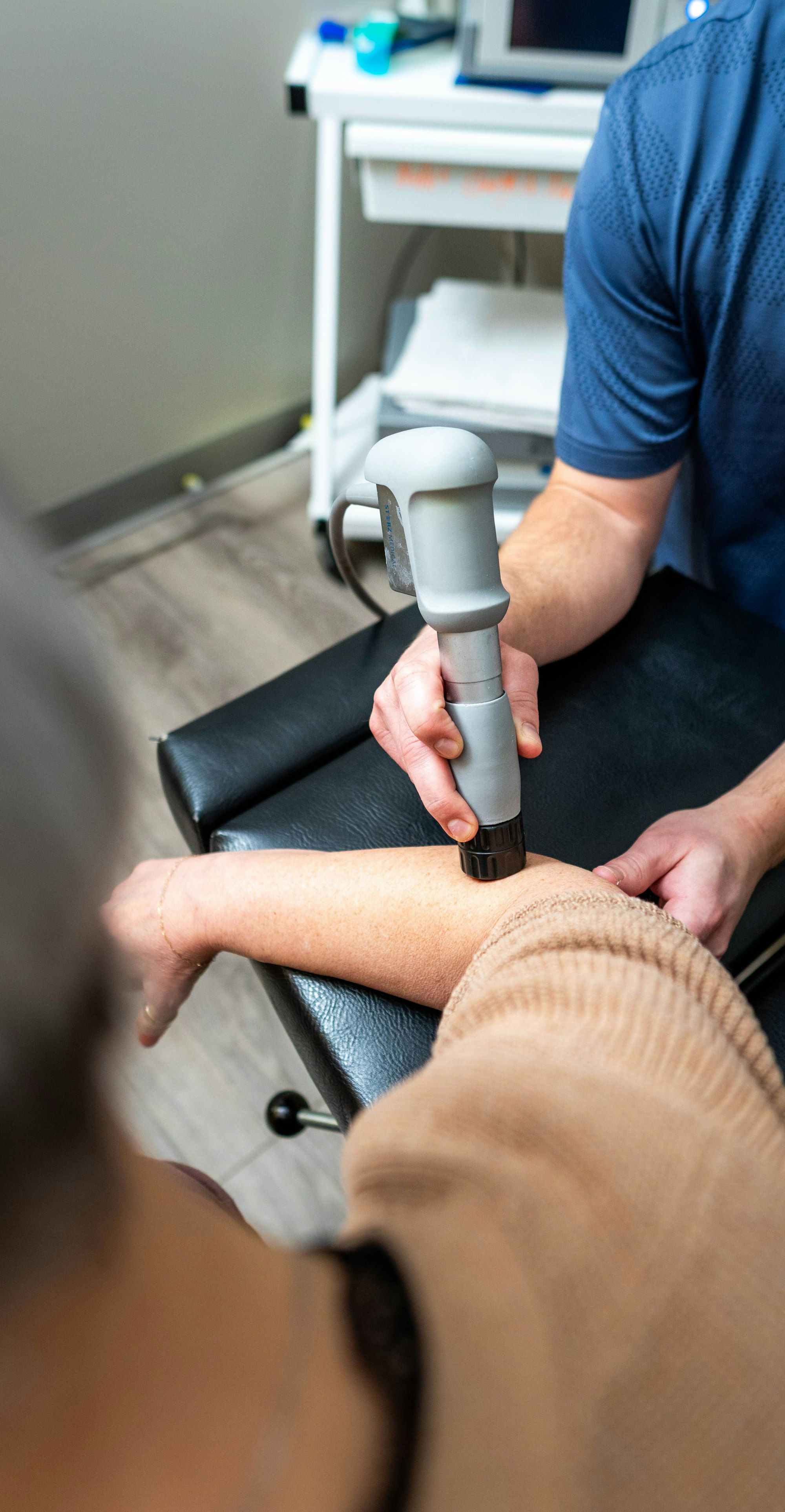
Yes — and in many cases, combining PRP with complementary treatments produces significantly better results than PRP alone. For joint and musculoskeletal applications, PRP pairs well with stem cell therapy and exosome therapy along with shockwave therapy. PRP provides the initial inflammatory environment that recruits stem cells to the area; MSCs and exosomes provide the deeper regenerative signals. The combination addresses tissue repair through multiple mechanisms simultaneously. For hair restoration, PRP is commonly combined with minoxidil and/or finasteride for a more comprehensive approach — medications that reduce DHT-driven follicle miniaturization while PRP stimulates follicle activity directly. For aesthetic applications, PRP combined with microneedling consistently outperforms either treatment alone. The microchannels created by needling allow deeper PRP penetration while the PRP amplifies the collagen remodeling response. Dr. Abdullah designs combination protocols based on your specific goals and budget — always with the goal of maximizing clinical outcome rather than maximizing the number of treatments.
How soon should I expect results after PRP or stem cell therapy?
Regenerative treatments don't work like a switch, so most people don't feel much in the first few weeks. The first real signals usually show up around months two and three, and the fuller effect tends to land between months four and six as your tissue finishes remodeling. At Magnolia Functional Wellness in Southlake, we build in a six-month check-in specifically because that's when we can honestly judge your trajectory.
What if I don't feel better six months after my regenerative treatment?
First, we separate no improvement at all from less improvement than you'd hoped for, because those are different problems. True non-responders are uncommon, and when it happens it's usually a structural issue, a dosing mismatch, or an unaddressed driver like joint instability or blood sugar. At Magnolia Functional Wellness in Southlake, the six-month visit is where we reassess honestly and decide whether a second treatment, focused rehab, or a different approach makes the most sense for you.
Maybe, but I want to be straight with you. Most of the evidence for BPC-157 and TB-500 in tendon and muscle healing comes from animal studies, not large human trials, so I treat them as a supportive tool rather than a guarantee. At Magnolia Functional Wellness in Southlake, I only use them as part of a supervised plan that also covers sleep, load management, and the boring fundamentals. If your foundation's solid, they may help you bounce back faster, but they're not a shortcut around doing the work.
Need More Information?
Our team is ready to answer your specific questions and concerns.