
PRP for Osteoarthritis: Grade-by-Grade Outcomes
Not every arthritic knee responds to PRP the same way. Kellgren-Lawrence grade, symptom duration, and preparation quality all change what you can reasonably expect. Dr. Farhan Abdullah walks through the evidence grade by grade, including the placebo-controlled trial that came back negative, and explains where PRP fits and where it doesn't.
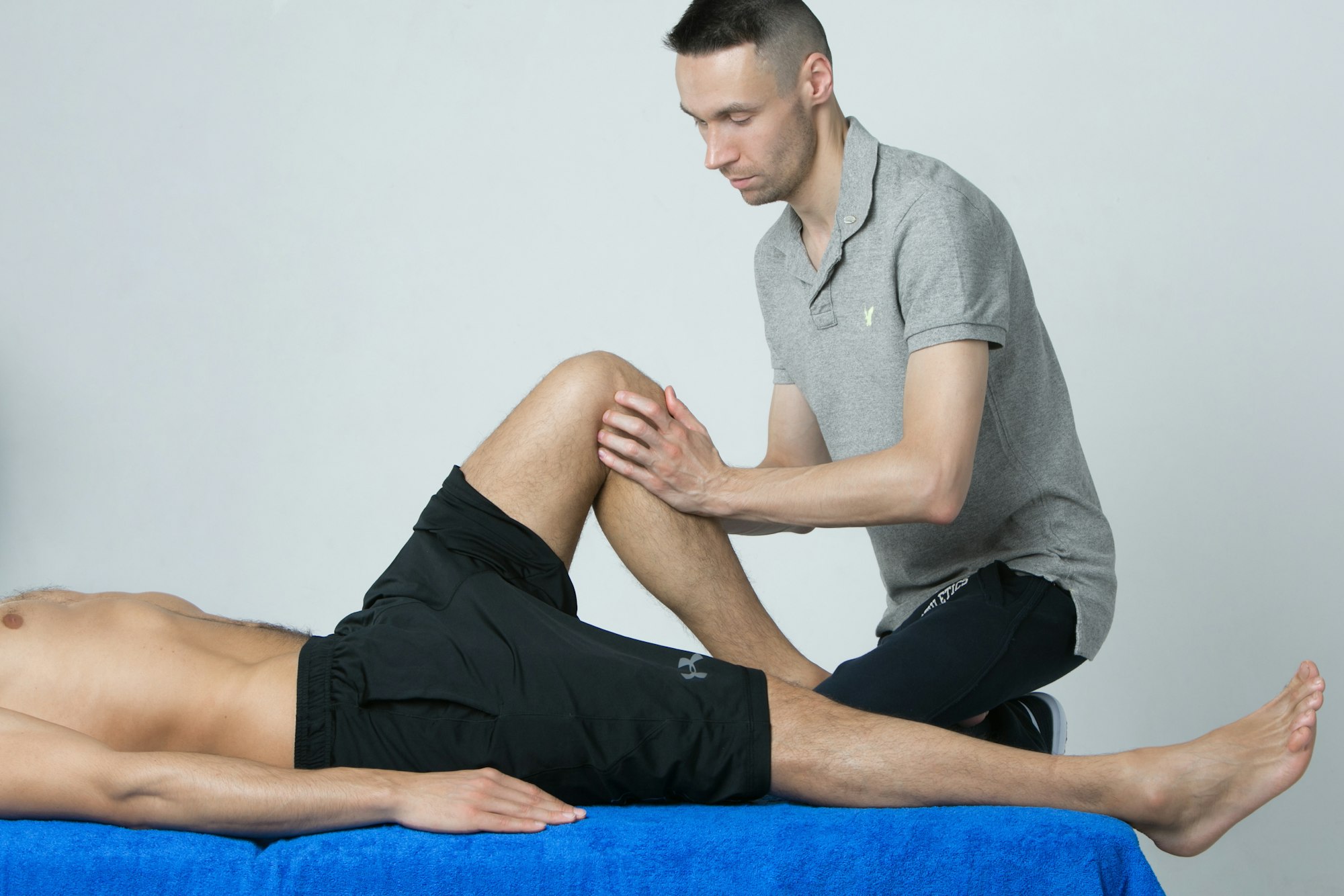


A patient brought me her knee X-ray report a few weeks ago and pointed at one phrase: "bone on bone." She'd heard that phrase from an orthopedist, then from a physical therapist, then from her sister-in-law, and by the time she sat down across from me she had already decided her options were a cortisone shot every few months or a knee replacement she wasn't ready for at fifty-eight. She wanted to know whether PRP could help. What she was really asking, though she didn't put it this way, was whether her knee was too far gone.
That's the right question. It's also the one most clinics answer badly. Some promise cartilage regeneration they cannot deliver. Others dismiss platelet-rich plasma entirely because one well-publicized trial came back negative. Neither answer is useful if you're the person with the knee.
I'm Dr. Farhan Abdullah, an internal medicine physician and the medical director at Magnolia Functional Wellness in Southlake. I still work as a hospitalist, which means part of my week is spent with patients whose joint disease has progressed far enough that losing mobility is now driving everything else in their health. That perspective makes me careful about staging. Osteoarthritis isn't one disease with one answer. It's a spectrum, and where you sit on it changes what PRP can realistically do for you.
So let's go grade by grade.
What the Kellgren-Lawrence Grades Actually Describe
Almost every study on PRP for knee arthritis sorts patients using the Kellgren-Lawrence scale, a radiographic grading system that's been around since the late 1950s. It runs from 0 to 4 and it's based entirely on what shows up on a plain X-ray.
- Grade 0: No radiographic features of arthritis.
- Grade 1: Doubtful joint space narrowing, possible tiny osteophytes (bone spurs).
- Grade 2: Definite osteophytes, possible joint space narrowing. This is usually called mild.
- Grade 3: Multiple osteophytes, definite narrowing, some sclerosis, possible deformity of the bone ends. Moderate.
- Grade 4: Large osteophytes, marked narrowing, severe sclerosis, definite deformity. This is the "bone on bone" grade.
Two things about this scale are worth knowing before you let it dictate your treatment plan.
First, it measures structure, not suffering. The correlation between X-ray grade and how much pain someone reports is genuinely weak. I've seen grade 4 knees in patients who walk three miles a day and grade 2 knees in patients who can't get through a grocery run. If your imaging looks worse than you feel, that's real information, and it should factor into the decision.
Second, an X-ray tells you almost nothing about the biology inside the joint. Cartilage doesn't show up on plain film. Neither does synovial inflammation, which is a large part of what actually hurts. The X-ray shows you the shadow that cartilage loss leaves behind. It doesn't show you whether there's still living tissue in there capable of responding to a treatment.
Keep both of those in mind as we walk through the grades, because the studies below sort patients by a scale that only sees part of the picture.
Grades 1 and 2: Where PRP Has the Most Room to Work
This is where the data is strongest, and it isn't close.
A 2023 pharmacodynamic meta-analysis published in the International Journal of Surgery by Cao and colleagues pooled 45 randomized controlled trials covering 3,829 participants, of whom about 1,805 received PRP. Rather than just asking whether PRP beats hyaluronic acid, the authors modeled which patient characteristics predicted a bigger response. Their answer was specific: a lower Kellgren-Lawrence grade of 2 or below, shorter symptom duration (under six months), higher baseline symptom scores, age 60 or older, and BMI of 30 or above were all associated with greater efficacy. They also found the effect tends to peak roughly two to three months after injection, which matters for setting expectations.
The grade finding is the one I quote most often to patients. Earlier disease responds better. That isn't surprising when you think about the mechanism. PRP delivers a concentrated dose of growth factors and signaling proteins into the joint. Those signals need tissue to act on. A joint at grade 2 still has meaningful cartilage and a synovium that can shift out of a chronic inflammatory state. A joint at grade 4 has far less to work with.
What does responding better actually look like? Realistically, for a grade 1 or 2 knee: less pain, better function, less reliance on anti-inflammatories, and a longer runway before anyone brings up surgery. Not new cartilage. I want to be blunt about that, because the phrase "regrows cartilage" gets used in this industry and the imaging evidence doesn't support it. What PRP appears to do is change the environment inside the joint and slow the process down. That's worth a lot. It isn't the same as reversal.
The practical implication is uncomfortable for a lot of people: the best time to consider PRP injections is earlier than most people consider them. Patients typically arrive after years of escalating symptoms, several cortisone shots, and a surgical consult. By then the window where the response is largest has partly closed.
Grade 3: The Honest Middle Ground
Moderate arthritis is where the conversation gets genuinely nuanced, and where I spend the most time in consultation.
A 2025 meta-analysis in Arthroscopy by Li and colleagues restricted itself to fifteen double-blind randomized controlled trials covering 1,632 patients with Kellgren-Lawrence grades I through III. That design choice matters. Double-blind trials are harder to run and much harder to fool yourself with. The result: at twelve months, PRP outperformed hyaluronic acid on WOMAC pain and total scores, and the difference was large enough to clear the minimal clinically important difference threshold, meaning patients could actually feel it rather than it just showing up as a statistical artifact.
Now the other side. In 2021, JAMA published the RESTORE trial by Bennell and colleagues, a rigorous placebo-controlled study of 288 Australian patients aged 50 and older with grade 2 or 3 medial knee arthritis. Participants got three weekly injections of either leukocyte-poor PRP or saline. At twelve months, PRP did not beat saline on knee pain (a difference of 0.4 points on an 11-point scale, well under the 1.8-point threshold for clinical meaning) and did not preserve medial tibial cartilage volume on MRI.
Both of those things are true at the same time, and any clinic that shows you one without the other is selling rather than informing.
How do I reconcile them? A few ways. RESTORE used a single commercial preparation with a fixed three-injection protocol, and PRP is not a standardized product. Platelet concentration, leukocyte content, volume, and whether the sample is activated all vary enormously between systems, and those variables plausibly affect outcomes. The comparators also differ: saline is not an inert control in a joint, and beating hyaluronic acid is a different bar than beating placebo. And RESTORE enrolled a population skewed toward the harder end, with grade 3 knees included and a mean age near 62.
What I tell grade 3 patients is this. The evidence supports a meaningful chance of symptom relief lasting six to twelve months, which is longer than a cortisone injection typically provides and without cortisone's effect on cartilage over repeated use. It does not support an expectation of structural repair. We set a decision point at three to four months, since that's when the response should be visible, and if you haven't gotten there we stop rather than sell you a second series on hope.
Grade 4: What I Tell Patients Who Are Bone on Bone
Here's the honest answer, and it isn't the one that grows a practice.
Grade 4 knees are largely absent from the good literature. The Li meta-analysis capped inclusion at grade III. RESTORE enrolled grades 2 and 3. The Cao analysis found that efficacy declined as grade rose, and grade 4 sits past the edge of where the modeling has much to say. When a treatment's supporting trials systematically excluded patients like you, that absence is itself information.
That doesn't make PRP useless at grade 4, but it changes the framing entirely. I'm no longer talking about modifying the course of the disease. I'm talking about whether we can buy you a period of better function and less pain, and whether that period is worth what it costs you. For some patients it clearly is. Someone who needs to get through a daughter's wedding, or a busy season at work, or six months of prehab before a planned replacement, may get real value from an injection series even knowing the ceiling is low.
For others, the right answer is that a knee replacement is the treatment that will actually give them their life back, and delaying it with a series of injections is a bad trade. I say that out loud in the room. I'd rather lose the case than take money for something I don't think will work.
There's also a middle path worth mentioning. Grade 4 patients often have significant contributors we can address that have nothing to do with the joint surface itself: quadriceps weakness, a limp that's overloading the medial compartment, metabolic inflammation, vitamin D deficiency, poor sleep, ten or fifteen pounds that would meaningfully change joint loading. Functional medicine training makes me look at all of that before I reach for a needle, and sometimes that work moves the needle more than the injection would have.
Why the Preparation and the Protocol Change the Answer
One reason PRP studies disagree so much is that PRP describes a category, not a product. Two clinics can both say they offer it and be delivering preparations that differ by an order of magnitude.
The variables that matter most for arthritic joints:
- Platelet concentration. Single-spin tabletop systems typically produce two to three times baseline. Validated double-spin systems produce substantially more. More isn't infinitely better, but a preparation barely above baseline blood isn't likely to do much.
- Leukocyte content. For intra-articular use, leukocyte-poor preparations are generally favored, because white cells bring pro-inflammatory cytokines into a joint that's already inflamed. Leukocyte-rich preparations have their advocates for tendon work, which is a different problem.
- Number of injections. Most protocols with positive results used a series rather than a single shot.
- What you do around it. No NSAIDs for several days before and roughly two weeks after, because ibuprofen and naproxen suppress exactly the response we're trying to provoke. Structured loading and strengthening afterward, not rest.
That last point gets ignored constantly. An injection into a joint attached to a weak leg is half a treatment. I've had patients here in Southlake tell me they were back on the pickleball courts four days after an injection somewhere else with no rehab plan at all, then wonder why the result faded. The injection creates an opportunity. What you do over the following twelve weeks determines whether you use it.
How We Approach the Decision at Magnolia
When someone comes in asking about PRP for arthritis, the X-ray grade is one input among several. I want to know how long the symptoms have been going on, because shorter duration predicts better response. I want to know what's happening mechanically in the whole limb. I want labs, because metabolic inflammation and vitamin D status affect healing. And I want to know what you're actually trying to get back to, since walking the dog without limping and running a half marathon lead to different conversations.
For some patients the honest recommendation is a different orthobiologic option or a combination approach. For some it's shockwave therapy first, or physical therapy first, or weight management first. For some it's a referral to a surgeon. Regenerative medicine is a set of tools, not an ideology, and a clinic that recommends the same tool to everyone who walks in isn't practicing medicine.
The short version, if you want to carry one thing away: PRP is best supported for mild to moderate arthritis, grades 1 through 3, with the strongest response in the earlier grades and in people whose symptoms haven't been running for years. At grade 4 it becomes a palliative option with a low ceiling and honest limitations. And the phrase "bone on bone" on a radiology report, frightening as it sounds, tells you less about your prospects than how you move, how long you've hurt, and what else is going on in your body.
If you're somewhere in that spectrum and trying to figure out where, that's a conversation worth having with a physician who will tell you when the answer is no. That's the standard we hold ourselves to at Magnolia Functional Wellness in Southlake.
By Dr. Farhan Abdullah, DO | Medical Director, Magnolia Functional Wellness | Southlake, TX
Your Questions Answered
Led by trained medical professionals delivering safe, effective, and scientifically backed aesthetic and wellness treatments.
Does PRP still work if my X-ray says I'm bone on bone?
Bone on bone usually means Kellgren-Lawrence grade 4, and I'll be straight with you: that's the grade most of the good studies left out. PRP can still buy some patients a stretch of better function and less pain, but I won't tell you it changes the course of the disease at that stage. At Magnolia Functional Wellness in Southlake, we look at your whole leg, your labs, and what you're actually trying to get back to before deciding, and sometimes the honest answer is that a surgical consult serves you better.
How long does PRP last?
For joint applications, clinical studies show pain relief and functional improvement lasting 6–12 months for most patients, with some reporting sustained benefit beyond a year. This is meaningfully longer than cortisone injections, which typically provide 6–8 weeks of relief without addressing underlying tissue quality. For hair restoration, the stimulatory effects on follicle activity tend to peak around 3–6 months after a treatment series and gradually diminish over time, which is why maintenance injections are built into the protocol. For aesthetic skin applications, collagen remodeling continues for 3–6 months after treatment, and results typically last 12–18 months depending on skin quality, lifestyle factors, and sun exposure. The important distinction with PRP is that it doesn't just mask symptoms — it promotes actual tissue changes. Those changes take time to fully develop but also tend to be more durable than symptomatic treatments.
How many PRP treatments will I need?
It depends significantly on what you're treating. For musculoskeletal applications — joint pain, tendon injuries — most patients see meaningful improvement from a series of 2–3 injections spaced 4–6 weeks apart, followed by reassessment. Some conditions respond well to a single treatment; others, particularly moderate to advanced osteoarthritis, benefit from an annual maintenance injection after the initial series. For scalp hair restoration, the standard protocol is 3–4 treatments spaced 4–6 weeks apart for the initial phase, followed by maintenance injections every 4–6 months to sustain follicle stimulation. Hair restoration with PRP is a long-term commitment — the follicles need ongoing support. For aesthetic applications combined with microneedling, a series of 3 treatments spaced 4–6 weeks apart is typical, with maintenance every 6–12 months. Dr. Abdullah assesses your response after each treatment and adjusts the protocol accordingly. We don't lock you into a predetermined package — we treat based on how you're actually responding.
Does PRP mean I can avoid surgery altogether?
For some milder tendon, ligament, or joint injuries, PRP earlier in the process can help you heal enough to delay or reconsider surgery. But for a full-thickness tear or a joint that clearly needs repair, surgery is still the right call, and PRP is there to support your recovery. Dr. Abdullah won't promise you'll skip an operation you genuinely need. We'd rather give you an honest assessment of where PRP fits in your specific situation.
Why does PRP quality vary so much between providers?
Most medspas and high-volume clinics use single-spin kits producing 2–3x platelet concentration — barely above baseline blood — with significant leukocyte and red blood cell contamination. We use the EmCyte Genesis Sapphire centrifuge with Pure PRP SP kits, a double-spin validated system producing highly concentrated, leukocyte-poor platelet preparations. The leukocyte-poor distinction matters specifically for joint and musculoskeletal applications — research consistently shows leukocyte-poor PRP outperforms leukocyte-rich preparations for osteoarthritis and tendinopathy because you're delivering growth factors without the pro-inflammatory cytokines that counteract them. When a clinic advertises PRP at $200–$300 per session, the processing system almost certainly isn't producing a preparation with meaningful therapeutic concentration or purity. Cheap PRP is cheap for a reason.
Need More Information?
Our team is ready to answer your specific questions and concerns.