
Spermidine: The Autophagy-Inducing Compound in Wheat Germ and Aged Cheese
Spermidine is a polyamine found in wheat germ, aged cheese, natto, and mushrooms that switches on autophagy, your cells' internal cleanup process. Dr. Farhan Abdullah walks through the mechanism, the animal lifespan data, the twenty-year Bruneck cohort linking higher intake to lower mortality, and the randomized trial that came up short. A candid look at where spermidine belongs in a longevity plan, and where it doesn't.


There's a wedge of aged Parmesan in my refrigerator that my wife assumes is there for pasta night. I keep grating it onto things for a different reason. It happens to be one of the richest dietary sources of a molecule most people have never heard of, and the research on that molecule has quietly become some of the more interesting work in the entire longevity field.
The molecule is spermidine. The name is unfortunate, and I'll get that out of the way now. Antonie van Leeuwenhoek first crystallized it out of semen in the 1670s, which is how it ended up with a label that makes patients raise an eyebrow when I bring it up. But spermidine isn't a sex hormone or anything close to it. It's a polyamine, a small positively charged molecule that shows up in nearly every living cell, in wheat germ, in aged cheddar, in natto, in mushrooms, in green peas, and in the bacteria living in your colon right now.
I'm Dr. Farhan Abdullah. I'm a board-certified internal medicine physician, I still round on patients at a hospital here in the Dallas area, and I'm the medical director at Magnolia Functional Wellness in Southlake. Patients ask me about longevity compounds constantly, usually two days after a podcast sent them down a rabbit hole at 11pm. Spermidine comes up more often than it used to. So let's go through what the evidence actually supports, where it gets shaky, and whether that container of wheat germ in your pantry deserves a promotion.
What Spermidine Actually Is
Polyamines are a small family of molecules (putrescine, spermidine, and spermine) that your body makes on its own, absorbs from food, and receives as a gift from your gut microbiome. They bind to DNA and RNA, stabilize cell membranes, regulate ion channels, and participate in protein synthesis. Cells can't divide without them. That's not a wellness claim, that's basic biochemistry that's been in textbooks for fifty years.
Here's what makes spermidine relevant to aging: your levels drop as you get older. Tissue concentrations of spermidine decline substantially across the lifespan in nearly every mammal that's been measured. There's an interesting exception in the human data, which is that centenarians and their offspring tend to have higher circulating polyamine levels than people two or three decades younger. That's an observation, not proof of anything, but it caught researchers' attention early on.
The mechanism that generated the excitement is more specific. Spermidine inhibits an enzyme called EP300, which is an acetyltransferase that normally puts the brakes on autophagy. Take the brakes off, and cells start cleaning house. That single mechanistic thread runs through nearly every spermidine paper published since 2009, and it's the reason a molecule from wheat germ ended up being discussed in the same breath as rapamycin and metformin.
One more thing worth knowing. Spermidine is a "caloric restriction mimetic," meaning it produces some of the same downstream cellular signals as eating less without requiring you to eat less. I'm always a little skeptical of that category, because biology rarely gives you the benefit without the cost. But the spermidine data is more convincing than most.
Autophagy: The Cellular Cleanup Crew You Don't Notice Until It Quits
Every cell in your body accumulates garbage. Misfolded proteins, oxidized lipids, mitochondria that have stopped producing usable energy and started leaking reactive oxygen species instead. Autophagy is the process by which a cell wraps that debris in a membrane, ships it to the lysosome, and breaks it down into raw material it can reuse. Yoshinori Ohsumi won the Nobel Prize in 2016 for working out how it operates.
Autophagic capacity declines with age. That decline shows up in the tissues you'd expect to suffer most from accumulated junk: heart muscle, neurons, skeletal muscle, liver. When I look at the pathology of Alzheimer's disease, Parkinson's disease, heart failure with preserved ejection fraction, and sarcopenia, I'm looking at conditions where damaged material accumulates faster than the cell can clear it. Restoring autophagy is one of the few interventions that plausibly touches all of them at once.
The question, of course, is whether you can actually restore it in a living human being. Fasting does it. Exercise does it. Certain drugs do it. And spermidine appears to do it too.
The most elegant demonstration I've seen came from a 2024 paper in Nature Cell Biology by Sebastian Hofer and colleagues, working across the Graz and Paris groups that have driven most of this field. They showed that spermidine levels rise during fasting and caloric restriction in yeast, flies, mice, and human volunteers. Then they did the more important experiment: they blocked spermidine synthesis, and fasting stopped working. The autophagy response was blunted. The lifespan extension went away. The cardioprotection went away.
That reframes things. Spermidine isn't just another supplement that happens to nudge autophagy. It looks like a required intermediate in how fasting produces its benefits in the first place. If you've been doing 16:8 or a longer fast and wondering what's happening under the hood, some of it is running through this pathway.
What the Human Evidence Shows, and Where It Gets Uncomfortable
Here's where I have to be the doctor rather than the enthusiast.
The animal data is genuinely strong. A 2016 paper in Nature Medicine from Tobias Eisenberg and colleagues showed that oral spermidine extended lifespan in mice, reduced cardiac hypertrophy, preserved diastolic function in old animals, improved mitochondrial respiration, and lowered blood pressure in a rat model of salt-sensitive hypertension. Critically, when they knocked out Atg5 (an essential autophagy gene) in heart muscle, the cardioprotection disappeared entirely. That's how you demonstrate a mechanism rather than just assert one.
The human epidemiology is suggestive. Stefan Kiechl and colleagues published a prospective cohort analysis in the American Journal of Clinical Nutrition in 2018 drawing on 829 participants from the Bruneck study in northern Italy, followed for twenty years with repeated dietitian-administered food frequency questionnaires. All-cause mortality fell steadily across increasing thirds of spermidine intake, from about 40 deaths per 1,000 person-years in the lowest group to about 15 in the highest.
That finding gets quoted a lot. It should be quoted with a caveat. This is observational nutrition data, and people who eat more spermidine-rich foods are eating more whole grains, legumes, mushrooms, and fermented foods. They're likely doing several other things right. Statistical adjustment helps, but it doesn't fully solve the problem.
Now for the part supplement companies don't put on the label. The best randomized controlled trial we have on spermidine supplementation in humans was largely negative. Claudia Schwarz and colleagues published the SmartAge trial in JAMA Network Open in 2022. They gave a wheat germ extract supplement to older adults with subjective cognitive decline for twelve months. Memory performance didn't differ from placebo. The biomarkers didn't move meaningfully. Exploratory analyses hinted at possible benefits for verbal memory and inflammation, and the authors suggested higher dosing deserves testing, but the primary endpoint was a miss.
So we have compelling mechanism, strong preclinical outcomes, favorable epidemiology, and one well-run clinical trial that didn't show what everyone hoped it would. That's a normal place for a longevity compound to sit in 2026. It's not a reason to dismiss spermidine. It is a reason to stop anyone who tells you it's proven.
Getting Spermidine From Food (Which Is Where I'd Start)
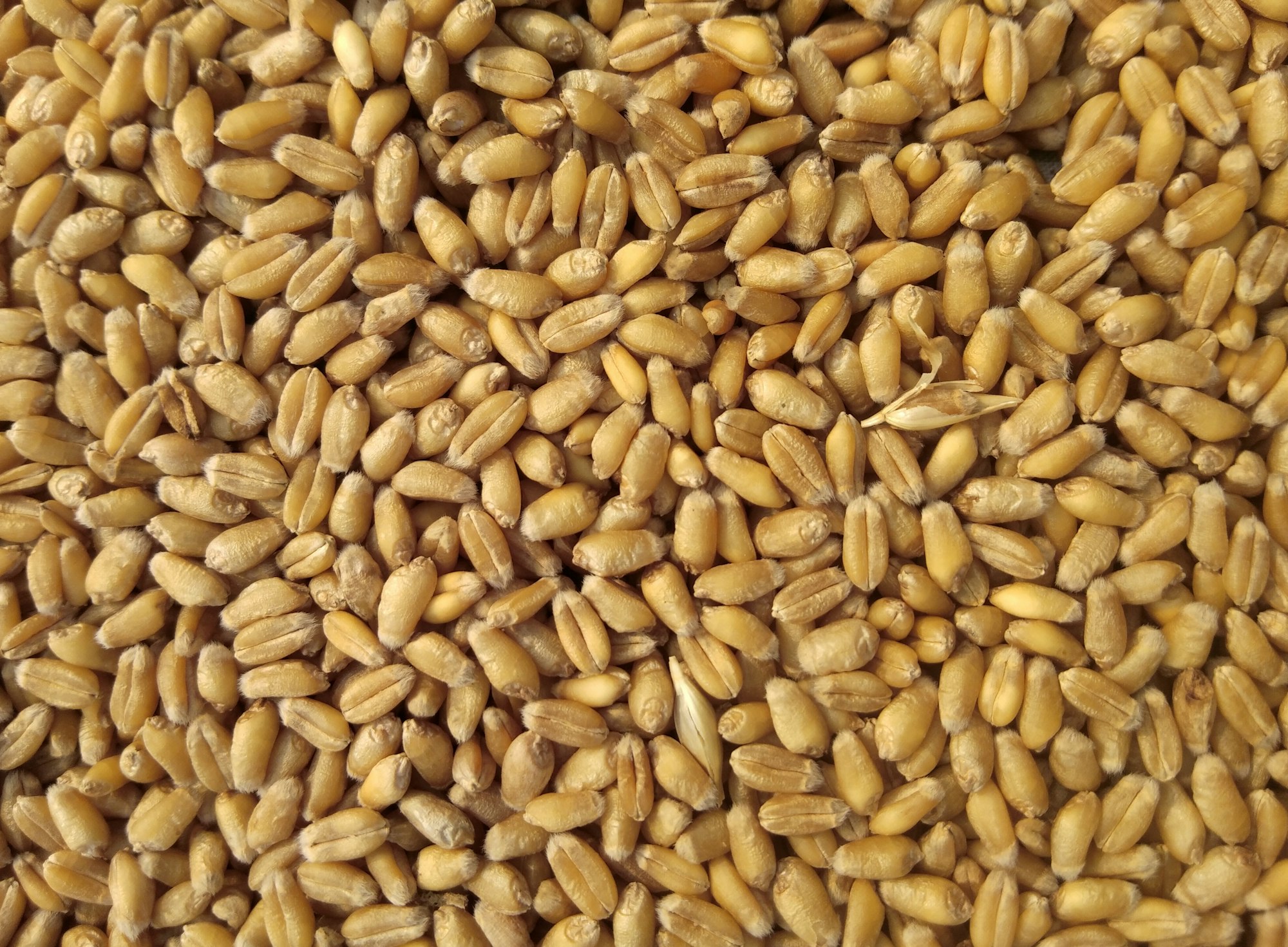
Wheat germ is the standout, roughly 240 milligrams per kilogram, far and away the densest common source. Aged cheeses come next, and aging matters enormously here: a well-aged cheddar or Parmesan carries dramatically more spermidine than fresh mozzarella, because bacterial fermentation keeps producing polyamines over months and years. Natto, dried soybeans, mushrooms, green peas, chickpeas, broccoli, cauliflower, mangoes, and hazelnuts all contribute.
Typical Western intake lands somewhere around 10 to 15 milligrams a day. The high-intake group in the Bruneck cohort was closer to 25 to 30. That gap is bridgeable with food. Two tablespoons of wheat germ stirred into Greek yogurt or a smoothie gets you most of the way there, and it costs about four dollars for a jar that lasts a month.
I'll say something that might sound unscientific coming from an internist: I prefer the food route here, and not only because of the fiber and micronutrients riding along. Spermidine-rich eating patterns overlap almost perfectly with the Mediterranean pattern, and we have decades of hard outcome data supporting that pattern. When a patient tells me they've started keeping wheat germ, natto, and a block of real Parmesan in the kitchen, I'm not worried about whether the polyamine hypothesis holds up. They've improved their diet either way.
One practical note for anyone in North Texas. Summer here does not encourage complicated cooking. Nobody wants to stand over a stove in August when it's 104 outside and the AC is already losing the argument. So keep it simple. Wheat germ goes into a cold smoothie. Chickpeas and mushrooms go into a salad. Aged cheese requires no cooking at all. This is one of the easier dietary changes to make in the middle of a Texas summer.
Supplements, Dosing, and What I Tell Patients at Magnolia
Most commercial spermidine supplements are standardized wheat germ extracts delivering somewhere between 1 and 6 milligrams of spermidine per serving. Some newer products go higher. The safety data at these doses looks reassuring in the trials conducted so far, with no meaningful difference in adverse events compared to placebo over a year of supplementation.
A few honest cautions. Wheat germ extracts are not safe for people with celiac disease or wheat allergy, and I've seen supplement labels handle that disclosure poorly. Polyamines support cell proliferation, which is exactly why the oncology literature has spent years studying polyamine inhibition as a cancer strategy. Whether dietary spermidine matters in that context is unresolved, but I don't recommend supplementation to patients with an active malignancy or a recent cancer history without their oncologist weighing in first. And if you're pregnant, breastfeeding, or on immunosuppressants, this isn't the moment to experiment.
What I tell patients who ask me about it in clinic: food first, supplement second, and understand what tier of evidence you're operating on. Spermidine sits in the same category as several compounds we discuss under longevity medicine and geroprotective therapy, where the mechanism is well characterized, the animal outcomes are impressive, and the human trials are still catching up. That's a reasonable place to spend a modest amount of money and effort. It is not a reasonable place to spend your entire health budget while your blood pressure runs 150/95 and you sleep five hours a night.
The patients who see the most benefit from this kind of work are the ones who've already handled the basics. Sleep, resistance training, protein intake, cardiometabolic labs, hormones where indicated. Once that foundation is solid, adding cellular-level support (spermidine from diet, NAD+ therapy, structured fasting protocols) starts to make sense. Backwards is where people waste years.
Spermidine won't make you a centenarian on its own. What it might do, based on genuinely good mechanistic science and imperfect human evidence, is help your cells keep taking out the trash a little longer than they otherwise would. That's a modest claim, and modest claims tend to age better than dramatic ones. At Magnolia Functional Wellness in Southlake, we build longevity plans around what the data supports rather than what's trending, and sometimes that means telling you the exciting molecule is worth a jar of wheat germ and not much more than that. For now.
By Dr. Farhan Abdullah, DO | Medical Director, Magnolia Functional Wellness | Southlake, TX
Your Questions Answered
Led by trained medical professionals delivering safe, effective, and scientifically backed aesthetic and wellness treatments.
Can I just eat spermidine-rich foods instead of taking a supplement?
For most people, yes, and it's where I'd start. Wheat germ, aged Parmesan and cheddar, natto, mushrooms, chickpeas, and green peas will move your daily intake into the range associated with lower mortality in the cohort data. You also get fiber, protein, and micronutrients that a capsule won't give you. At Magnolia Functional Wellness in Southlake, food comes first and supplements come second.
How much spermidine do I actually need per day?
There's no official recommended intake, so we're working from observational data. Typical American intake runs about 10 to 15 milligrams a day, while the highest-intake group in the twenty-year Bruneck cohort was closer to 25 to 30. Two tablespoons of wheat germ plus some aged cheese and legumes gets most patients into that upper range without much effort.
Is it safe to take a spermidine supplement long term?
The trial data at typical doses of 1 to 6 milligrams looks reassuring, with adverse event rates no different from placebo over twelve months. That said, most products are wheat germ extracts, so they're off the table if you have celiac disease or a wheat allergy. I also want patients with an active or recent cancer to check with their oncologist first, since polyamines support cell proliferation. Bring it up at your next visit in Southlake and we'll look at it in the context of everything else you're doing.
Is a fasting-mimicking diet just a fancy juice cleanse?
No, and the difference matters. A juice cleanse floods you with sugar and does almost nothing for the cellular cleanup people are really after. A fasting-mimicking diet keeps calories, protein, and sugar low enough that your body shifts into a genuine fasting-like state while you're still eating real food. At Magnolia Functional Wellness in Southlake, we treat it as a structured medical reset, not a detox gimmick.
Is longevity medicine the same as anti-aging supplements?
No — and the distinction matters. The agents discussed on this page are FDA-approved medications or well-characterized pharmaceutical compounds used off-label with specific mechanistic targets, growing clinical evidence, and physician-supervised monitoring protocols. This is fundamentally different from the supplement industry, which sells products in the vocabulary of longevity science without the regulatory standards, manufacturing quality controls, or clinical oversight that prescription medicine involves. Rapamycin and dasatinib are prescription medications that require physician evaluation precisely because they have meaningful biological effects — which is also why they're worth taking seriously.
Need More Information?
Our team is ready to answer your specific questions and concerns.