Urolithin A: The Pomegranate Metabolite That Recycles Damaged Mitochondria
A patient set a bottle of Urolithin A on my desk and asked whether she was being played. Dr. Farhan Abdullah breaks down the pomegranate metabolite your gut bacteria actually make, what mitophagy is and why it slows with age, and what the human trials genuinely showed versus what the marketing claims.


A patient set a bottle on my desk last month and asked me a question I get some version of almost every week. "Is this worth a hundred dollars a month, or am I being played?" The bottle was Urolithin A. She'd heard about it on a podcast, bought three months of it, and then felt guilty enough about the price to bring it to her follow-up appointment.
I like that question. It's the right question, and most supplement companies would rather you never ask it.
I'm Dr. Farhan Abdullah, an internal medicine physician and the medical director at Magnolia Functional Wellness here in Southlake. I still work hospital shifts in Dallas, which keeps me honest about the difference between a mechanism that's interesting and a treatment that changes someone's life. Urolithin A sits in an unusual spot between those two categories, and it's one of the few longevity compounds where I think the enthusiasm is mostly earned. Mostly. There are caveats, and we'll get to them.
Your Gut Bacteria Make This, Not the Pomegranate
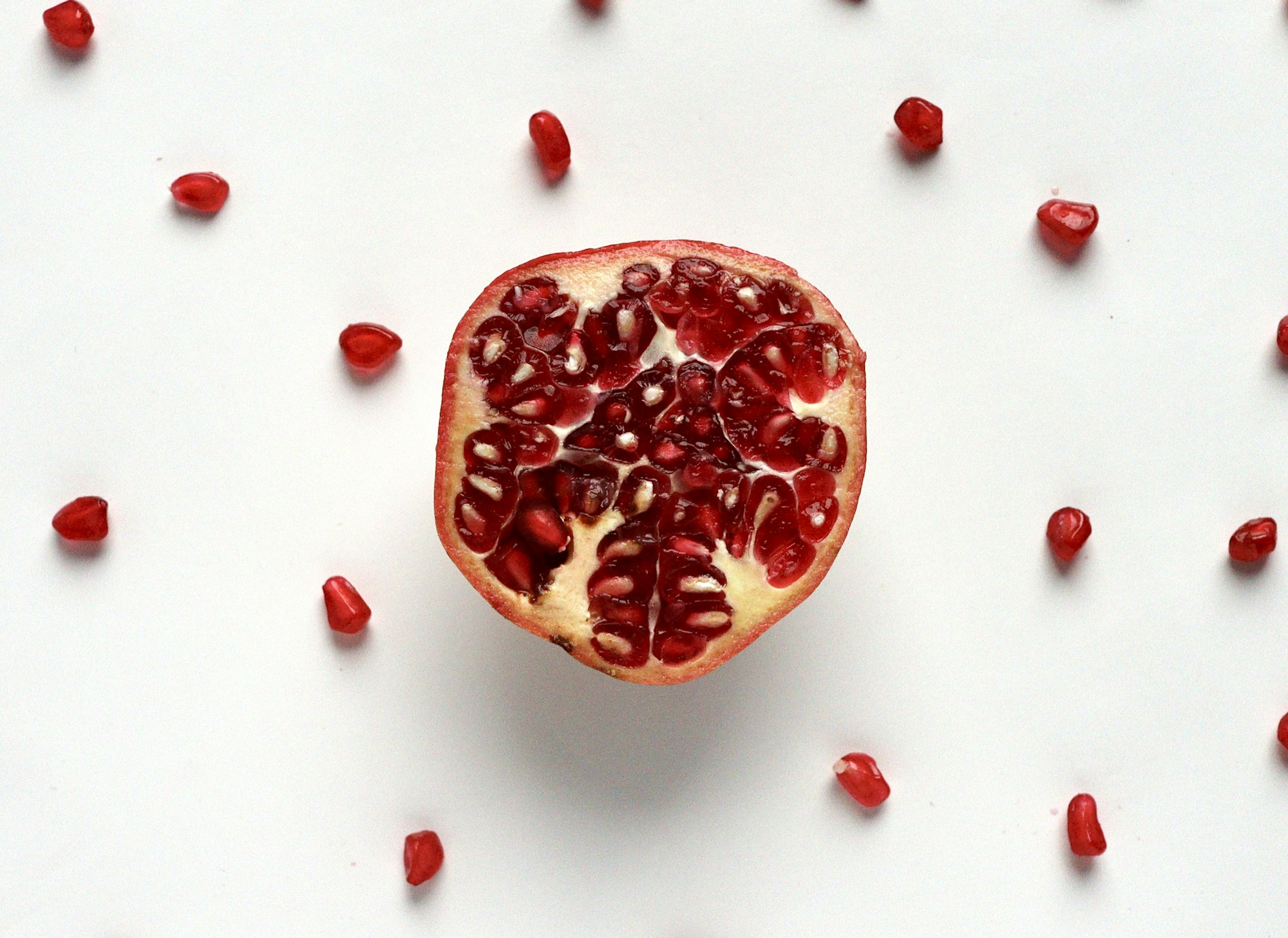
Here's the detail that gets flattened in almost every article written about this compound: pomegranates don't contain Urolithin A. Neither do walnuts, raspberries, or strawberries.
What those foods contain are ellagitannins, a family of large polyphenols that your body cannot absorb in any meaningful quantity. They pass through the small intestine largely intact and arrive in the colon, where certain gut bacteria break them down into ellagic acid and then convert that into urolithins. Urolithin A is the one that matters most.
So the compound in question is a postbiotic. It's a bacterial metabolite, manufactured inside you by microbes you either have or don't have.
And that last part is where it gets genuinely interesting from a clinical standpoint. Not everyone carries the bacteria needed to run this conversion efficiently. The commonly cited figure is that somewhere around 40 percent of adults produce meaningful amounts of Urolithin A after eating pomegranate. The rest produce very little, or produce different urolithins that don't appear to do the same thing. Antibiotic exposure, diet, and age all shift this.
Which means two people can eat identical pomegranate salads and end up with wildly different blood levels of the active compound. That's not a small footnote. It's the entire reason the supplement industry exists around this molecule, because a manufactured dose bypasses the lottery of whether your microbiome happens to cooperate.
I find this humbling, honestly. We spent decades telling patients to eat more antioxidant-rich fruit as though the benefit were a straightforward function of what went in the mouth. Turns out the interesting chemistry was happening two feet downstream, performed by organisms we weren't even measuring.
Mitophagy: Why Cells Need a Recycling Program
To understand why anyone cares about this molecule, you need one concept: mitophagy.
Your mitochondria are the structures inside your cells that convert fuel into ATP, the energy currency that powers basically everything your body does. A muscle cell might contain thousands of them. They work hard, they generate reactive oxygen species as a byproduct, and over time individual mitochondria get damaged.
A damaged mitochondrion is worse than no mitochondrion. It produces less energy while generating more oxidative stress, and it can leak molecular signals that provoke inflammation. It's the broken appliance still plugged into the wall, drawing current and occasionally throwing sparks.
Healthy cells solve this with quality control. Damaged mitochondria get tagged, wrapped in a membrane, and hauled off for degradation and recycling. That process is mitophagy, a specialized branch of autophagy. The main pathway runs through two proteins called PINK1 and Parkin, which accumulate on the surface of a failing mitochondrion and effectively flag it for disposal.
Here's the aging part. Mitophagy slows down as you get older. Damaged mitochondria accumulate in tissue, particularly in muscle, and the net effect is a cell population running on progressively worse machinery. Researchers have flagged this as one of the core processes that drives age-related decline in strength and endurance, and it's part of why muscle quality falls faster than muscle quantity in aging adults.
Urolithin A's claim to fame is that it induces mitophagy. It appears to push cells to clean house.
What the Research Actually Found
The foundational work came out in 2016 in Nature Medicine, showing that Urolithin A induces mitophagy and prolongs lifespan in C. elegans and increases muscle function in rodents. Worms lived longer. Aged mice ran further. That paper is why the compound got taken seriously at all.
But I want to be direct about something. Worm lifespan studies are a graveyard of compounds that went nowhere in humans, and rodent muscle function is not the same as a 58-year-old's quadriceps. The animal data earned this molecule a look, nothing more.
What moved it forward was the human work. A first-in-human trial published in Nature Metabolism in 2019 reported that the mitophagy activator urolithin A is safe and induces a molecular signature of improved mitochondrial and cellular health in humans. That study established two things that mattered: the compound was well tolerated at the doses tested, and it produced measurable changes in mitochondrial gene expression and plasma acylcarnitines in older adults. Acylcarnitines are worth knowing about, because elevated levels suggest your mitochondria are struggling to fully process fatty acids. Levels came down.
Notice what that study did not show. It didn't show people getting stronger or walking further. It showed the biology moving in the right direction, which is a legitimate finding and also exactly the kind of result that gets oversold in marketing copy.
The clinical outcome trials came next. In 2022, JAMA Network Open published a randomized clinical trial on the effect of Urolithin A supplementation on muscle endurance and mitochondrial health in older adults. That same year, Cell Reports Medicine published a randomized trial finding that Urolithin A improves muscle strength, exercise performance, and biomarkers of mitochondrial health in middle-aged adults, with roughly a 12 percent improvement in muscle strength over four months alongside reductions in C-reactive protein, a general marker of inflammation.
A twelve percent strength gain is real. It's the kind of number that, sustained across a decade, plausibly affects whether someone can get off the floor unassisted at 80.
The Caveats I'd Want a Patient to Hear
Now the part the podcast usually skips.
First, most of the significant human trials on this compound have been funded or run by the company that sells the branded ingredient. That doesn't make the results fraudulent. Industry funds most nutrition research, and these studies were properly randomized and placebo-controlled. But independent replication is thinner than the marketing implies, and I weight a finding differently when the people who profit from it also designed the study.
Second, look closely at how many outcomes were measured versus how many reached significance. A recent systematic review of the placebo-controlled trials found that only a minority of measured outcomes showed statistically significant benefit. Strength and certain performance measures moved. Plenty of other endpoints didn't. That's a more modest picture than the reverse-your-muscle-aging language you'll find on supplement retailer pages.
Third, this is a food ingredient, not an approved drug. It's regulated as a supplement, which means the FDA has not evaluated it for treating or preventing any disease, and manufacturing quality varies enormously between brands. If you're going to take it, third-party testing matters more than the label design.
Fourth, and this is the one I emphasize most in the room: nobody in these trials got strong by taking a capsule and sitting down. The comparison is supplement versus placebo, both on top of ordinary life. Resistance training produces strength gains that make twelve percent look small. If a patient tells me they're considering Urolithin A but they haven't lifted anything heavier than a grocery bag since the Cowboys last looked promising, we're having a different conversation first.
How I Actually Use This in Practice
So, back to the woman with the bottle on my desk. What did I tell her?
I told her the science underneath it is more solid than most of what gets sold in this category, and that the honest expected benefit is modest and mostly concentrated in muscle and mitochondrial function. Then I asked what else she was doing, because that answer determines whether the hundred dollars is reasonable or wasted.
The patients I think have a defensible case for trying it tend to share a few features. They're typically over 50. They're already training with resistance a few times a week, sleeping adequately, and eating enough protein. Their thyroid is actually optimized rather than technically normal, their ferritin and B12 are sufficient, and they're not sitting on untreated sleep apnea. In other words, they've handled the things that move the needle far more than any supplement will, and they're looking at the margins.
For those patients, a trial of three to four months with an honest before-and-after assessment is reasonable. Grip strength, a six-minute walk, how they feel on the back nine or chasing a grandkid around Bob Jones Park. Then we decide based on what happened, not on what a website promised.
The patients I steer away from it are the ones using it as a substitute for the hard stuff. If someone's fatigue turns out to be an iron deficiency, a thyroid problem, or six hours of broken sleep a night, no amount of mitophagy activation fixes that. I'd rather find the real bottleneck. Sometimes that bottleneck is upstream substrate availability, which is where something like NAD+ therapy becomes a more direct conversation than a mitophagy inducer would be.
And plenty of the time the answer isn't a supplement at all. It's a proper workup, which is unglamorous and far more likely to tell us something useful.
Where This Fits in the Bigger Picture
What I appreciate about Urolithin A is that it targets a specific, well-characterized process rather than gesturing vaguely at "cellular health." Mitophagy is real, it declines with age, and there's now human evidence that this compound engages it. That's more than I can say for most of the bottles patients bring me.
What I'd caution against is the framing that any single molecule is going to meaningfully change your aging trajectory. The hallmarks of aging number roughly a dozen, they interact, and impaired mitophagy is one of them. Addressing one lever well is worth something. It isn't a strategy.
If you're in Southlake or anywhere around DFW and you're trying to sort out which of these compounds deserves your money and which ones don't, that's a reasonable thing to bring to a physician rather than to a comment section. It's a large part of what longevity and geroprotective medicine involves in practice. At Magnolia Functional Wellness, we'd rather look at your actual labs, your actual training history, and your actual symptoms before deciding whether a supplement belongs in the plan. Sometimes the answer is yes. Often the answer is that something simpler and more boring is being overlooked, and fixing that will do more than anything you could order online.
By Dr. Farhan Abdullah, DO | Medical Director, Magnolia Functional Wellness | Southlake, TX
Your Questions Answered
Led by trained medical professionals delivering safe, effective, and scientifically backed aesthetic and wellness treatments.
Do I make Urolithin A on my own, or do I need a supplement?
<p>It depends entirely on your gut bacteria, and most people have no idea which camp they're in. Only around 40 percent of adults carry the microbes that efficiently convert the ellagitannins in pomegranates and walnuts into Urolithin A, so two people can eat the same fruit and end up with very different blood levels. That variability is the main argument for a measured dose rather than relying on diet alone. We're happy to talk through whether it's worth it for you at Magnolia Functional Wellness in Southlake.</p>
Is Urolithin A worth the money?
<p>For the right patient, possibly. The human trials show real but fairly modest gains in muscle strength and endurance, mostly in adults over 50, and the safety record so far looks reassuring. What I tell my patients is that it's a margins play, not a foundation. If you aren't already doing resistance training, sleeping properly, and eating enough protein, that hundred dollars a month is buying you far less than fixing those things would.</p>
Does NMN actually slow down aging?
Honestly, we can't say that yet. NMN reliably raises blood NAD+ levels, and a few placebo-controlled trials have shown modest improvements in things like walking speed and sleep quality. But proving it slows human aging is a much higher bar, and we're not there. At Magnolia Functional Wellness in Southlake, I treat NMN as a promising tool inside a bigger longevity strategy, not a magic pill.
What's the best longevity drug in 2026?
There's no single winner yet. Metformin has the most human data behind it and rapamycin has the most mechanistic excitement, though neither is FDA-approved for longevity and both are used off-label when they're used at all. The honest answer is that the strategies with the strongest evidence still aren't drugs. They're resistance training, sleep, cardiovascular fitness, hormone optimization where it's clinically indicated, and controlling inflammation. At Magnolia Functional Wellness in Southlake we build longevity protocols around the patient rather than around whatever compound is trending.
If young blood isn't the answer, what can I actually do for longevity?
Quite a lot, honestly. The parabiosis research keeps pointing back to reducing chronic inflammation, protecting your mitochondria, and clearing senescent cells, none of which requires anyone else's blood. In my Southlake practice we build longevity plans around metabolic health, muscle mass, hormones, and evidence-informed options like NAD+ therapy and geroprotective medicine.
Need More Information?
Our team is ready to answer your specific questions and concerns.