
What a Continuous Glucose Monitor Can Teach You About Your Own Metabolism
Two weeks with a glucose sensor can tell you more than years of fasting labs, if you know what to look for. Dr. Farhan Abdullah explains how to read overnight baselines, meal recovery, food order, post-meal walks and the sleep and stress patterns that have nothing to do with food.
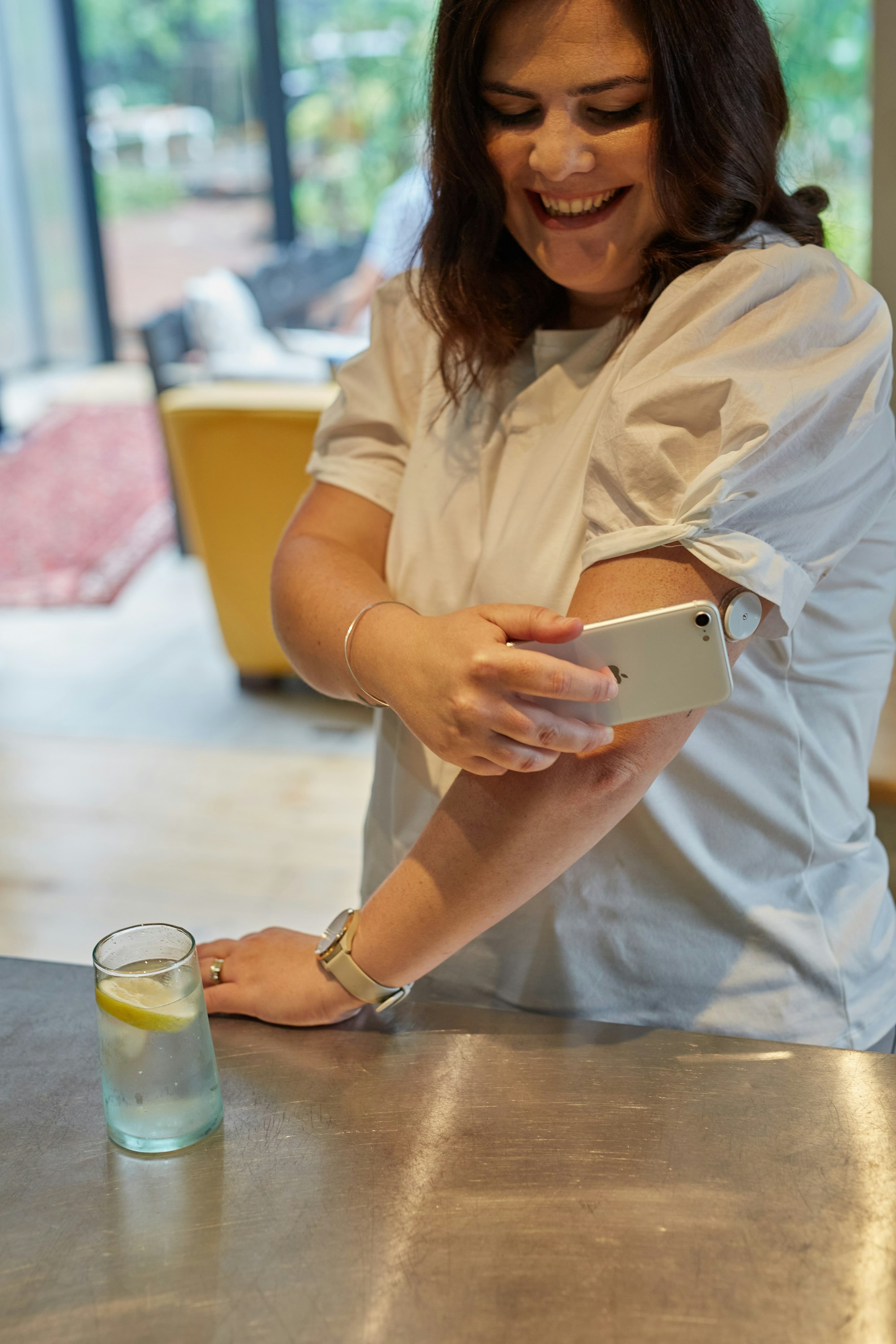


By Dr. Farhan Abdullah, DO | Medical Director, Magnolia Functional Wellness | Southlake, TX
Picture a 52-year-old engineer who's never had a single abnormal lab. He comes back from two weeks with a glucose sensor on his arm, sits down across from me, and looks a little shaken. "I thought I knew how my body worked," he says. "Turns out I didn't." I've had some version of that conversation more times than I can count. His fasting glucose has always been in the low 90s. His A1c is fine. And yet his graph shows a man whose blood sugar climbs past 180 after his usual Tuesday enchilada lunch, stays high for most of the afternoon, and then does something strange around 4 a.m. every single night.
I'm Dr. Farhan Abdullah, and at Magnolia Functional Wellness in Southlake I look at a lot of these reports. November is Diabetes Awareness Month, and with Thanksgiving less than two weeks out, it feels like the right time to talk about what a continuous glucose monitor can actually teach you about your own metabolism. Not whether you should wear one forever (I wrote about the hype problem earlier this year, and my answer hasn't changed). This post is about the other side. If you do wear one for a couple of weeks, what are you looking at, and which patterns deserve your attention?
Because the lessons usually aren't the ones people expect. They rarely come down to "this food is bad." They're about timing, sequence, sleep, stress, and how quickly your body cleans up after itself.
Your Lab Numbers Are a Snapshot. A CGM Is the Movie.
A fasting glucose is one moment, captured after eight or more hours without food, usually at 7:30 in the morning in a lab chair. An A1c is a long blurred average of roughly three months. Both are useful. Both are blunt. Neither tells you what happens at 2 p.m. after lunch or at 3 a.m. when you're asleep.
That gap is exactly what a team at Stanford set out to measure. In a 2018 study published in PLoS Biology by Hall and colleagues, researchers put CGMs on adults across the spectrum of glucose regulation and fed them identical standardized meals. They grouped people into what they called "glucotypes," based on how much their glucose swung. The finding that stuck with me: even people classified as normoglycemic by standard measures spent about 15 percent of their time in the prediabetic range and about 2 percent in the diabetic range.
Read that again. People with normal labs were quietly visiting abnormal territory every day.
Now, I'd be careful about over-reading that. A brief excursion isn't a diagnosis, and one study isn't enough to hang anyone's treatment plan on. But it does explain why my engineer felt blindsided. His snapshot looked clean. His movie had a plot twist.
When I review a CGM report with a patient, I'm not hunting for the single highest number. I'm looking at four things, roughly in this order:
- The overnight baseline. Where does glucose sit between midnight and 5 a.m., when there's no food in the picture? This is the closest thing to a clean read on your underlying metabolic state.
- Recovery time after meals. How long does it take to get back to baseline? Ninety minutes tells a very different story than four hours.
- Repeatable patterns. One weird spike is noise. The same spike after the same meal three times is information.
- The surprises. Rises with no food attached, which usually point to sleep, stress, or the sensor itself.
The Same Meal Doesn't Do the Same Thing to Everyone
This is the lesson that frustrates people most, and it's also the one I find most freeing. There isn't one correct glucose response to a bowl of rice.
The clearest evidence comes from Israel. In a 2015 study published in Cell by Zeevi and colleagues at the Weizmann Institute, researchers tracked week-long glucose in 800 people and measured responses to 46,898 meals. They found high variability in how different people responded to identical meals. One person's gentle bump was another person's mountain. The team then built a machine-learning model, using blood work, habits, body measurements, activity and gut microbiome data, that predicted personal responses well enough that a blinded, randomized diet built from those predictions produced lower post-meal glucose.
What does that mean for you, practically? It means the internet's list of "good" and "bad" foods is a starting point, not a verdict. I've watched patients who were sure whole wheat bread was the healthy choice discover it hit them harder than a small portion of white rice with chicken. I've also watched the reverse. Your two weeks of data are about you, and that's the point of wearing the thing.
A word of caution, though. People tend to take this lesson too far and start testing every snack like a lab experiment. That isn't what I'm after. I want you to identify three or four meals you eat all the time, the regular breakfast, the go-to lunch, the Friday pizza, and see how those land. Those are the meals that actually shape your metabolism over a year. The one-off birthday cake doesn't.
And remember that context changes the result. The same oatmeal can look different after a good night's sleep than after a terrible one, or on a day you walked versus a day you sat through six hours of meetings. If a food looks bad once, test it again before you exile it.
Order, Timing and a Ten-Minute Walk
Here's where CGM data tends to change behavior fastest, because the fixes are small and you can see them work on your phone within an hour.
Start with food order. A pilot study by Shukla and colleagues at Weill Cornell, published in Diabetes Care in 2015, gave 11 adults with type 2 diabetes the same meal on two separate days: ciabatta bread and orange juice, grilled chicken, salad and steamed broccoli. On one day they ate the carbohydrates first. On the other, they ate the protein and vegetables first and the carbohydrates 15 minutes later. Same food, same calories. When vegetables and protein came first, glucose was about 29 percent lower at 30 minutes, 37 percent lower at 60 minutes, and 17 percent lower at two hours. Insulin was lower too.
Eleven people, measured by blood draws rather than sensors, all with diabetes. So it's a signal, not gospel. But it lines up with what I see on patients' graphs all the time, and it costs nothing. Eat the salad and the turkey before the rolls. That's a Thanksgiving tip you can actually use.
Then there's the post-meal walk. In a 2016 randomized crossover study in Diabetologia by Reynolds and colleagues, 41 adults with type 2 diabetes wore CGMs and tried two approaches for two weeks each: a single 30-minute walk every day, or 10 minutes of walking after each main meal. Total walking time was identical. Walking after meals lowered post-meal glucose by about 12 percent overall, and after dinner, when people ate the most carbohydrate and sat the most, the drop was about 22 percent.
I love this one because it reframes exercise. You don't need a heroic workout to change your numbers. You need your muscles to do some work while the glucose from dinner is arriving. A lap around the neighborhood, a stroll around Southlake Town Square after eating out, even pacing while you take a phone call. When patients see their evening curve flatten after a short walk, the habit tends to stick in a way my lectures never accomplish.
A quick note on intense exercise
Don't be alarmed if a hard workout, like heavy lifting or sprints, makes your glucose rise briefly. That's your stress hormones releasing stored glucose for fuel, and it's normal. It usually settles quickly, and over time training improves how well your muscles take up glucose.
The Patterns That Have Nothing to Do With Food
This is the part of a CGM report that surprises people most, and in my view it's the most valuable. A good chunk of your glucose story is written when you aren't eating at all.
Sleep. Back to my engineer and his 4 a.m. mystery. Some of that was the dawn phenomenon, a normal early-morning surge in cortisol and other hormones that nudges glucose upward before you wake. Some of it, in his case, tracked with his nights of poor sleep. That connection is old news in research terms. In a classic 1999 Lancet study by Spiegel, Leproult and Van Cauter at the University of Chicago, 11 healthy young men were limited to four hours in bed for six nights. Compared with when they were fully rested, their glucose tolerance was worse, evening cortisol was higher, and their sympathetic nervous system was more active. The authors noted the changes resembled what we see in normal aging.
Six nights. Healthy young men. If that's what happens to them, what do you think a decade of five-hour nights does to a busy parent in their forties?
Stress. I've seen glucose rise with no food at all during a tense workday, a long drive on 114 at rush hour, or an argument at home. Cortisol and adrenaline tell your liver to release glucose. That's useful if you're running from danger. It's less useful if you're stuck in traffic.
Alcohol. A glass of wine with dinner often looks fine on a graph, and sometimes overnight glucose even runs a little lower, because the liver is busy processing alcohol instead of releasing glucose. That doesn't make alcohol a metabolic tool. It also tends to fragment sleep, which brings you right back to the problem above.
The sensor itself. Not every dip is real. If you sleep on the arm wearing the sensor, pressure can produce a false overnight low, sometimes called a compression low. Readings in the first day after you apply a new sensor are often less reliable too. Before anyone panics about a strange overnight number, I ask which side they sleep on.
Turning Two Weeks of Data Into Something Useful
A pile of graphs isn't a plan. What makes a CGM worthwhile is what you do with it afterward, and that's where context matters.
At Magnolia, I don't read CGM data in isolation. I pair it with real labs: fasting insulin, A1c, a lipid panel and, depending on the person, liver enzymes and hormones. A slightly high overnight baseline in someone with a high fasting insulin means something different than the same number in someone whose insulin is low and normal. And when the full picture suggests a person is drifting toward prediabetes, that's when a broader conversation makes sense, sometimes about nutrition and training alone, sometimes about medication. For patients carrying extra weight, that can include a medication like semaglutide or tirzepatide as part of a supervised plan, which our physician-supervised GLP-1 weight loss guide walks through.
For most people, though, the takeaways are simpler, and they fit on an index card:
- Find your three or four everyday meals and learn how they land.
- Eat protein and vegetables before the starch when you can.
- Walk for ten minutes after your biggest meal.
- Protect your sleep like it's a prescription, because metabolically it is one.
- Judge the trend over two weeks, not a single spike.
Then take the sensor off. Seriously. I'd rather you wear one for two weeks, learn a handful of things that change how you live, and move on, than wear one for a year and develop a tense relationship with every meal. If you notice the data making you anxious instead of curious, that's a sign to stop, and I'll tell you so. For a deeper look at how glucose fits into the bigger aging picture, our longevity medicine work starts from exactly these kinds of metabolic basics.
And my engineer? He doesn't have to give up enchiladas. He eats the salad first, walks the parking lot loop after lunch, and gets to bed an hour earlier. In the version of this story I see most often, the follow-up graph isn't flat, and it doesn't need to be. It just recovers faster. That's the kind of lesson a continuous glucose monitor is good at teaching. If you've been curious about what your own metabolism is doing between lab visits, we're glad to help you read the story at Magnolia Functional Wellness in Southlake. And this Thanksgiving, start with the green beans and take the long way around the block after dessert.
Your Questions Answered
Led by trained medical professionals delivering safe, effective, and scientifically backed aesthetic and wellness treatments.
Does the order I eat my food really change my blood sugar?
<p>It can make a real difference. In a small Weill Cornell study of adults with type 2 diabetes, eating the protein and vegetables 15 minutes before the bread and juice lowered post-meal glucose by roughly a third at the one-hour mark compared with eating the same meal carbs first. It isn't a cure for anything, but it's a free habit, and at Magnolia Functional Wellness in Southlake it's one of the first changes we suggest when we review a CGM report.</p>
Why is my glucose higher in the morning before I've eaten anything?
<p>That's often the dawn phenomenon, a normal early-morning rise in cortisol and other hormones that tells your liver to release glucose before you wake up. Short or broken sleep can make it more noticeable. A mild morning bump is common, but if your fasting numbers keep creeping up, it's worth checking fasting insulin and A1c with us at Magnolia Functional Wellness in Southlake.</p>
Can poor sleep raise my blood sugar?
<p>Yes, sleep loss changes how your body handles glucose. In a well-known University of Chicago study, healthy young men limited to four hours in bed for six nights had worse glucose tolerance and higher evening cortisol than when they were well rested. One rough night won't hurt you, but if your CGM looks worse after short sleep, that's real data worth acting on.</p>
Why does my blood sugar spike after eating healthy foods like fruit or oatmeal?
Because that's exactly what your metabolism is supposed to do. When you eat carbohydrates, your glucose rises and then insulin brings it back down. A brief rise after fruit or oatmeal in a healthy person isn't dangerous, it's the system working. What matters more is how quickly you return to baseline, not the peak number that your CGM app flashes at you.
How long should I wear a continuous glucose monitor?
In my practice, I treat CGMs as a learning tool, not a permanent accessory. Two to four weeks is usually plenty of time to spot your patterns, test a few changes, and understand how your body responds. If you find yourself wearing one for years chasing a perfectly flat line, that's often a sign the device is creating anxiety rather than solving a real problem.
Need More Information?
Our team is ready to answer your specific questions and concerns.